
Loading, please wait...
LOT 0132
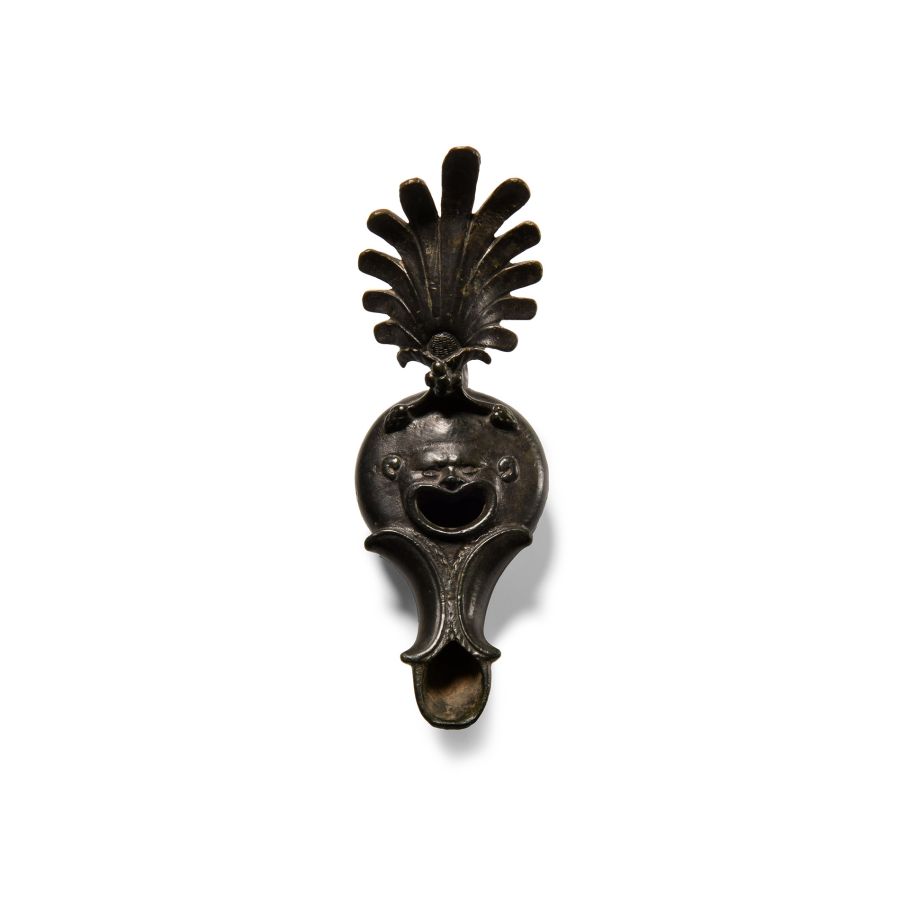
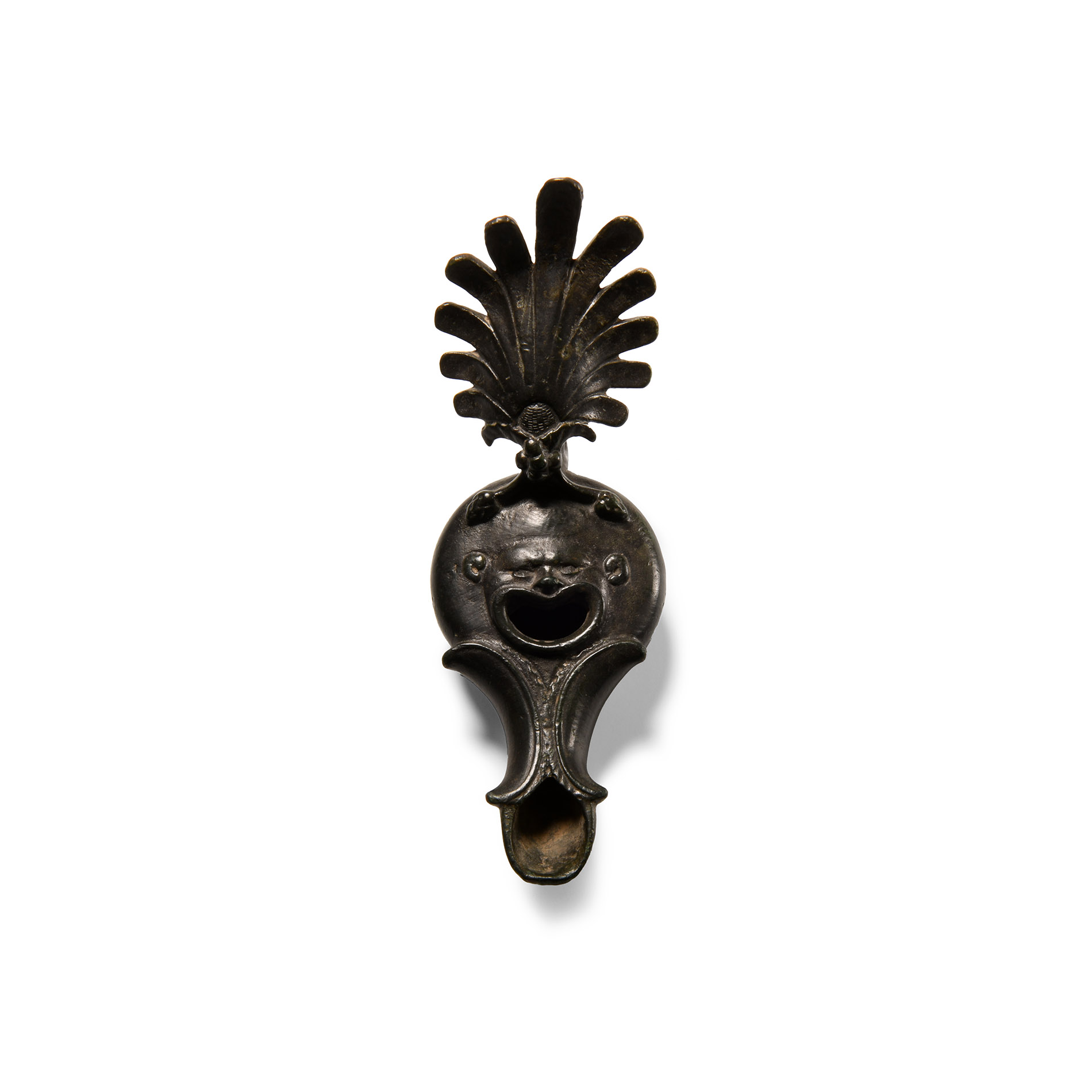
Roman Bronze Lamp with Theatrical Mask
1ST-2ND CENTURY A.D.
5 1/4 in. (220 grams, 13.3 cm).
Nozzle with quasi-volutes, theatrical mask surrounding the central opening; ring-handle with palmette attachment; base moulded.
ProvenanceAcquired from Weber, Kohl.
Ex private collection, Rhemish, Germany.
with Gorny & Mosch, 14 December 2010, lot 499.
Private collection, Europe.
This lot has been checked against the Interpol Database of stolen works of art and is accompanied by search certificate number no.11800-206492.
Cf. Walters, H.B., Catalogue of the Greek and Roman lamps in the British Museum, London, 1914, no.1468, for the type.
FootnotesThe principal parts of a lamp were the body or reservoir which contained the oil (infundibulum); the flat circular top (discus) on which the design, if any, was placed, sometimes with an ornamented rim (margo), the nozzle, with a hole for the insertion of the wick (rostrum, nasus, myxus), the wick, known as ellydinium, the handle (ansa, manubrium).
CONDITIONTimeLine Auctions follows a vetting process to ensure the authenticity and legality of all items, reinforcing our commitment to integrity and responsible trading. Each antiquity, antique, and coin lot undergoes thorough examination by a vetting committee of at least ten external specialists, professional trade association members, scientists, and archaeologists: Our Vetting Process
AUCTIONS:
TimeLine is a leading auction house specialising in antiquities, ancient art, collectables, natural history, coins, medals, and books. Our auctions offer museums, collectors, historians, and enthusiasts the opportunity to acquire unique and historically significant pieces.
LOT 0132
Roman Bronze Lamp with Theatrical Mask
Estimate £3,000 - 4,000€3,480 - 4,640 (for guidance only)$4,050 - 5,400 (for guidance only)
-
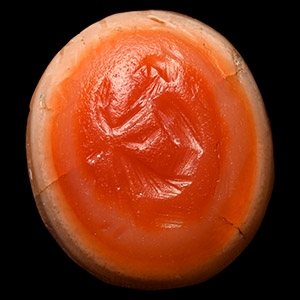
Roman Inscribed Orange Sardonyx Gemstone with Philosopher Seated Under a Tree
1st century A.D.Estimate: £600 - 800 (+bp*)
Opening Bid: £333
The oval stone engraved with an old man (a philosopher?) seated on a stone, wearing a low cap, half naked and with the cloak covering his leg; his right hand resting beside him, and his left hand raised in the act of speaking; a tree behind, inscription in Greek letters 'ψίω' (= eat). 1.01 grams, 13 mm
Acquired in the late 1980s-early 1990s. Important North West London collection.
A particularly recognisable representation in Graeco-Roman art was that of a male character, with a bald head and a slightly pointed beard, seated in profile on a simple seat or on a rock. It represents the philosopher, who often has his hand raised in the gesture of speaking or holds a volume in his hands, characterised according to the rules of cynicism, by the bare torso and the cloak that covers his legs. The inscription refers to the imperative to 'feed' on knowledge. -
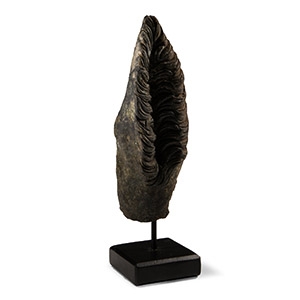
Larger Than Life-Size Roman Bronze Satyr's Ear
1st-3rd century A.D.Sold for (Inc. bp): £1,690
Probably from a colossal statue of Silenus or a satyr, detailed and naturalistic rendering of a left ear, conical shape with accurate depiction of the internal hair. 767 grams, 18.5 cm
Acquired in Europe before 1995. Private collection, Europe.
In the mythology of ancient Greece and in the Graeco-Roman literary world, satyrs were a community of beings who lived mostly in woods, surrounded by nature, and often together with nymphs. In the most ancient period they were imagined by the Greeks like Sileni, in human form, but with the ears, tail and sometimes hooves of horses. Seilenoi were depicted as fat, elderly, white-haired men, with snub noses, balding heads, and the ears and tails of asses. They were sometimes covered in fluffy white hair and occasionally sported a pair of ox horns. -
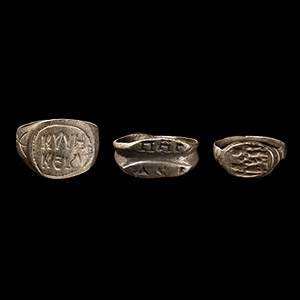
Silver Ring Group
Roman, 1st-4th century A.D. and laterSold for (Inc. bp): £715
One with expanded shoulders and bezel inscribed with text in a roundel; an oval bezel engraved with a figural scene; a 'twin' bezel composed of two elliptical plaques, each bearing inscribed letters. 8.68 grams total, 17-19 mm
Acquired on the UK art market. Property of a Ruislip, UK, gentleman, by inheritance.
