
Loading, please wait...
LOT 0758
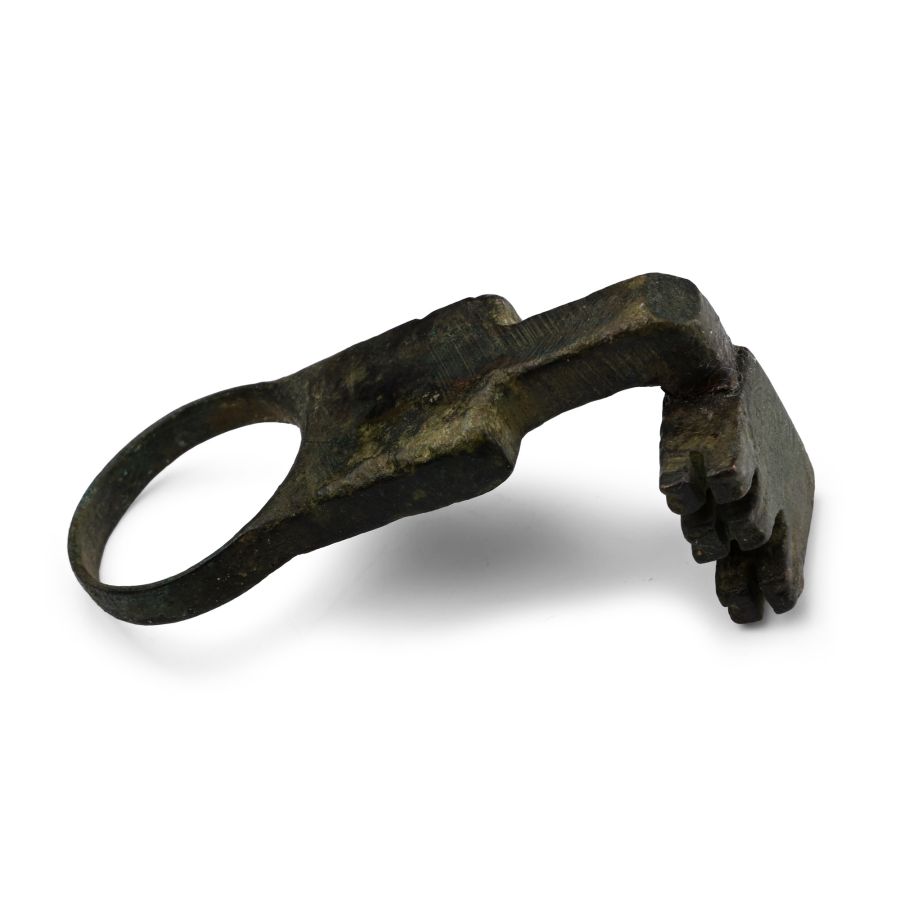
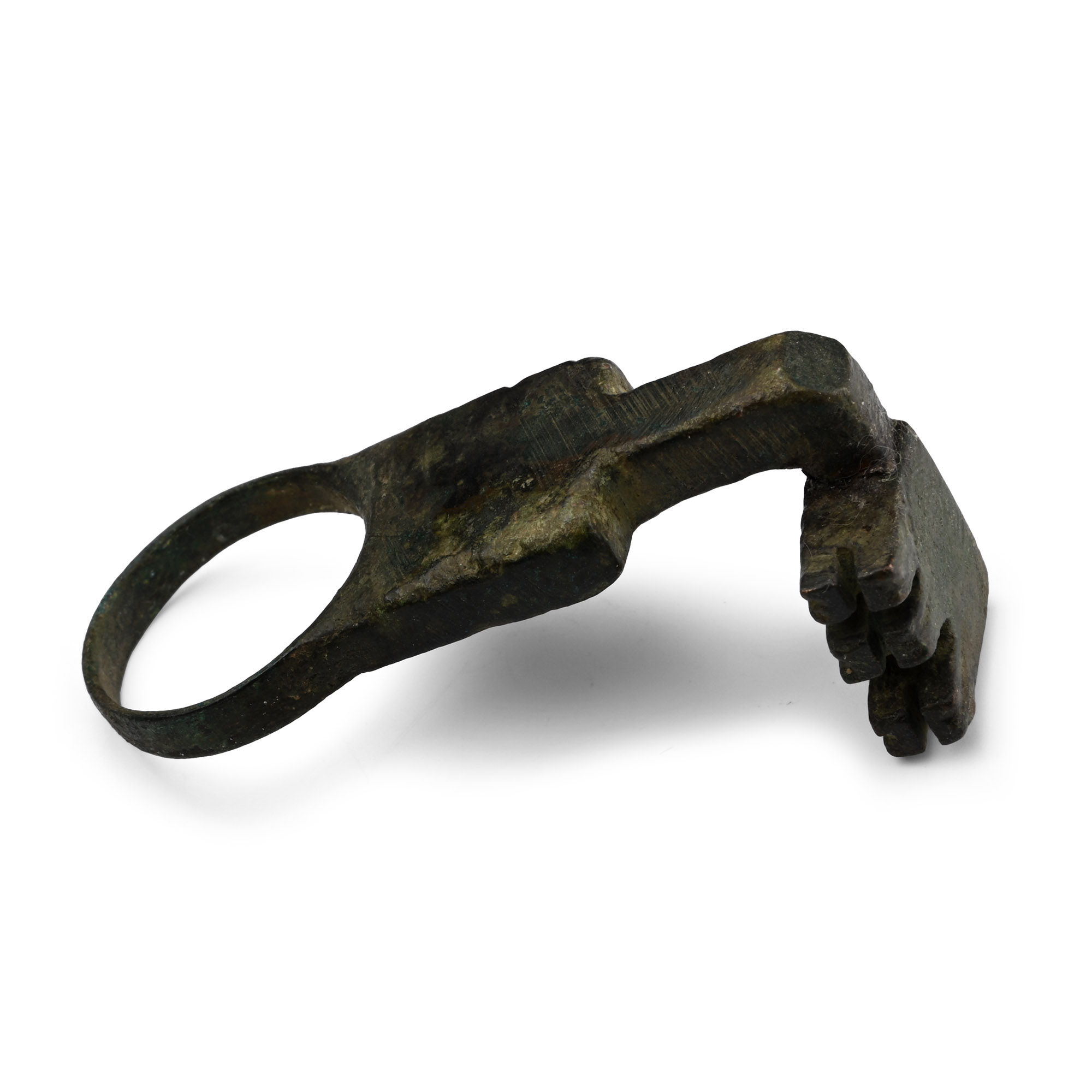
Roman Bronze Key
1ST-4TH CENTURY A.D.
2 3/8 in. (33.9 grams, 59 mm).
Comprising a broad ring and cranked shank, bits cut into the leading edge of the ward. [No Reserve]
ProvenanceEx London, UK, gentleman 1980-1990s.
This lot is accompanied by an illustrated lot declaration signed by the Head of the Antiquities Department, Dr Raffaele D'Amato.
TimeLine Auctions follows a vetting process to ensure the authenticity and legality of all items, reinforcing our commitment to integrity and responsible trading. Each antiquity, antique, and coin lot undergoes thorough examination by a vetting committee of at least ten external specialists, professional trade association members, scientists, and archaeologists: Our Vetting Process
AUCTIONS:
TimeLine is a leading auction house specialising in antiquities, ancient art, collectables, natural history, coins, medals, and books. Our auctions offer museums, collectors, historians, and enthusiasts the opportunity to acquire unique and historically significant pieces.
-
.jpg)
Roman Agate Cameo of Augustus
1st century A.D.Estimate: £25,000 - 35,000 (‡+bp*)
Opening Bid: £11,111
Ellipsoid cameo with profile portrait bust in antique gold pendant frame with surrounding cabochons: emerald, sapphire, ruby - and clusters of pearls; marked to reverse '750', in a rectangle 'Bd G' (believed to be an upstate New York jeweller's stamp) and an indeterminate third mark; supplied with a custom-made display stand. 99 grams total, 92 mm including stand, pendant: 50 mm
American collection, early 20th century, New York. with Robert Haber Gallery, New York, 1990. Ex Jean Clostre, Geneva, Switzerland. Accompanied by a scholarly report by Dr Ittai Gradel. This lot has been checked against the Interpol Database of stolen works of art and is accompanied by search certificate number no.12223-222312. This lot has been cleared against the Art Loss Register database, and is accompanied by an illustrated lot declaration signed by the Head of the Antiquities Department, Dr Raffaele D'Amato.
Dr Ittai Gradel says: 'The cameo, of exquisite technical quality, has a close parallel in the Cabinet des médailles, Paris .. The TimeLine auction cameo is not, however, an exact copy .. though details are so close to the larger Paris cameo that the same gem carver, or at least workshop, probably produced both.' -
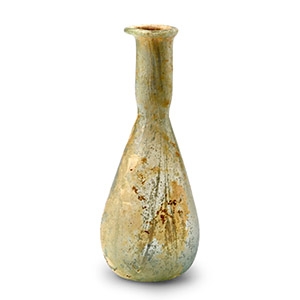
Roman Glass Flask
2nd-4th century A.D.Sold for (Inc. bp): £117
Small unguentarium with piriform body, tubular neck with everted rolled rim. 10.77 grams, 77 mm
Private collection, UK. Acquired by owner's grandmother in the early 1940s. with Christie's, London, 24 August 2009, no.TBC. Private European collection. This lot is accompanied by an illustrated lot declaration signed by the Head of the Antiquities Department, Dr Raffaele D'Amato. -
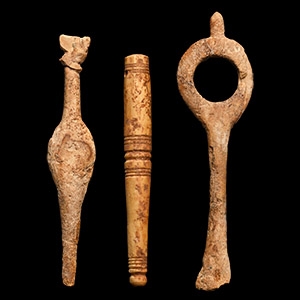
Roman Bone Pin and Implement Group
3rd-4th century A.D.Estimate: £100 - 140 (+bp*)
Opening Bid: £50
Each with round-section shank, one with hoop finial. 29.3 grams total, 9.2-11.3 cm
Private collection of Mr K.A., acquired in the 1990s-early 2000s. This lot is accompanied by an illustrated lot declaration signed by the Head of the Antiquities Department, Dr Raffaele D'Amato.
