
Loading, please wait...
LOT 0695
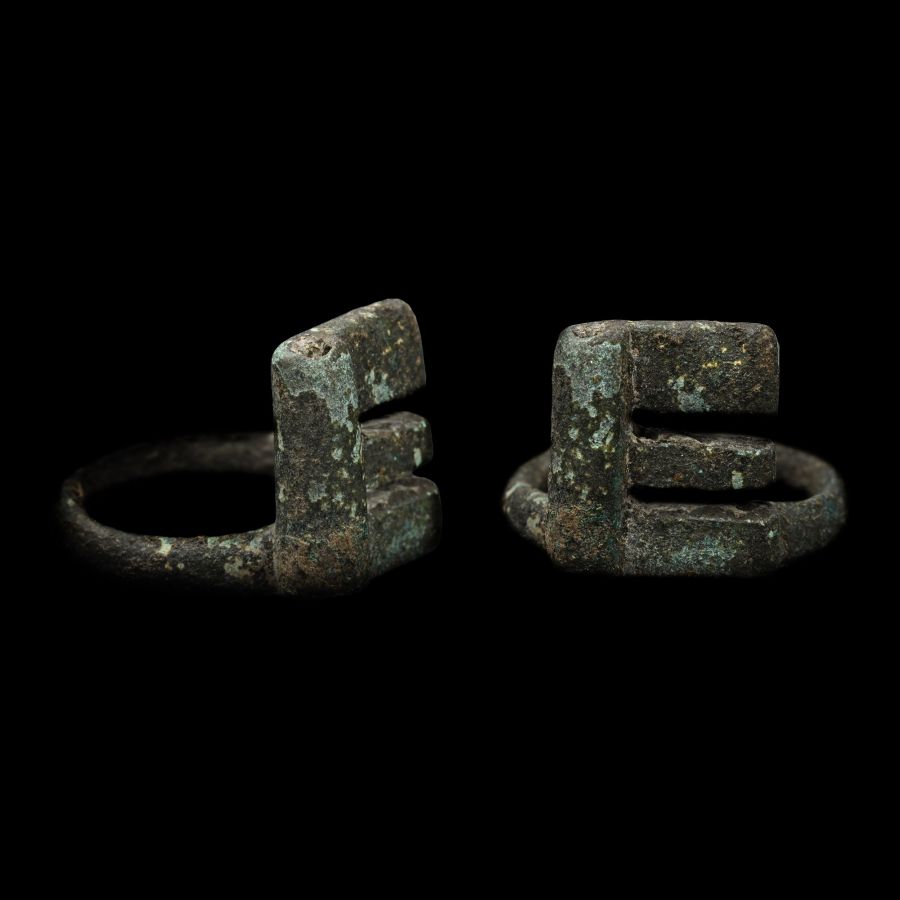
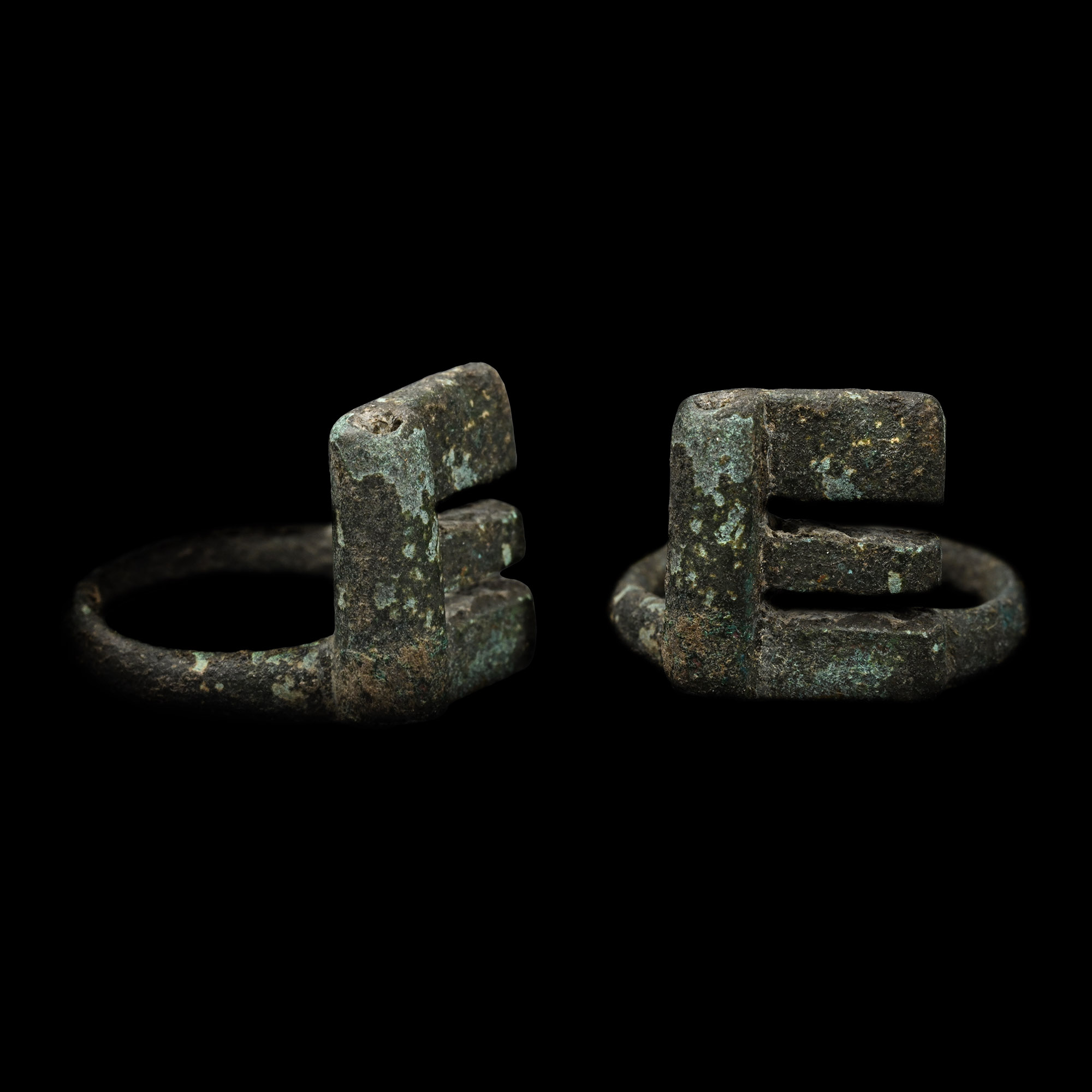
Roman Bronze Key Ring
1ST-4TH CENTURY A.D.
1 in. (5.68 grams, 23.55 mm).
Comprising a narrow hoop, rectangular bezel with flange cut with teeth, tubular frame to rear. [No Reserve]
ProvenanceAcquired on the European art market in the 1990s.
From the collection of G.M.R.H., London, UK.
This lot is accompanied by an illustrated lot declaration signed by the Head of the Antiquities Department, Dr Raffaele D'Amato.
Cf. Chadour, A.B., Rings. The Alice and Louis Koch Collection, volume I, Leeds, 1994, item 371, for type.
CONDITIONTimeLine Auctions follows a vetting process to ensure the authenticity and legality of all items, reinforcing our commitment to integrity and responsible trading. Each antiquity, antique, and coin lot undergoes thorough examination by a vetting committee of at least ten external specialists, professional trade association members, scientists, and archaeologists: Our Vetting Process
AUCTIONS:
TimeLine is a leading auction house specialising in antiquities, ancient art, collectables, natural history, coins, medals, and books. Our auctions offer museums, collectors, historians, and enthusiasts the opportunity to acquire unique and historically significant pieces.
-
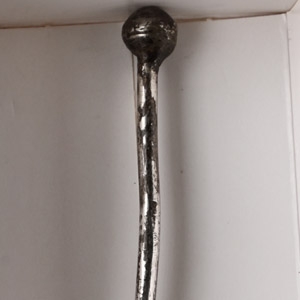
Roman Silver Pin with Bulbous Head
1st century A.D.Sold for (Inc. bp): £91
Comprising a sturdy shank, spherical head with some faceting to the equator. 6.95 grams, 77 mm
Acquired from Coincraft, London, UK. From the private collection of Kenneth Machin (1936-2020), Buckinghamshire, UK; his collection of antiquities and natural history was formed since 1948; thence by descent. Accompanied by a Coincraft certificate of authenticity. This lot is accompanied by an illustrated lot declaration signed by the Head of the Antiquities Department, Dr Raffaele D'Amato. -
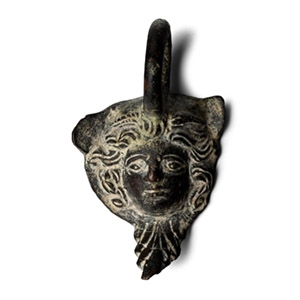
Roman Bronze Patera Mount
1st-2nd century A.D.Estimate: £350 - 450 (‡+bp*)
Opening Bid: £175
Triangular in form with mounting ring above, hollow-formed gorgoneion with palmette below. 50.88 grams, 69 mm
Acquired in 1990. Private collection, Switzerland, thence by descent. Private collection, since the late 1990s. This lot is accompanied by an illustrated lot declaration signed by the Head of the Antiquities Department, Dr Raffaele D'Amato. -
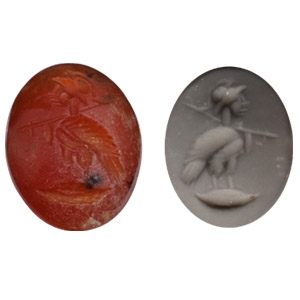
Roman Carnelian Intaglio with Harpy
1st-5th century A.D.Sold for (Inc. bp): £234
Intaglio harpy figure on a baseline; supplied with a museum-quality impression. 0.65 grams, 11 mm
Acquired in 1992. Private collection, thence by descent. Private collection, since the late 1990s. This lot is accompanied by an illustrated lot declaration signed by the Head of the Antiquities Department, Dr Raffaele D'Amato.
