
Loading, please wait...
LOT 1042
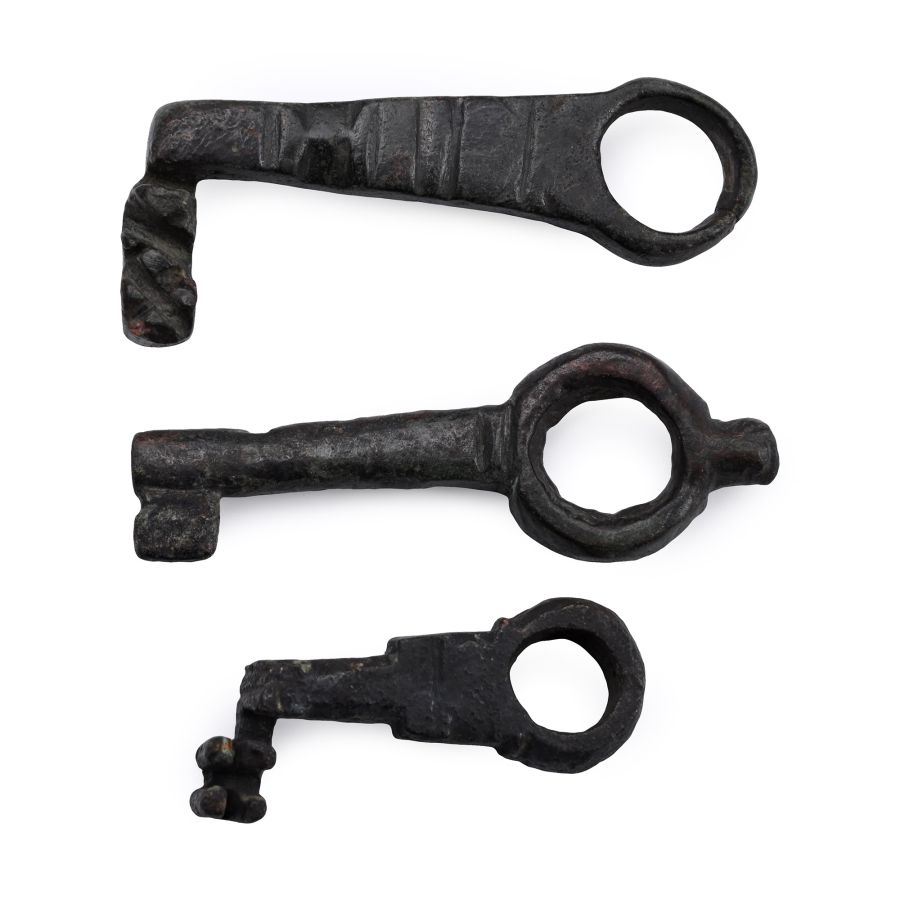
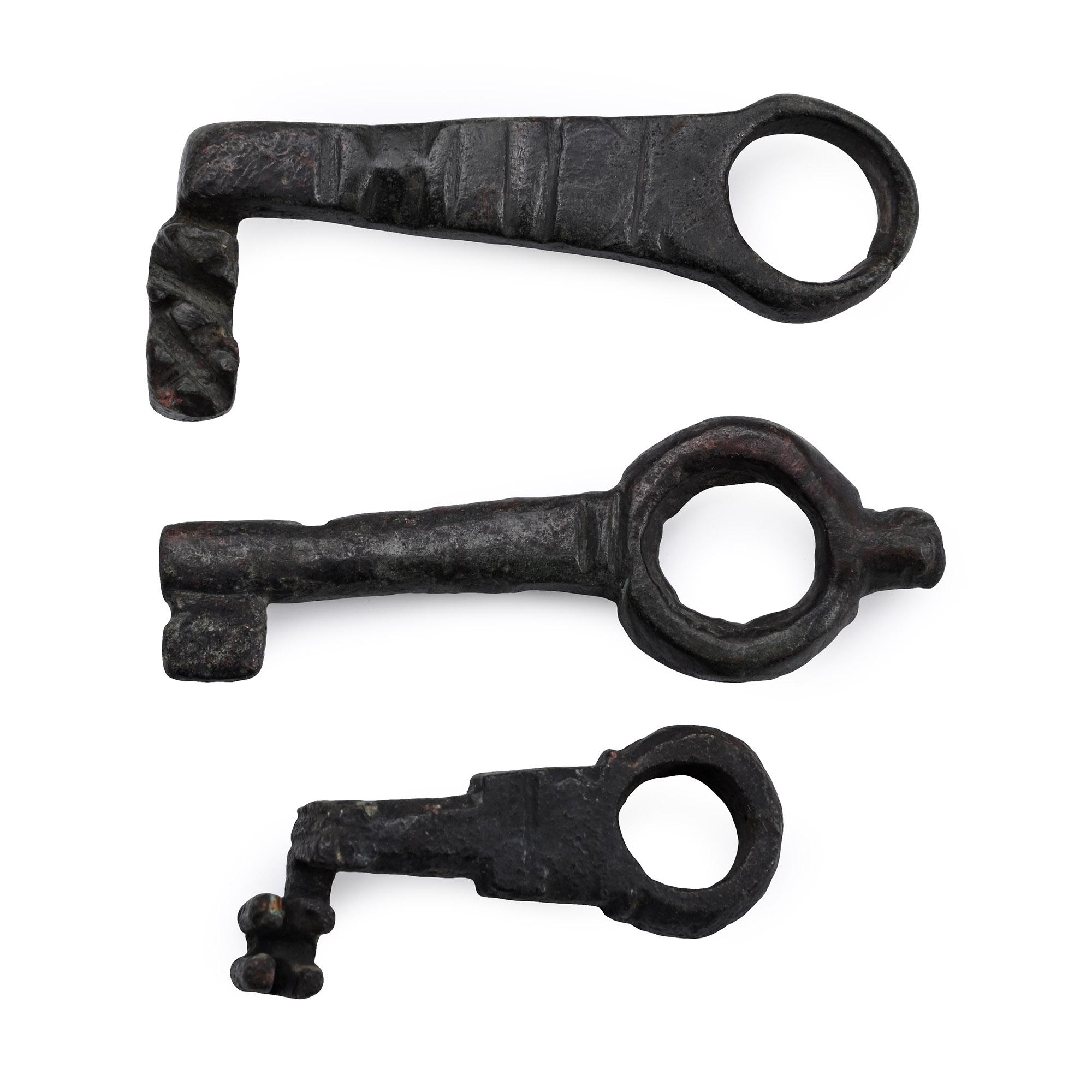
Roman Bronze Key Group
1ST-4TH CENTURY A.D.
1 5/8 - 2 1/2 in. (67.66 grams total, 42-62 mm).
Comprising three keys with looped terminals, one for a barrel lock. [3]
ProvenanceEx German art market, 2000s.
Acquired from an EU collector living in London.
From the collection of a Surrey, UK, gentleman.
TimeLine Auctions follows a vetting process to ensure the authenticity and legality of all items, reinforcing our commitment to integrity and responsible trading. Each antiquity, antique, and coin lot undergoes thorough examination by a vetting committee of at least ten external specialists, professional trade association members, scientists, and archaeologists: Our Vetting Process
AUCTIONS:
TimeLine is a leading auction house specialising in antiquities, ancient art, collectables, natural history, coins, medals, and books. Our auctions offer museums, collectors, historians, and enthusiasts the opportunity to acquire unique and historically significant pieces.
-
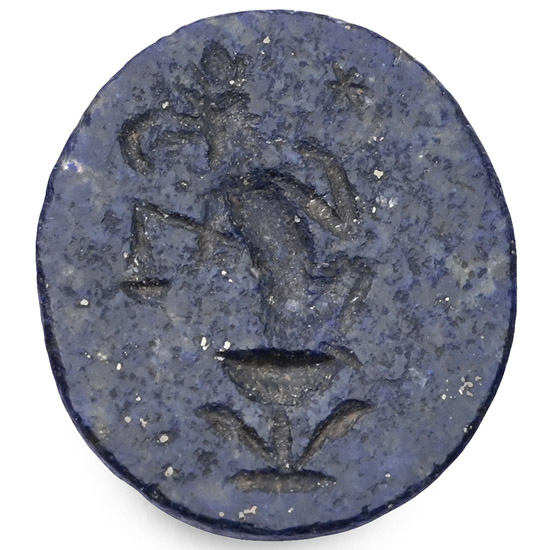
Roman Lapis Lazuli Gemstone with Putto
2nd-3rd century A.D.Sold for (Inc. bp): £52
With intaglio putto sitting on a chalice, objects in the field; supplied with a museum-quality impression. 1.07 grams. 14.07 mm
From the private collection of a European gentleman (1942-2024), formed since the 1970s. -
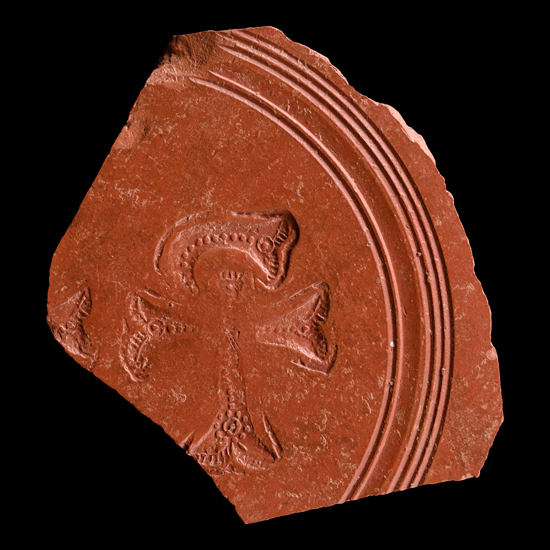
Roman Redware Plate Fragment with Chi Rho
4th century A.D.Sold for (Inc. bp): £85
An irregular fragment showing concentric banding and a stylised Christogram motif. 49 grams, 83 mm
Acquired on the UK art market from the 1990s. From the private collection of a Lincolnshire, UK, gentleman. -
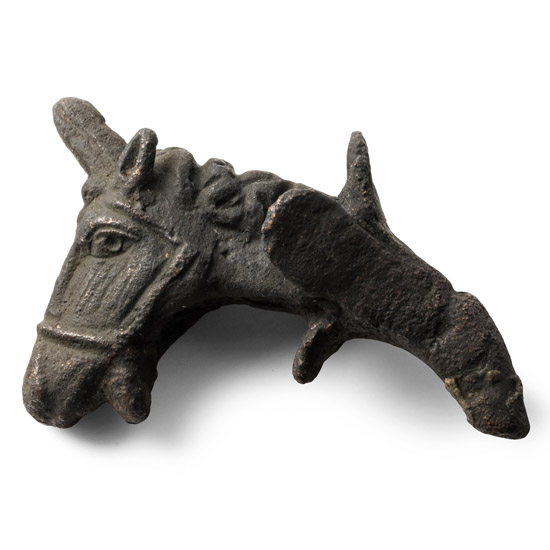
Roman Bronze Horse Head Terminal
1st-3rd century A.D.Sold for (Inc. bp): £416
Modelled as a caparisoned horse-head emerging from a four-petalled flower. 60.1 grams, 57 mm
From the collection of a gentleman, acquired on the London art market in the 1990s.
This is a horse protome designed to be a mount for a vessel or small furniture, a work of delicate Roman craftsmanship, a replica of a widespread Hellenistic model. Similar bronzes can be found at the Musée des Antiquités Nationales of Paris, at the Metropolitan Museum, and at the Mariemont Museum.
