
Loading, please wait...
_900x900.jpg "Roman Bronze Jug with Handle")
_200x200.jpg "Roman Bronze Jug with Handle")

.jpg "Roman Bronze Jug with Handle")
LOT 0164
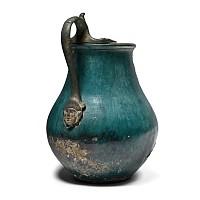
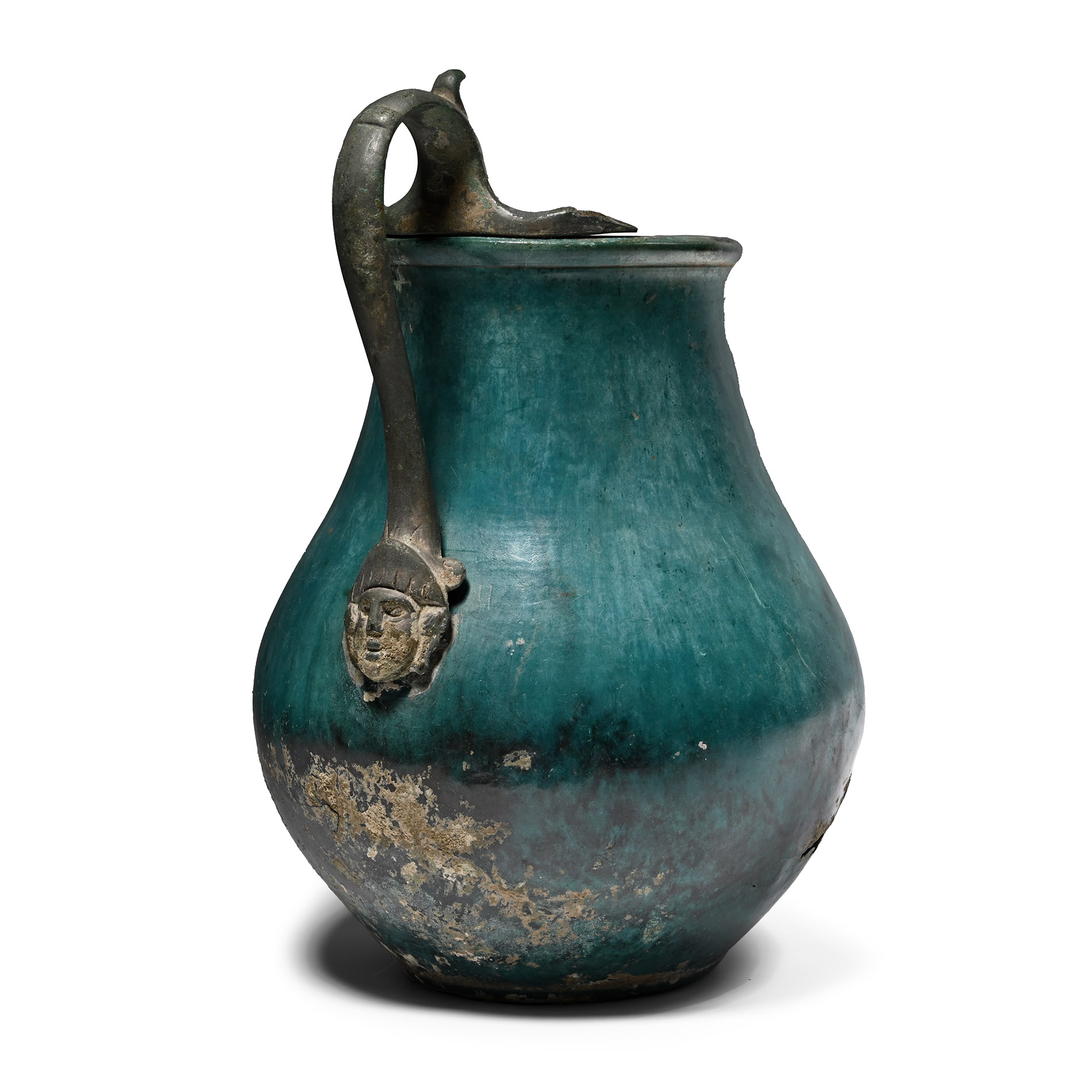
Roman Bronze Jug with Handle
1ST-2ND CENTURY A.D.
4 5/8 - 5 7/8 in. (563 grams total, 11.7-15 cm).
With bulbous body and short neck with thickened rim, low foot with concentric circles to base; the re-affixed handle with an actor's mask to the base and incised petals beneath the thumbpad.
ProvenanceAcquired in the mid 1980s-1990s.
Private collection, Switzerland, thence by descent.
Private collection, since the late 1990s.
Accompanied by a copy of an Art Loss Register certificate no.S00050269.
This lot has been checked against the Interpol Database of stolen works of art and is accompanied by a search certificate number no.12397-226686.
Cf. Rolland, H., Bronzes Antiques de Haute Provence, Paris, 1965, item 291, for similar with less bulbous profile..
CONDITIONTimeLine Auctions follows a vetting process to ensure the authenticity and legality of all items, reinforcing our commitment to integrity and responsible trading. Each antiquity, antique, and coin lot undergoes thorough examination by a vetting committee of at least ten external specialists, professional trade association members, scientists, and archaeologists: Our Vetting Process
AUCTIONS:
TimeLine is a leading auction house specialising in antiquities, ancient art, collectables, natural history, coins, medals, and books. Our auctions offer museums, collectors, historians, and enthusiasts the opportunity to acquire unique and historically significant pieces.
-
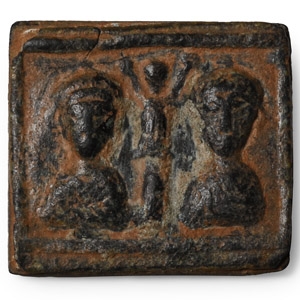
Late Roman Honorius with Theodosius II AE Exagium Solidi Weight
408-423 A.D.Sold for (Inc. bp): £195
Diademed and draped facing busts of Honorius and Theodosius II; between them above, Victory standing facing, crowning the emperors; to the reverse twenty-five pellets in form of a pyramid. 4.11 grams, 18mm
Condition as seen.
From the collection of a gentleman, acquired on the London art market in the 1990s. Ex Classical Numismatic Group, Electronic Auction 562, 15 May 2024, lot 792. -
.jpg)
Roman Silver Dionysus Pendant
1st-3rd century A.D.Sold for (Inc. bp): £260
Ellipsoid pendant, hollow to the reverse with high-relief mask of Dionysus flanked by vine leaves and bunches of grapes. 6.2 grams, 23 mm
From the glyptic collection of Mr X; thence by descent. Acquired Hotel des Ventes, Drouot, Eve SVV, Paris, France, 28 June 2017, no.147 (Part). Property of a French collector. -
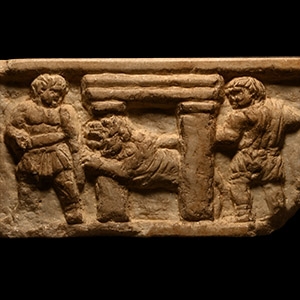
Roman Marble Frieze with Gladiators and Tiger
2nd-3rd century A.D. or laterSold for (Inc. bp): £1,430
Frieze fragment with scene carved in the half-round: left, a venator standing with gladius held ready to stab a tiger leaping towards him from between the columns of an arch while a second figure wearing a short tunic attacks the tiger with a spear; mounted on a custom-made stand. 1.9 kg total, 23.2 cm wide including stand
Acquired before 1985. UK art market. From the private collection of Mr David Barker, London, UK; thence by descent.
