
Loading, please wait...
LOT 0143
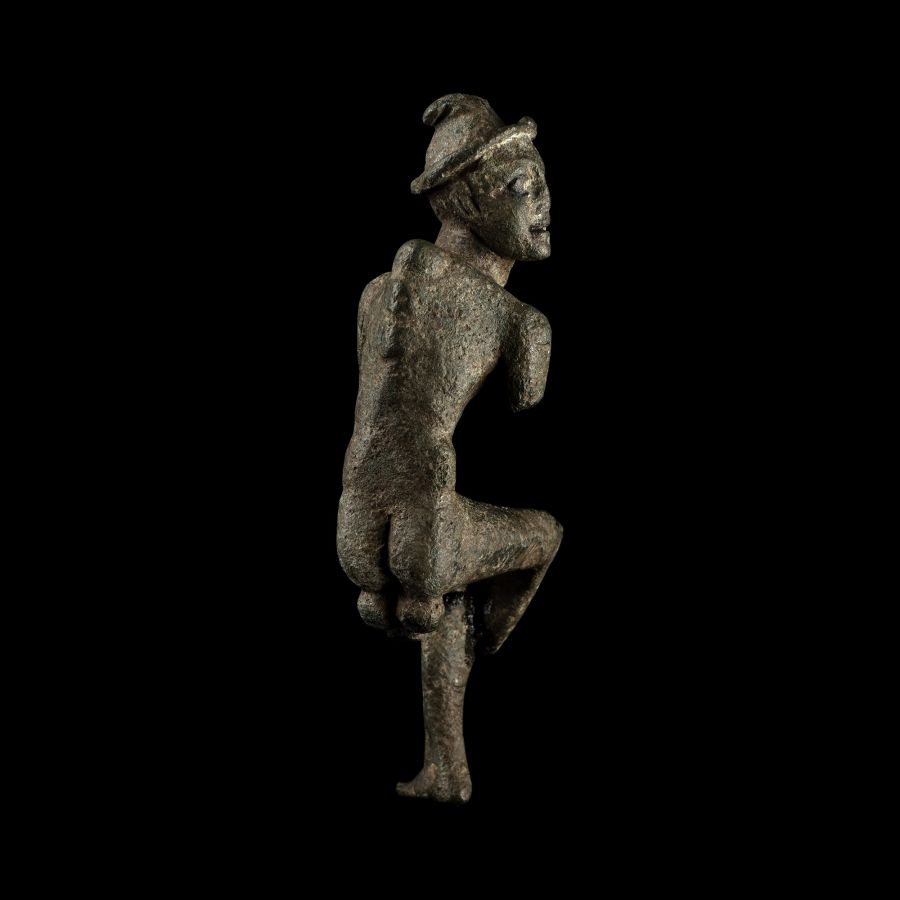
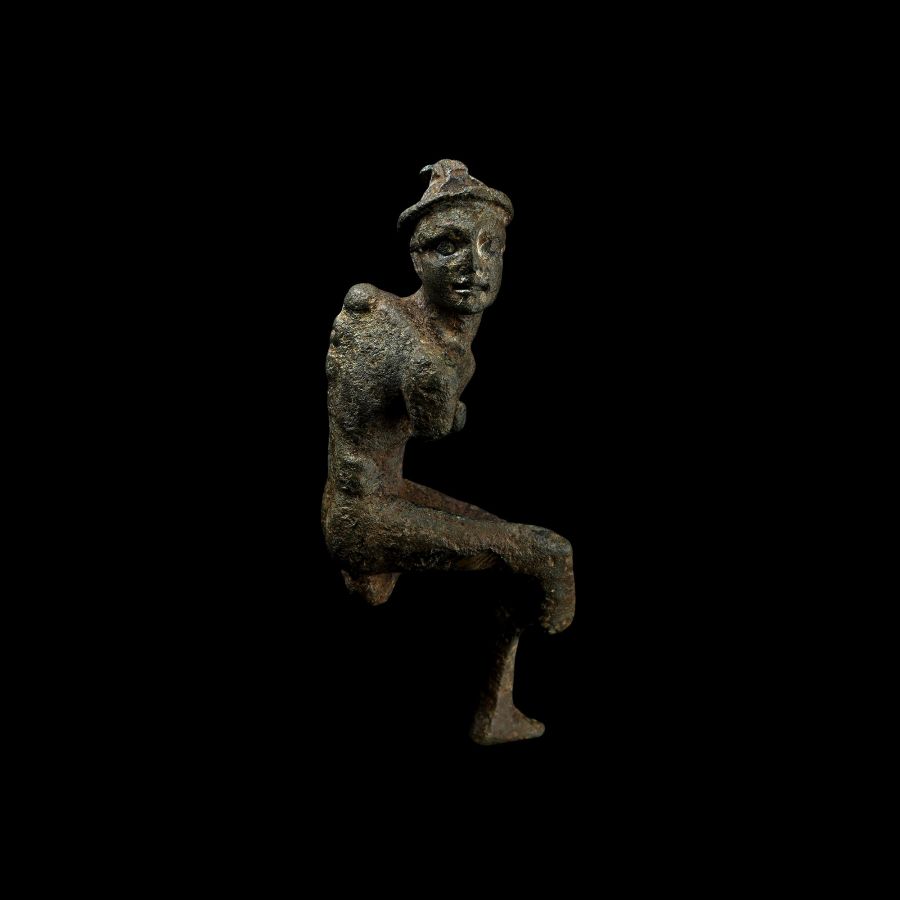
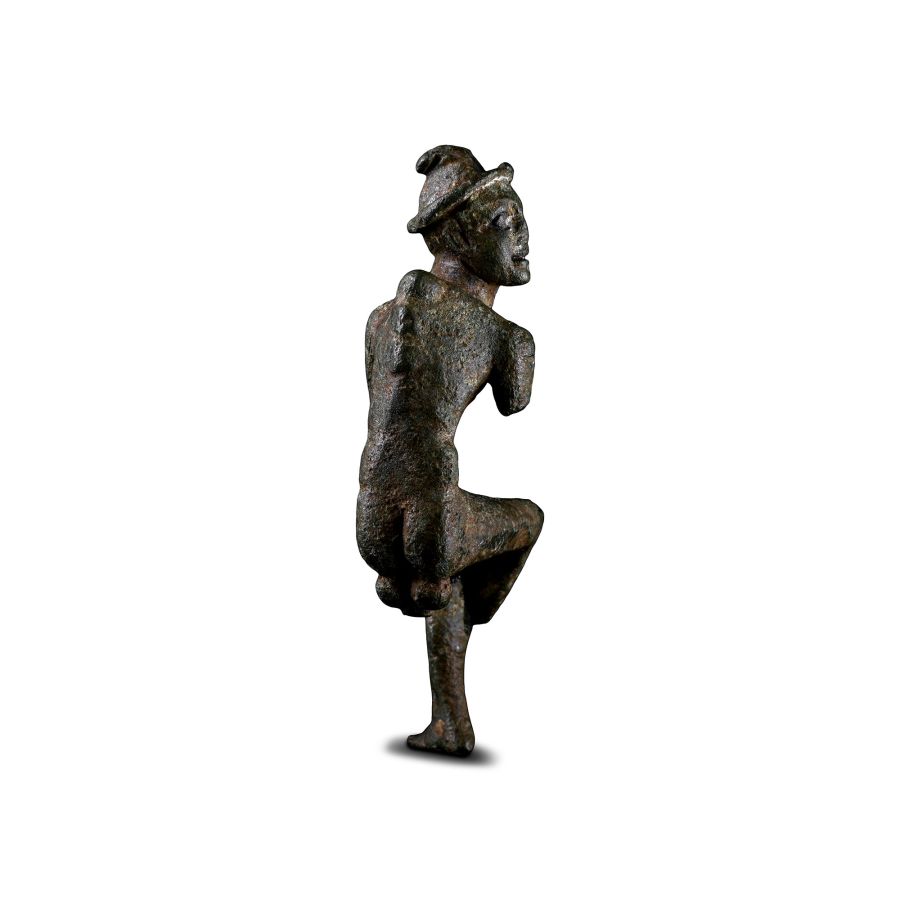
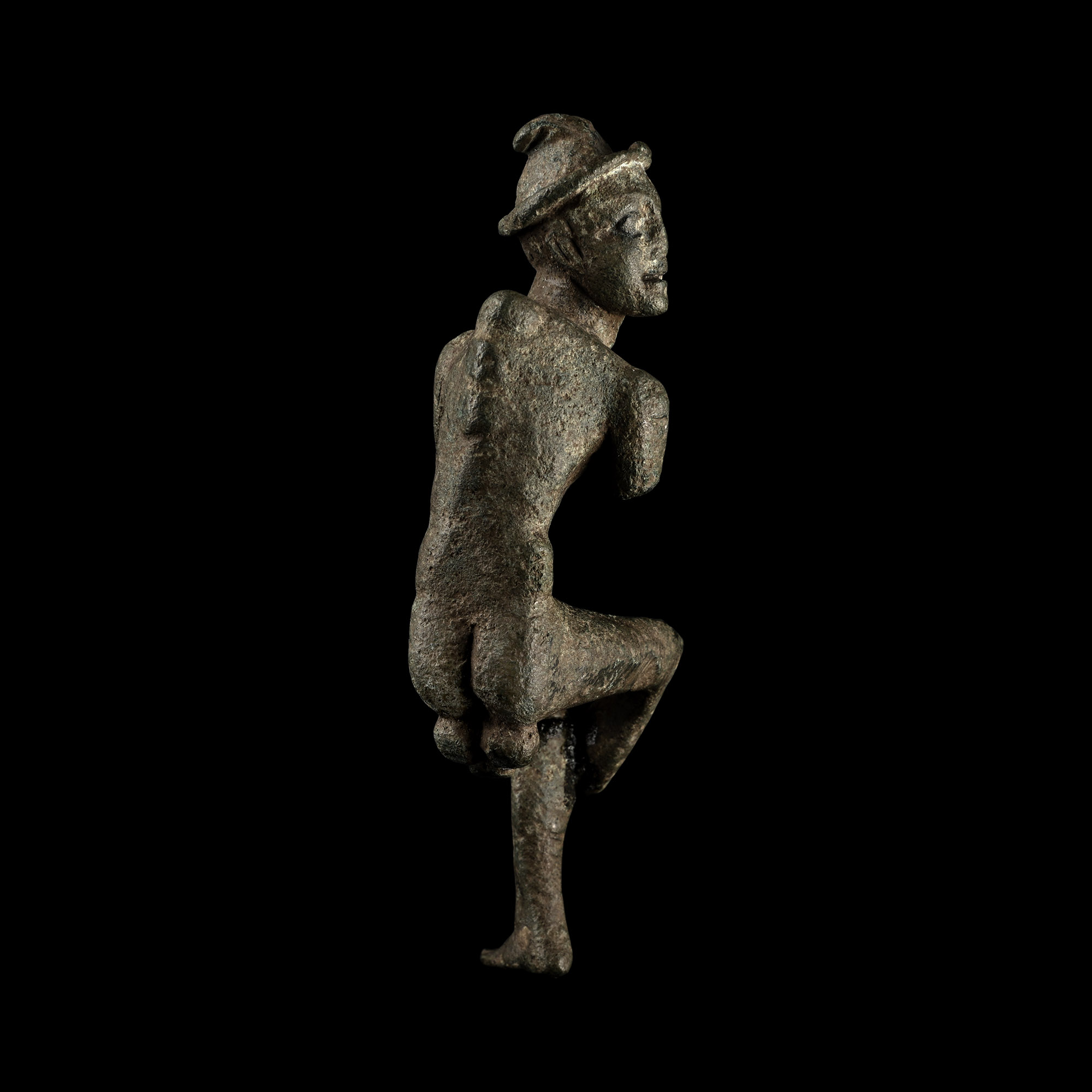
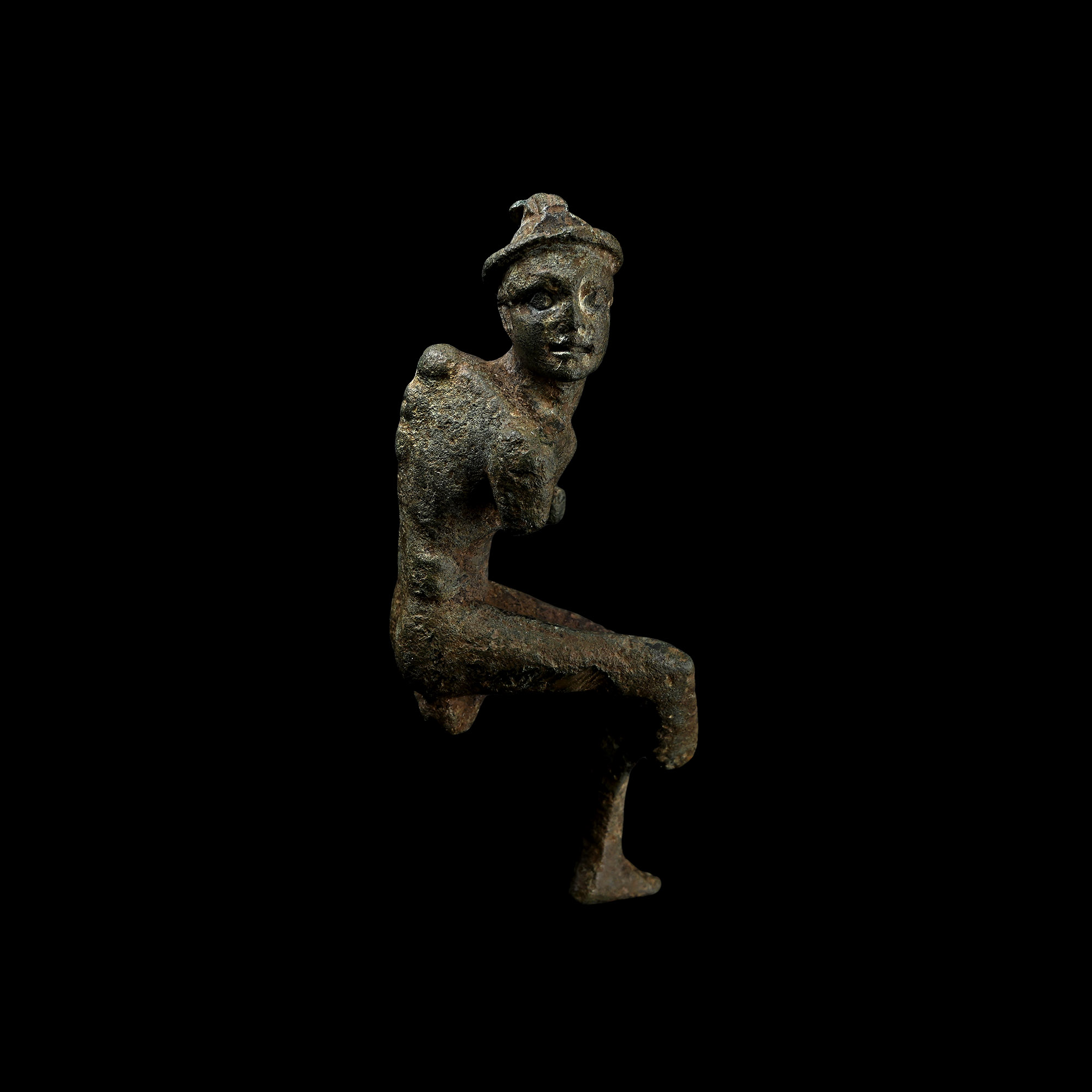
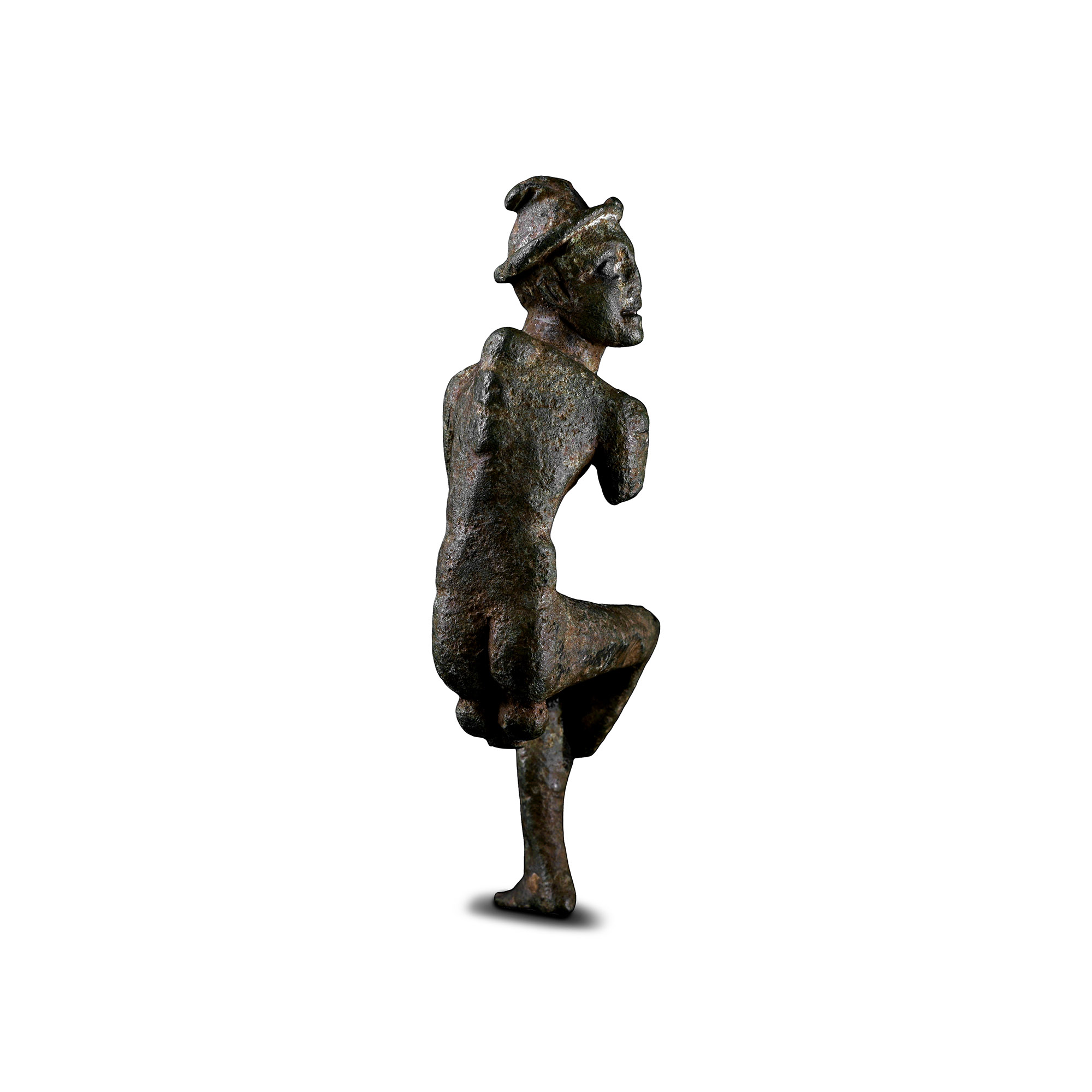
Roman Bronze Hunchback Grotesque Statuette
1ST CENTURY B.C.-1ST CENTURY A.D.
3 5/8 in. (130 grams, 93 mm).
Modelled in the round, sitting nude with head turned, arms and legs bent; wearing a brimmed cap with a feather in the crown; the spine and sternum modelled protruding, large, impressed eyes, genitals protruding below the crossed legs.
ProvenanceAcquired from Helios Ancient Art, Mayfair, London, UK, circa 1986.
From a privately held London, UK, collection from the 1980s-1990s.
This lot has been checked against the Interpol Database of stolen works of art and is accompanied by search certificate number no.13276-253965.
Cf. Rolland, H., Bronzes Antiques de Haute Provence, Paris, 1965, item 196; see also Cèbe, J.B., La caricature et la parodie dans le monde romain antique des origines à Juvénal, Bibliothèque des Écoles françaises d'Athènes et de Rome, 206, Paris, De Boccard, 1966; Dunand, F., Terres cuites gréco-romaines d'Égypte, Paris, Musée du Louvre, département des antiquités égyptiennes; Réunion des musées nationaux, 1990; Ewigleben, C., von Grumbkow, J. (Hrsg.), Götter, Gräber & Grotesken. Tonfiguren aus dem Alltagsleben im römischen Ägypten, Bilderhefte des Museums für Kunst und Gewerbe Hamburg, 25, Hamburg, Museum für Kunst und Gewerbe, 1991.
FootnotesSuch small bronzes with physical abnormalities and exaggerated features served as entertainment, but also had the function of warding off evil.
CONDITIONTimeLine Auctions follows a vetting process to ensure the authenticity and legality of all items, reinforcing our commitment to integrity and responsible trading. Each antiquity, antique, and coin lot undergoes thorough examination by a vetting committee of at least ten external specialists, professional trade association members, scientists, and archaeologists: Our Vetting Process
AUCTIONS:
TimeLine is a leading auction house specialising in antiquities, ancient art, collectables, natural history, coins, medals, and books. Our auctions offer museums, collectors, historians, and enthusiasts the opportunity to acquire unique and historically significant pieces.
LOT 0143
Roman Bronze Hunchback Grotesque Statuette
Estimate £3,000 - 4,000€3,480 - 4,640 (for guidance only)$4,050 - 5,400 (for guidance only)
-
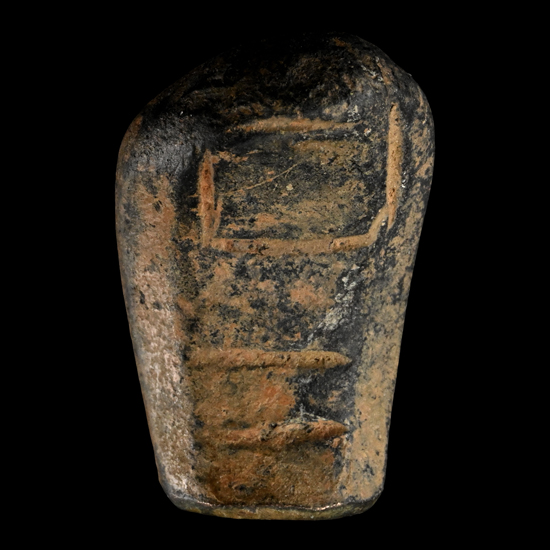
Roman Bronze Thumb from a Statue
1st-4th century A.D.Sold for (Inc. bp): £33
Modelled in the round thumb from the left hand with wrinkles and rectangular nail. 27 grams, 26 mm
From the collection of a gentleman, acquired on the London art market in the 1990s. -
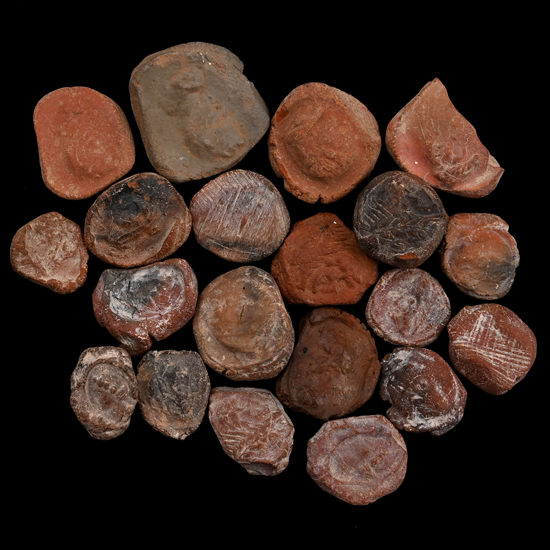
Roman Terracotta Bullae, Tesserae or Token Group
3rd century B.C.-1st century A.D.Sold for (Inc. bp): £130
A mixed group of ceramic bullae, tesserae or theatre tokens bearing low-relief motifs, mainly consisting of profile busts of deities. 29 grams total, 14-25 mm
From the private collection of a European gentleman (1942-2024), formed since the 1970s.
The term 'tessera' was used in Roman times to convey the Greek term σύμβολον (token). Small tiles are known as tokens, often shaped like coins, made of metal (copper, lead, iron), clay, bone, wood, or glass, stamped as well as engraved. The tokens, however, are not exclusively coin-shaped, as the Latin term 'tessera' suggests by etymologically referring to a square or at least a four-sided shape and confirmed in several cases by material remains of the past. Tokens and tesserae seem to have been used both in Athens and Rome for the distribution of goods. According to written sources, the term token is identified with credentials of the official authorities. They have also been interpreted as tokens of identity, as entrance tickets to theatre performances, tribunals or assemblies of citizens, archival material of seal engraving, as pawns in games, Charon’s obols and even as amulets. -
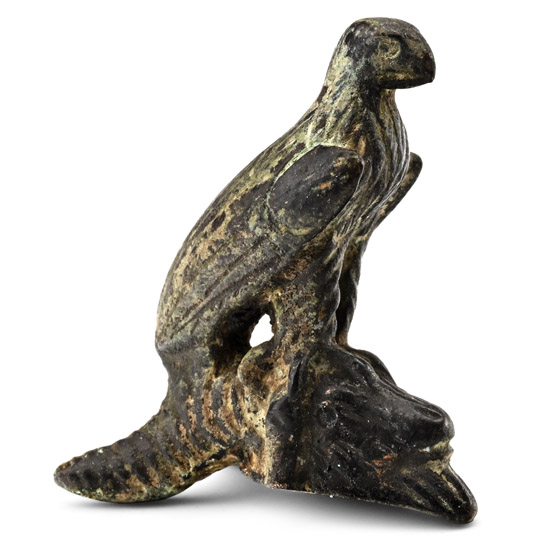
Roman Bronze Eagle on Ram's Head Statuette
3rd-4th century A.D.Sold for (Inc. bp): £176
The eagle standing with its wings closed, and its head turned slightly to the right, with long claws spread on the top of a large goat head with long segmented horns and a protruding beard. 22.1 grams, 34 mm
Ex German art market, 2000s. Acquired from an EU collector living in London. From the collection of a Surrey, UK, gentleman.
