
Loading, please wait...
LOT 0718
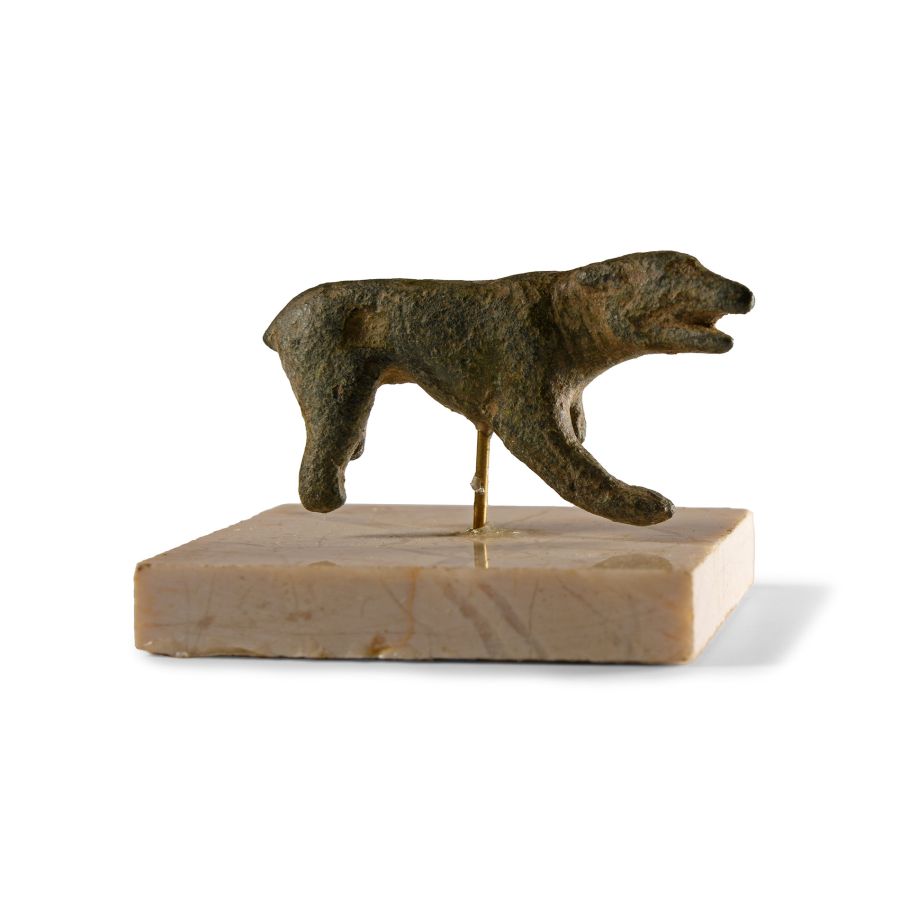
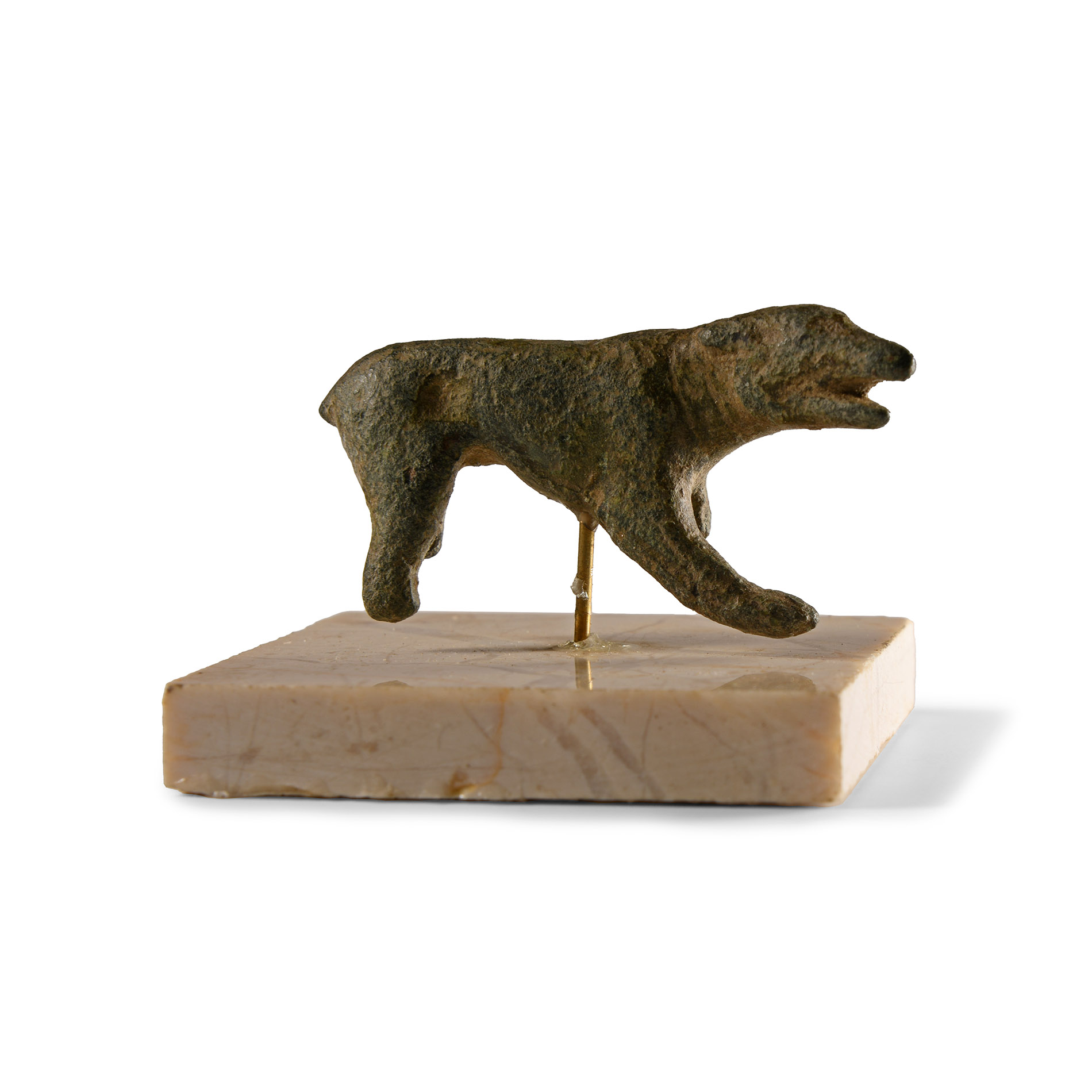
Roman Bronze Hound Statuette
1ST-2ND CENTURY A.D.
2 in. (80 grams total, 52 mm including stand).
Modelled in the round in advancing pose with head lowered and mouth open, low-relief collar to the neck; mounted on a custom-made stand. [No Reserve]
ProvenanceFrom a collection acquired on the UK art market from various auction houses and collections mostly before 2000.
From an important Cambridgeshire estate; thence by descent.
This lot is accompanied by an illustrated lot declaration signed by the Head of the Antiquities Department, Dr Raffaele D’Amato.
Cf. Durham, E., Metal Figurines in Roman Britain, vol. 2, Reading, 2010, pl.275, for type.
CONDITIONTimeLine Auctions follows a vetting process to ensure the authenticity and legality of all items, reinforcing our commitment to integrity and responsible trading. Each antiquity, antique, and coin lot undergoes thorough examination by a vetting committee of at least ten external specialists, professional trade association members, scientists, and archaeologists: Our Vetting Process
AUCTIONS:
TimeLine is a leading auction house specialising in antiquities, ancient art, collectables, natural history, coins, medals, and books. Our auctions offer museums, collectors, historians, and enthusiasts the opportunity to acquire unique and historically significant pieces.
-

Roman Silver Torc with Gemstone Pendant
1st-3rd century A.D.Sold for (Inc. bp): £156
A flat-section wire necklace with hook-and-eye fastening, ellipsoid pendant with ropework border and central cell, inset rock crystal cabochon. 12 grams, 84 mm
Ex German art market, 2000s. Acquired from an EU collector living in London. From the collection of Surrey, UK, gentleman. This lot is accompanied by an illustrated lot declaration signed by the Head of the Antiquities Department, Dr Raffaele D’Amato. -
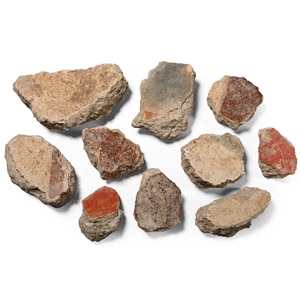
Roman Fresco Wall Plaster Collection
1st century A.D.Sold for (Inc. bp): £59
Fragments of wall plaster with rendered surface painted with mainly red, blue and white detailing; some with impression of timber laths to the reverse. 770 grams total, 5.2-11.6 cm
Acquired in the 19th century. Ex Jeger collection, Switzerland. UK gallery, early 2000s. This lot is accompanied by an illustrated lot declaration signed by the Head of the Antiquities Department, Dr Raffaele D’Amato.
These small fragments, for analogies with the fragments of Pompeii, seems to belong to the second style of Roman painting, red panels representing highlight and shadow, decorated with vegetal interlaces. Some panels were probably framed by a red grenade fillet. A fragment shows alternate blue and red colour over a cream background, maybe pertinent to a socle. -

Roman Bronze Military Compass and Tweezers Multi-Tool
Circa late 2nd-4th century A.D.Sold for (Inc. bp): £169
Featuring a compass and tweezers, free-moving collar to one arm, one arm with two oval terminals and one tapering to a point. 19 grams, 90 mm
Acquired before 2000. From the collection of a European gentleman living in the UK. This lot is accompanied by an illustrated lot declaration signed by the Head of the Antiquities Department, Dr Raffaele D’Amato.
This instrument, a type of circinus formed of two flat-section arms, was widely used by masons and carpenters, as well as for making wall decorations for the preparation of repetitive elements such as spirals or circles. It was widely used by the agrimensores of the army, as is proven by a very similar specimen found in Carnuntum, the camp of the Legio XIIII Gemina.
