
Loading, please wait...

LOT 0771
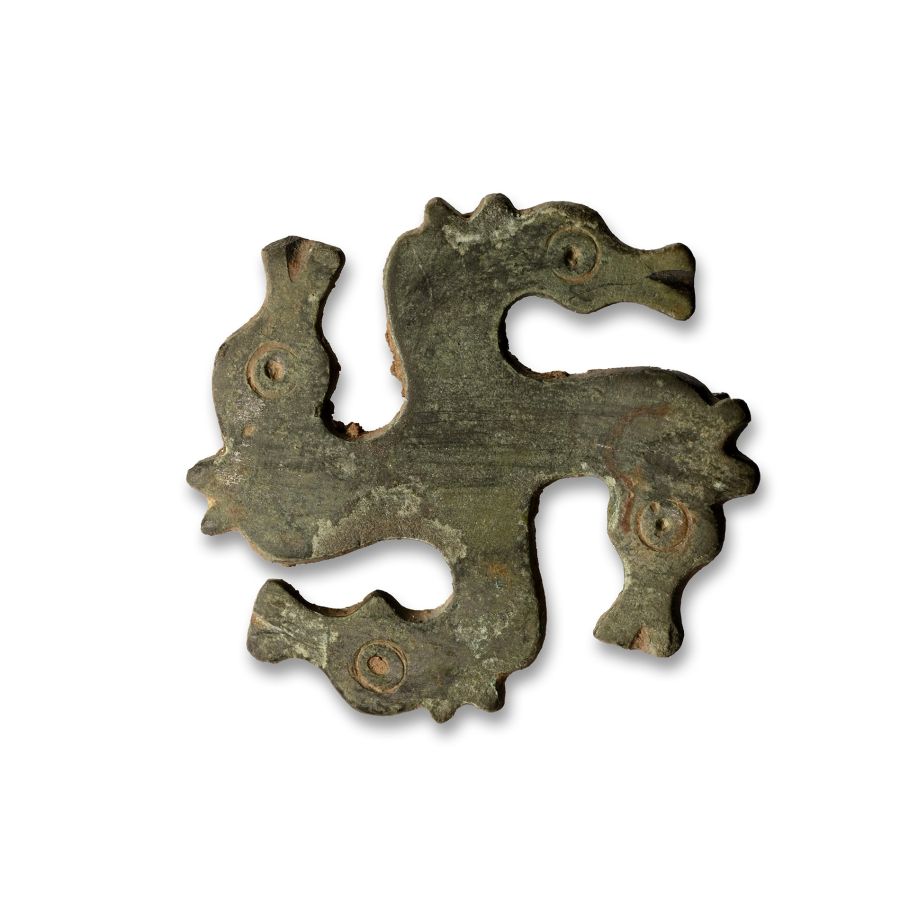
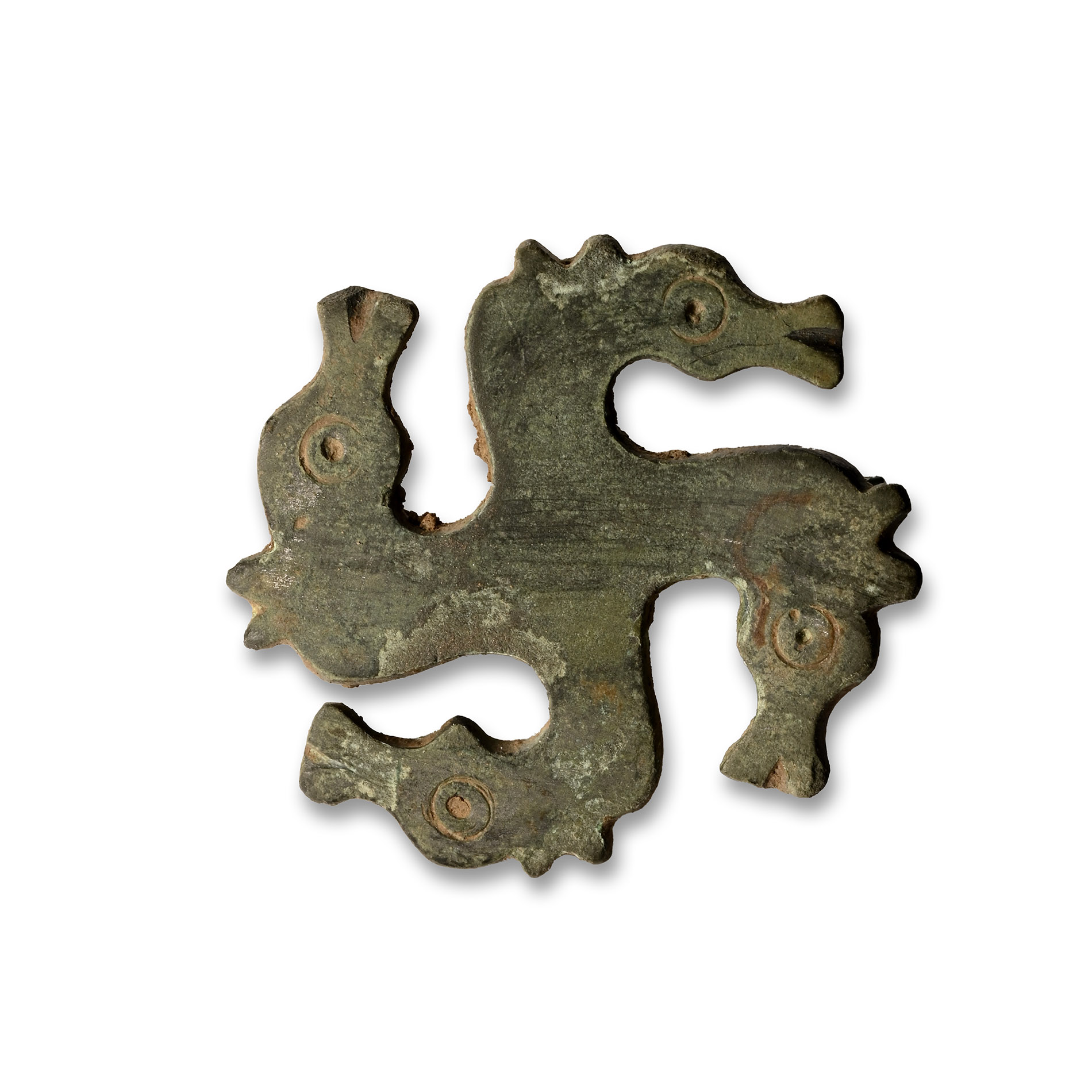
Roman Bronze Horse Whorl Brooch
3RD-4TH CENTURY A.D.
1 1/4 in. (11.6 grams, 32 mm).
With horse-head decoration to each arm, each head with punched ring-and-dot eye, and a similar motif to the centre; catchplate and hinged pin to verso. [No Reserve]
ProvenanceAcquired on the London art market in the late 1980s-1990s.
From the family collection of an East London, UK, gentleman.
Cf. Petcu, R., ‘Swastika-shaped fibulae with horse-head decorations (Almgren 232) from the Roman period in Dobrudja (Moesia Inferior)’ in Studia Antiqua et Archaeologica, 25(1); pp.113-122, fig.4.
CONDITIONTimeLine Auctions follows a vetting process to ensure the authenticity and legality of all items, reinforcing our commitment to integrity and responsible trading. Each antiquity, antique, and coin lot undergoes thorough examination by a vetting committee of at least ten external specialists, professional trade association members, scientists, and archaeologists: Our Vetting Process
AUCTIONS:
TimeLine is a leading auction house specialising in antiquities, ancient art, collectables, natural history, coins, medals, and books. Our auctions offer museums, collectors, historians, and enthusiasts the opportunity to acquire unique and historically significant pieces.
-
Roman Miniature Glass Group
1st-4th century A.D.Estimate: £100 - 140 (+bp*)
Opening Bid: £40
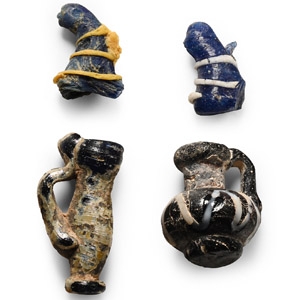
Comprising: a blue ewer with applied trails to the body; slender vase with applied handle; two small drinking horns with trails in contrasting colours. 14 grams total, 18-30 mm
From the private collection of Mr K.A., acquired in the 1990s-early 2000s. -
Roman Silver Votive Figure of the God Mercury
1st-3rd century A.D.Sold for (Inc. bp): £182
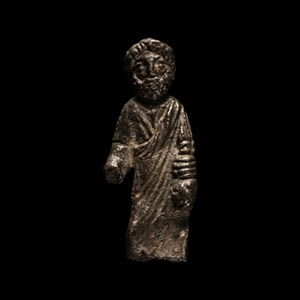
Modelled in the round, wearing a tightly-wrapped toga, his left arm bent and hand gripping the marsupium bag of coins; with full beard and hair parted neatly at the rear. 4.7 grams, 29 mm
Acquired in the 1980s. From the collection of a London antiquarian. -
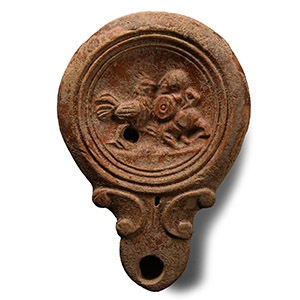
Roman Terracotta Oil Lamp with Dwarf Gladiator
1st-2nd century A.D.Sold for (Inc. bp): £780
Squat in profile with broad body, volute scrolls to nozzle, discus with high-relief scene of a grotesque dwarf wearing gladiator's costume and fighting with a cockerel. 47 grams, 10 cm
From the private collection of Mr K.A., acquired in the 1990s-early 2000s.
