
Loading, please wait...
LOT 0920
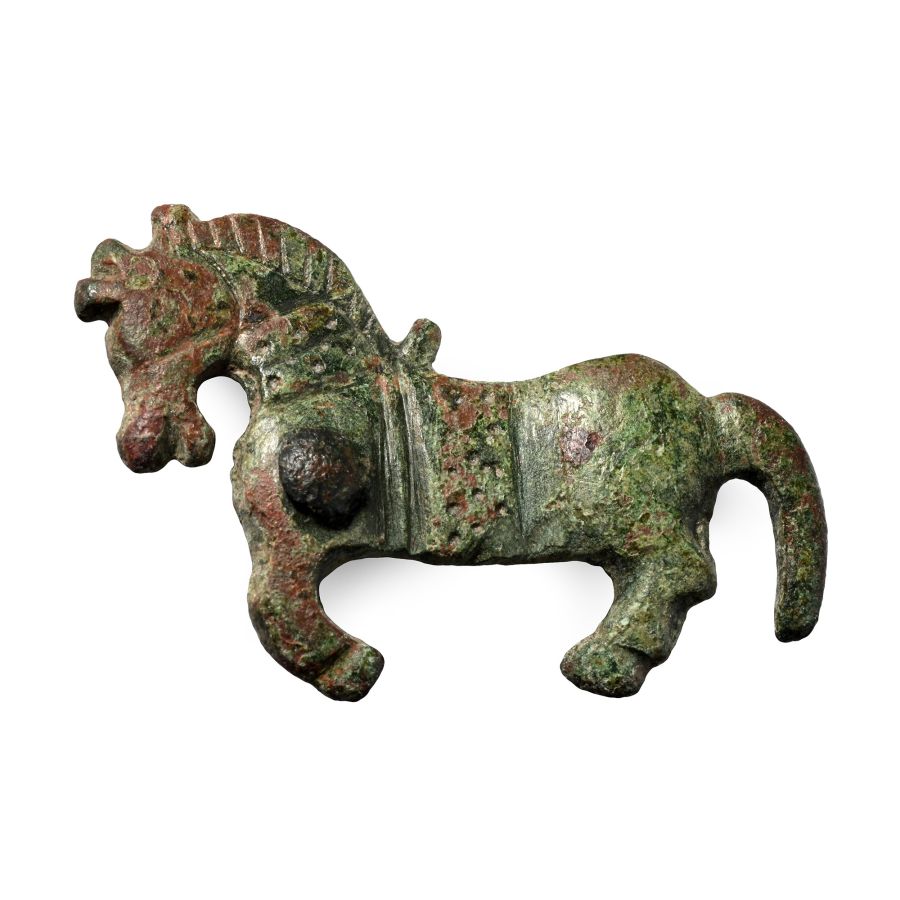
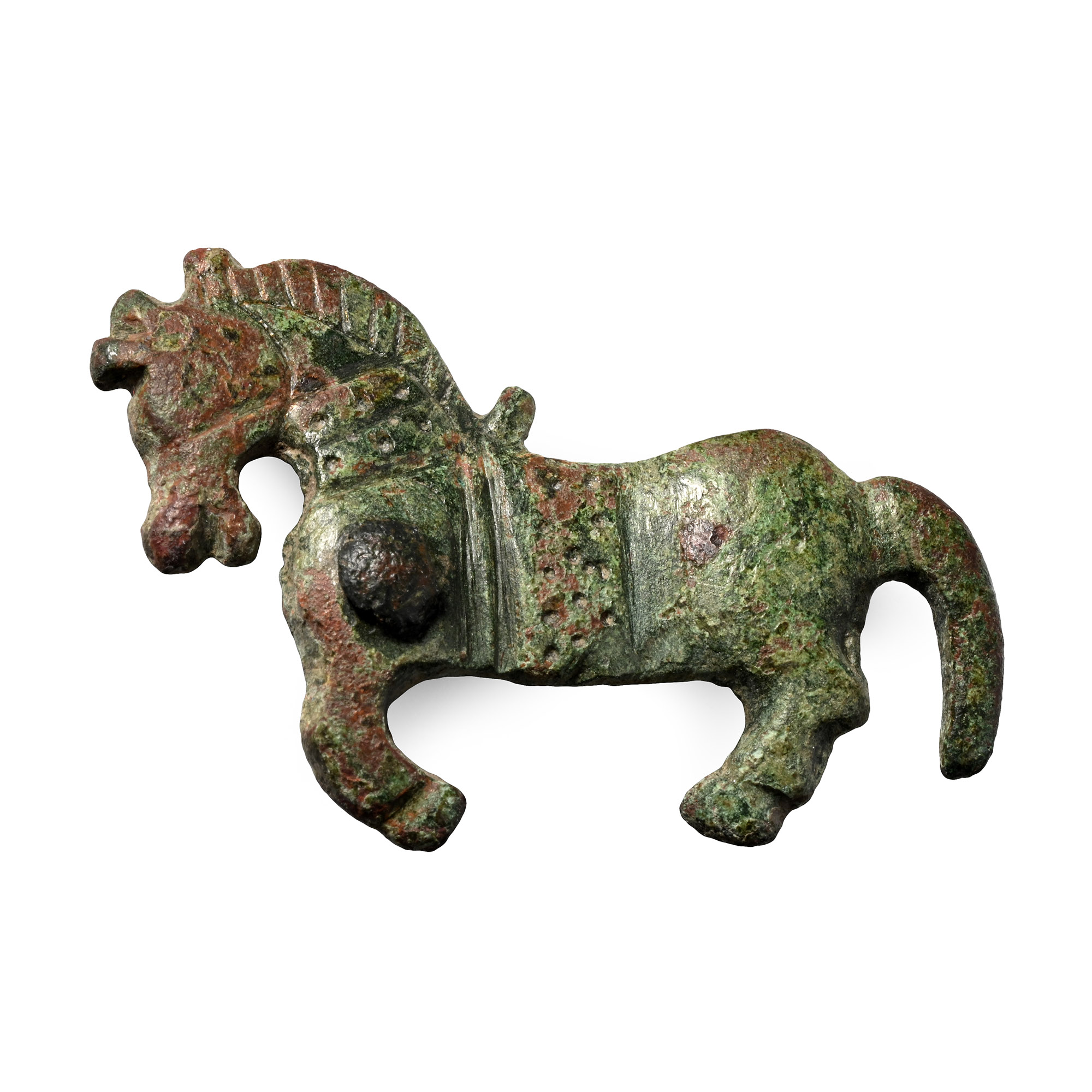
Roman Bronze Horse Plate Brooch
2ND-3RD CENTURY A.D.
1 5/8 in. (12.7 grams, 42 mm).
Formed as a caparisoned horse with curved neck and legs, punched detailing on the saddle and neck halter, and three pierced lugs on the reverse. [No Reserve]
ProvenanceFrom the private coin collection of a West London, UK, gentleman, formed since the mid 1980s.
CONDITIONTimeLine Auctions follows a vetting process to ensure the authenticity and legality of all items, reinforcing our commitment to integrity and responsible trading. Each antiquity, antique, and coin lot undergoes thorough examination by a vetting committee of at least ten external specialists, professional trade association members, scientists, and archaeologists: Our Vetting Process
AUCTIONS:
TimeLine is a leading auction house specialising in antiquities, ancient art, collectables, natural history, coins, medals, and books. Our auctions offer museums, collectors, historians, and enthusiasts the opportunity to acquire unique and historically significant pieces.
-
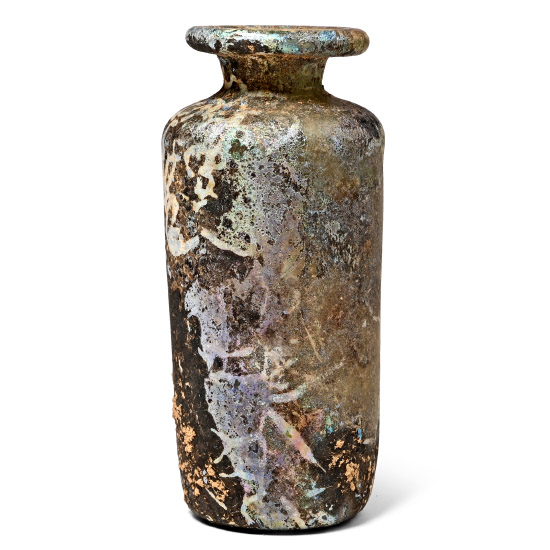
Roman Iridescent Glass Storage Vessel
2nd century A.D.Sold for (Inc. bp): £260
Tubular body with a narrow neck and a thick rim, dimple base. 30 grams, 94 mm
Acquired in the 1990s from London dealerships and auction houses. From the Lonson collection. -
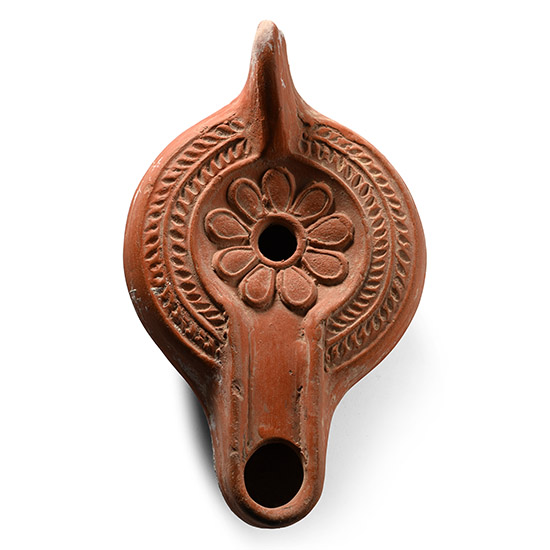
Late Roman Terracotta Oil Lamp with Nine-Petalled Flower
5th-6th century A.D.Sold for (Inc. bp): £247
Comprising a shallow discus with a wreath on the shoulder, a central nine-petalled flower surrounding the filler hole, a long nozzle with raised sides, a lug handle to the rear, and a raised basal ring. 158 grams, 13.4 cm
By descent to the son of a late Hertfordshire gentleman collector, whose collection was formed from the 1960s. -
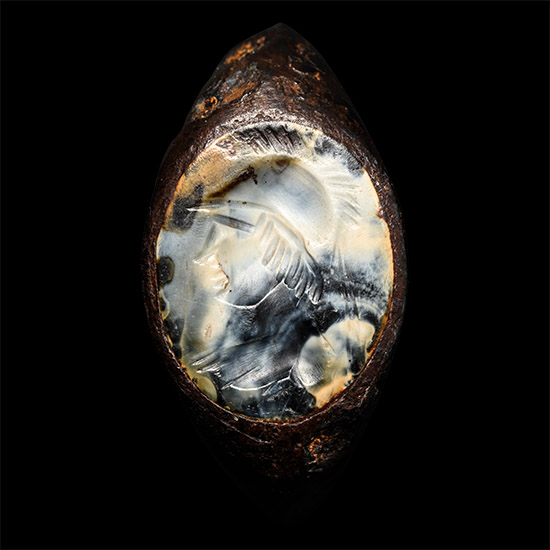
Roman Imperial Military Iron Ring with Burnt Agate Gemstone with a Helmetted Warrior
1st century A.D.Sold for (Inc. bp): £572
Comprising a slender D-section hoop expanding at the shoulders, oval bezel set with an intaglio of a young soldier wearing a crested helmet, either Minerva or Roma. 6.30 grams, 25.14 mm overall, 19.63 x 16.97 mm internal diameter (approximate size British P, USA 7 1/2, Europe 16.23, Japan 15)
UK private collection, acquired on the English market in the 2000s.
