
Loading, please wait...
LOT 0881
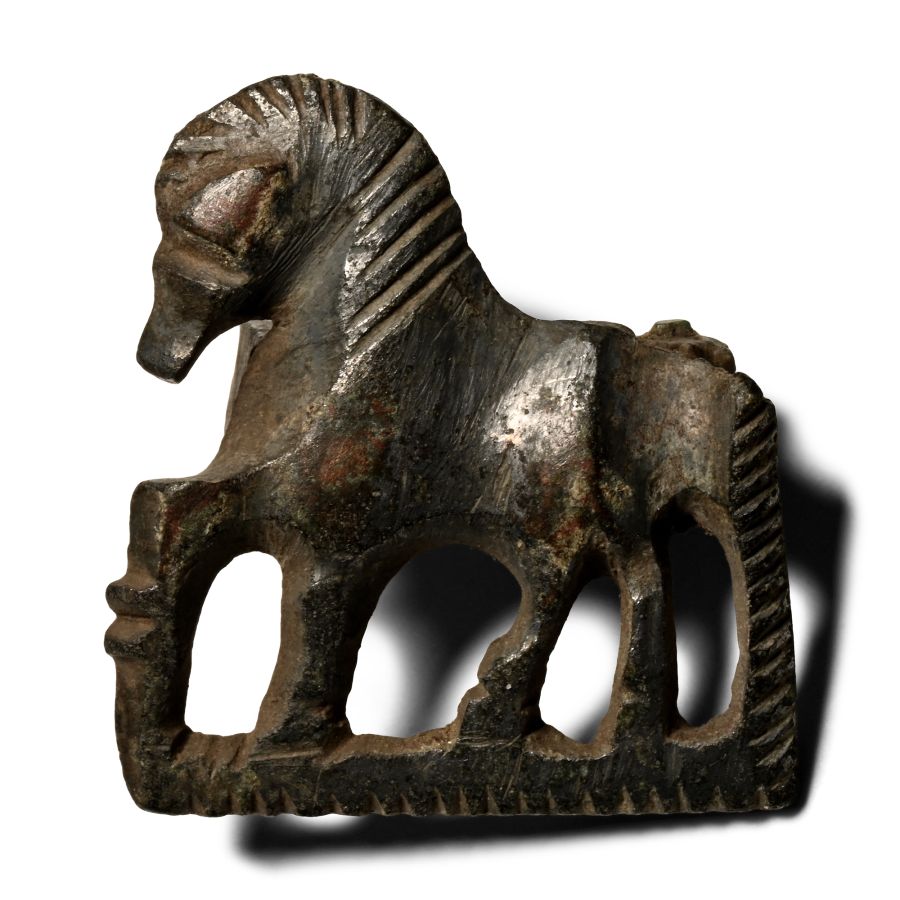
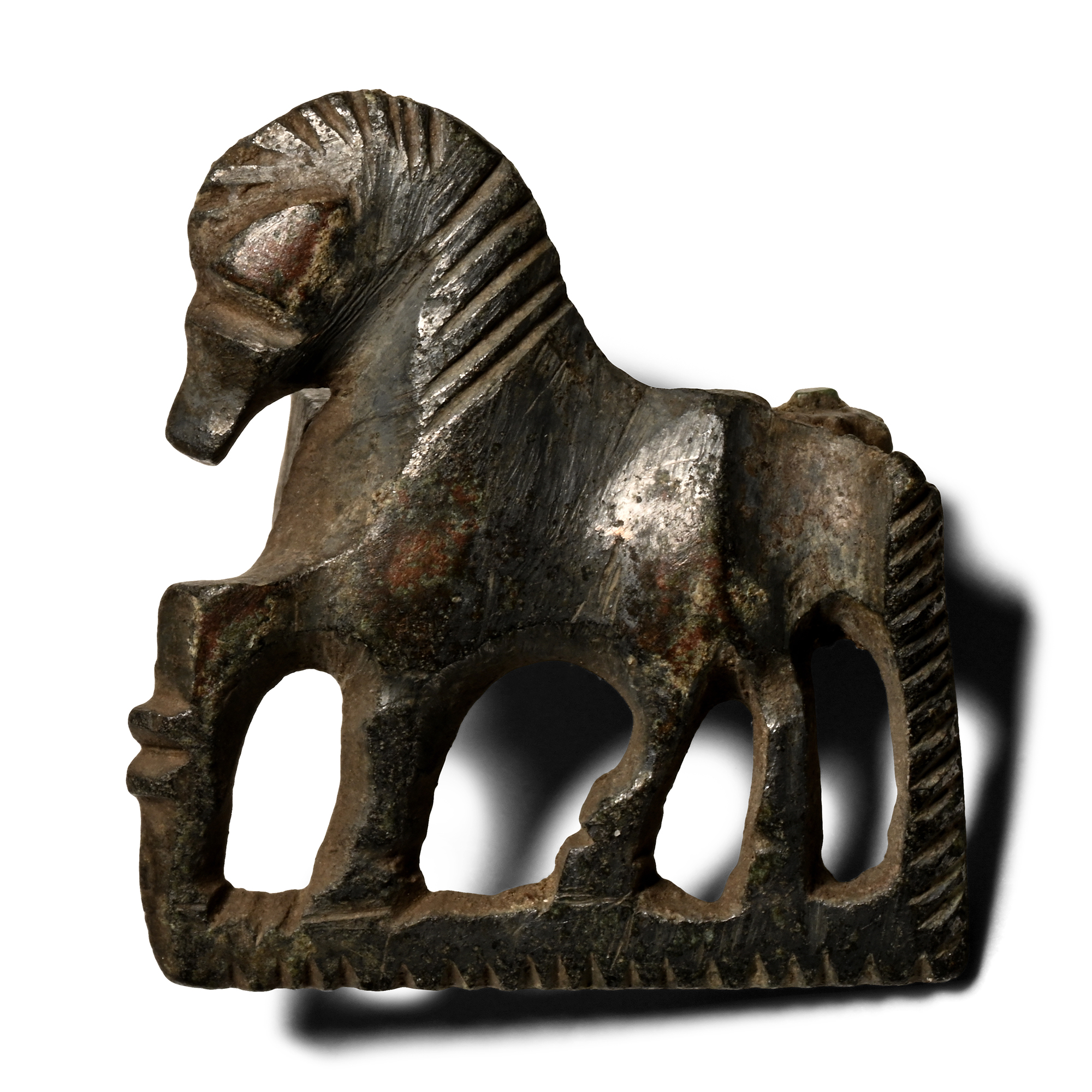
Roman Bronze Horse Plate Brooch
CIRCA 2ND CENTURY A.D.
1 3/8 in. (15.2 grams, 34 mm).
Modelled as a prancing horse with its foreleg raised, mane and tail indicated by diagonal striations; pin and catchplate on the reverse.
ProvenanceEx German art market, 2000s.
Acquired from an EU collector living in London.
From the collection of a Surrey, UK, gentleman.
TimeLine Auctions follows a vetting process to ensure the authenticity and legality of all items, reinforcing our commitment to integrity and responsible trading. Each antiquity, antique, and coin lot undergoes thorough examination by a vetting committee of at least ten external specialists, professional trade association members, scientists, and archaeologists: Our Vetting Process
AUCTIONS:
TimeLine is a leading auction house specialising in antiquities, ancient art, collectables, natural history, coins, medals, and books. Our auctions offer museums, collectors, historians, and enthusiasts the opportunity to acquire unique and historically significant pieces.
-
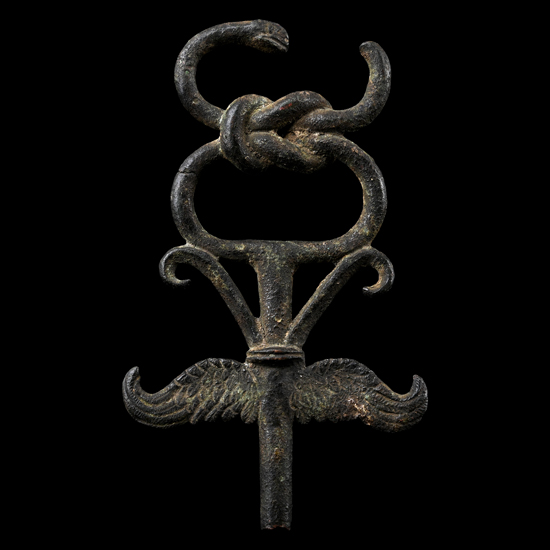
'The Colchester' Roman Bronze Caduceus Sceptre Finial
1st-4th century A.D.Sold for (Inc. bp): £585
Monofacial openwork finial formed as a serpent entwined and knotted above a pair of spread wings; from a large statue of Mercury (Hermes). 77 grams, 10.7 cm
Found in Colchester in the 1960s. From a late gentleman archaeologist’s collection, thence by family descent. -
.jpg)
Roman Carnelian Gemstone with Panther in Gold Ring
1st-2nd century A.D. and laterSold for (Inc. bp): £4,160
Ellipsoid cabochon with intaglio scene of a panther resting with forepaws extended beside a rocky outcrop with a frond extending above, thyrsus behind the shoulders; mounted in a later gold ring; supplied with a museum-quality impression. 13.72 grams, 33.34 mm overall, 16.97 mm internal diameter (approximate size British M 1/2, USA 6 1/4, Europe 13.09, Japan 12)
From the private collection of a European gentleman (1942-2024), formed since the 1970s. -
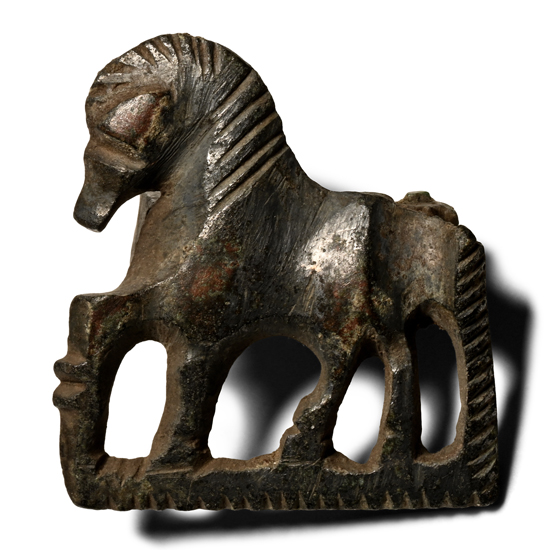
Roman Bronze Horse Plate Brooch
Circa 2nd century A.D.Sold for (Inc. bp): £140
Modelled as a prancing horse with its foreleg raised, mane and tail indicated by diagonal striations; pin and catchplate on the reverse. 15.2 grams, 34 mm
Ex German art market, 2000s. Acquired from an EU collector living in London. From the collection of a Surrey, UK, gentleman.
