Loading, please wait...

Use mousewheel to zoom in and out, click to enlarge

Details

LOT 0592

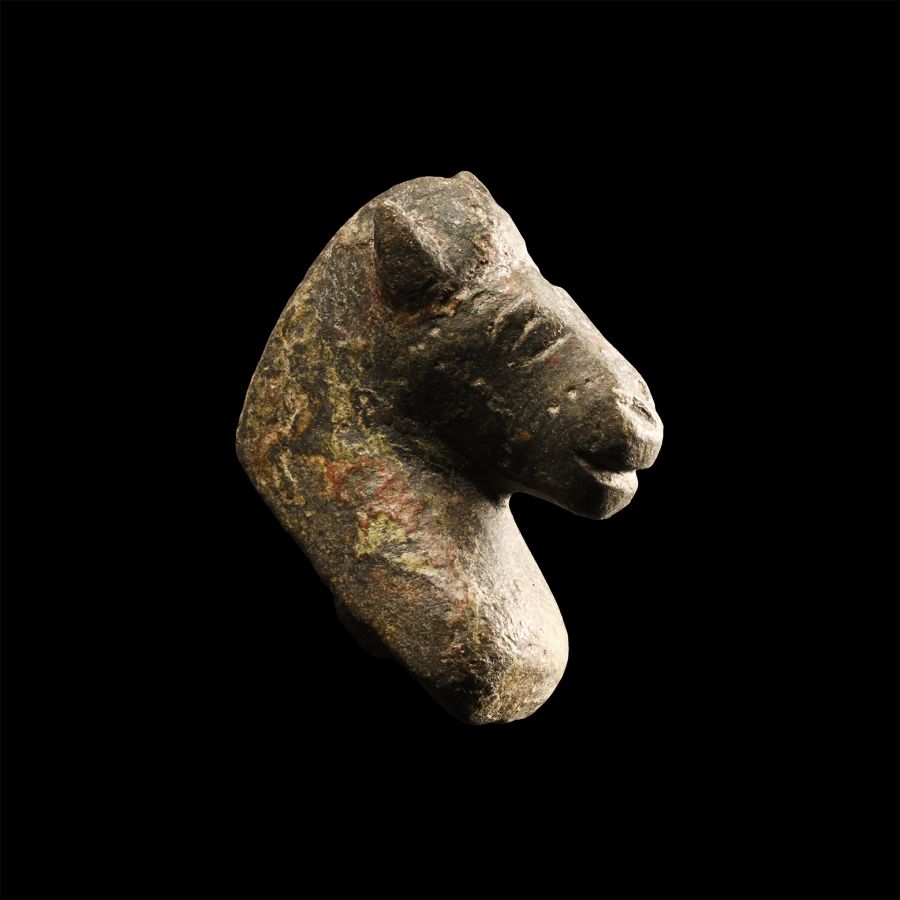
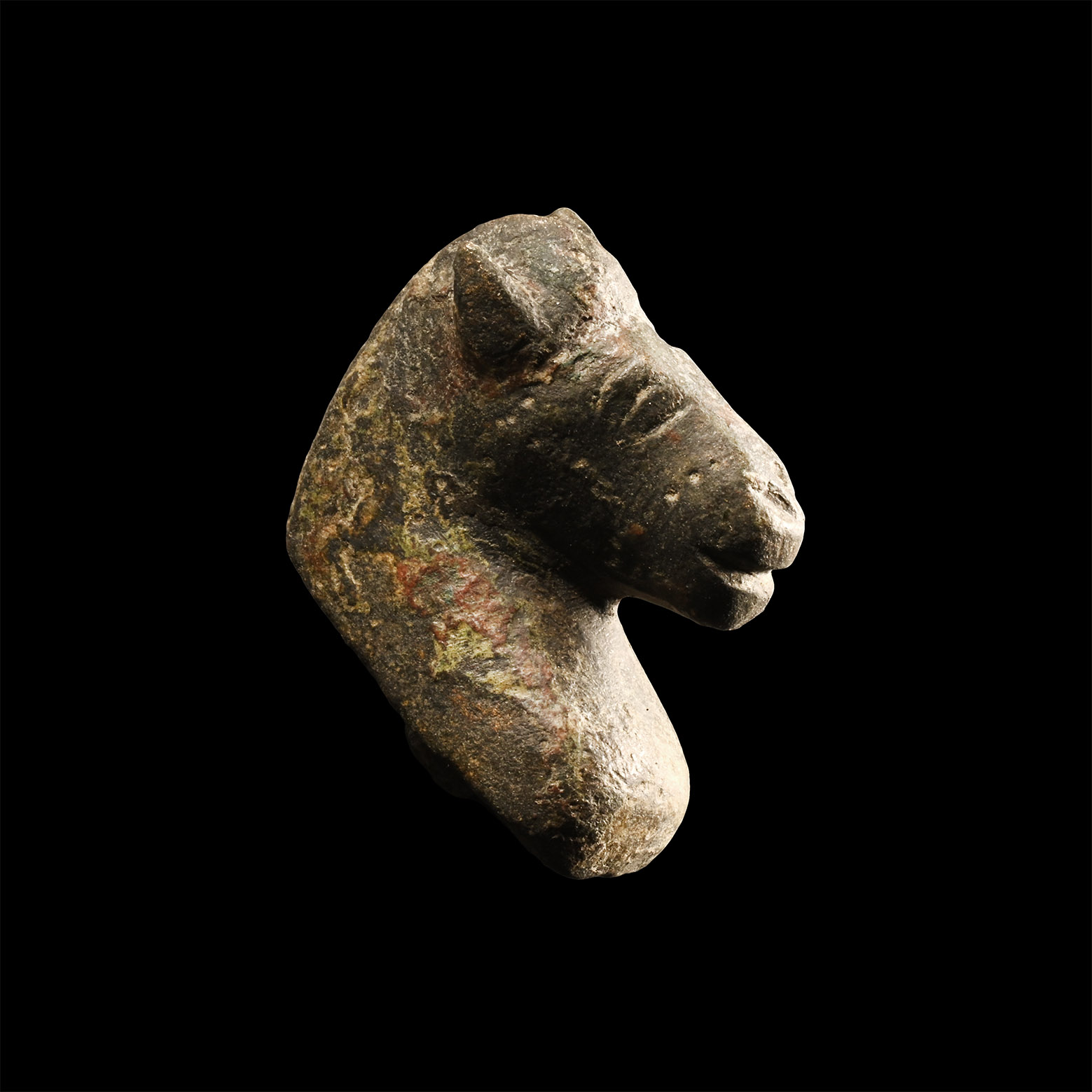
Roman Bronze Horse Head Protome

1ST-4TH CENTURY A.D.

1 in. (24 grams, 25 mm).

Modelled with naturalistic detailing with signs of attachment.

Provenance

‘The Ancient Menagerie Collection’ formerly the property of a Cambridgeshire lady, collected since the 1990s and acquired from auctions and dealers throughout Europe and the USA, now ex London collection.

CONDITION

VETTING:

TimeLine Auctions follows a vetting process to ensure the authenticity and legality of all items, reinforcing our commitment to integrity and responsible trading. Each antiquity, antique, and coin lot undergoes thorough examination by a vetting committee of at least ten external specialists, professional trade association members, scientists, and archaeologists: Our Vetting Process


AUCTIONS:

TimeLine is a leading auction house specialising in antiquities, ancient art, collectables, natural history, coins, medals, and books. Our auctions offer museums, collectors, historians, and enthusiasts the opportunity to acquire unique and historically significant pieces.

LOT 0592

Roman Bronze Horse Head Protome

Sold for (Inc. bp): £91

Print page

RELATED LOTS

  • Roman Redware Sherd with Venator Gladiator
    Roman Redware Sherd with Venator Gladiator
    4th century A.D.

    Sold for (Inc. bp): £91

    The fighting venator dressed in a long sleeved tunic embroidered with orbiculi and pectorarin, segmenta on the sleeves, brandishing a javelin of venabulum type; suspension loop to the reverse. 18 grams, 70 mm


    Acquired 1960s-1990s. From the late Alison Barker collection, a retired London barrister.

    The combat scene is likely a reference to the gladiatorial fights between men and animals; such games in the arena were a principal form of entertainment through the Roman Republic and Roman Empire. Both men and women would partake in such fights. The venatores (hunters) were the most specialised in this field, fighting with a spear with winged blades and long knives (culter venatorius).

    Lot Details

  • Roman Gold Ring with Gem Depicting Alexander the Great Hunting
    Roman Gold Ring with Gem Depicting Alexander the Great Hunting
    3rd century A.D.

    Estimate: £30,000 - 40,000 (+bp*)

    Opening Bid: £16,667

    Composed of a large openwork hoop and bezel set with a jasper gemstone, intaglio image of a mounted cavalryman wearing a high-crested pseudo Corinthian helmet and holding a barbed javelin in his hand, protecting his horse from the leaping lion attacking from the rear, a tree behind. 33.97 grams, 31.98 mm overall, 20.67 mm internal diameter (approximate size British T, USA 9 1/2, Europe 21.26, Japan 20)


    Acquired on the New York art market in 1995. Ex French collection. with Christie's, London, 25th April 2007, lot 187. Important North West London collection. Accompanied by a copy of a French cultural passport no.079872. Accompanied by an academic report by Dr Raffaele D'Amato. This lot has been checked against the Interpol Database of stolen works of art and is accompanied by a search certificate number no.11775-204565.

    The massive size, shape and the volute decoration is typical of the 3rd century A.D. and similar rings are visible in the collections of the British Museum and Mainz State Museum. The subject of the intaglio is made with great skill, exquisite artistry and engraved in fine detail. The lion hunt theme is typical of the Hellenistic world since the time of Alexander the Great.

    Lot Details

  • Roman Bronze Bracelet Group
    Roman Bronze Bracelet Group
    1st-4th century A.D.

    Sold for (Inc. bp): £117

    Comprising five with round-section bodies and squared terminals; the surfaces decorated with engraved lines and dots. 73 grams total, 63-66 mm


    From the family collection of a Surrey gentleman since before 1960.

    Bracelets were worn in Rome by ladies of rank, but it was considered a mark of effeminacy for civilian men to use such female ornaments (Suetonius, Caligula, 52; Nero, 30). The armillae (or psellia in Greek) were rings and bracelets worn by women in the Graeco-Roman world on both legs and arms. Homer mentions them (elikas) as being part of the hairstyle of the divine Aphrodite, thus giving an almost sacred character to these objects. There were different types, the most common consisting of a more or less thick metal wire, or a flat or cylindrical circle, like our examples.

    Lot Details

Stay up-to-date with the latest from TimeLine Auctions by joining our mailing list