
Loading, please wait...
LOT 0885
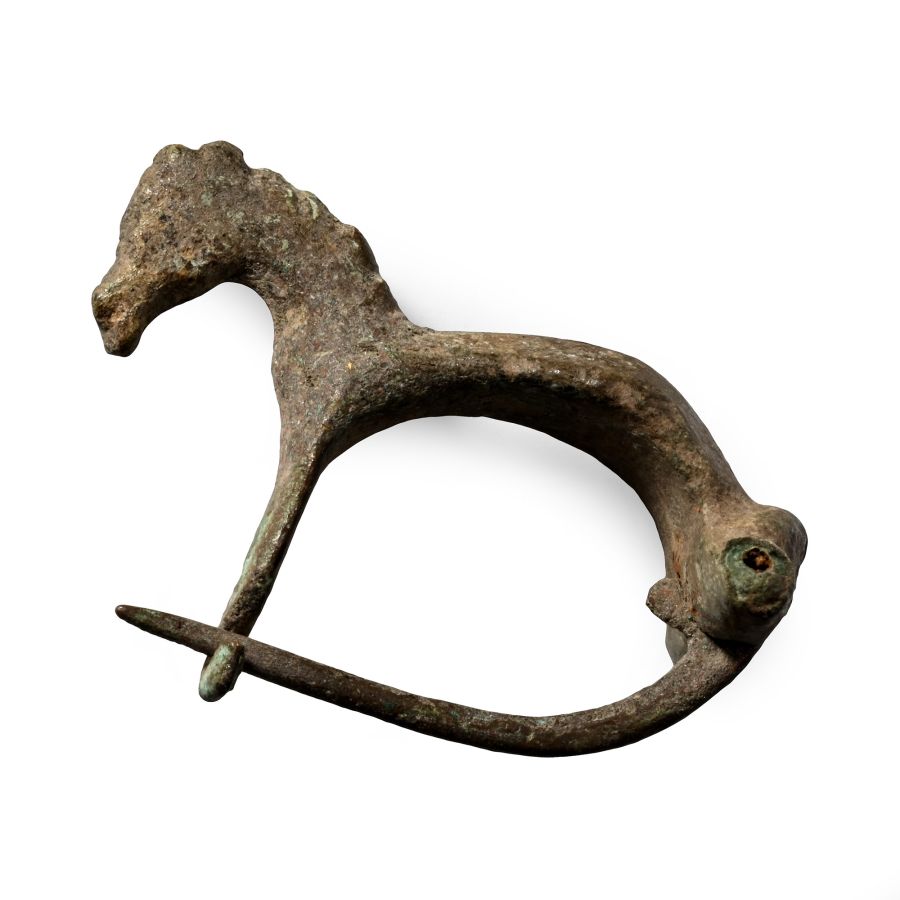
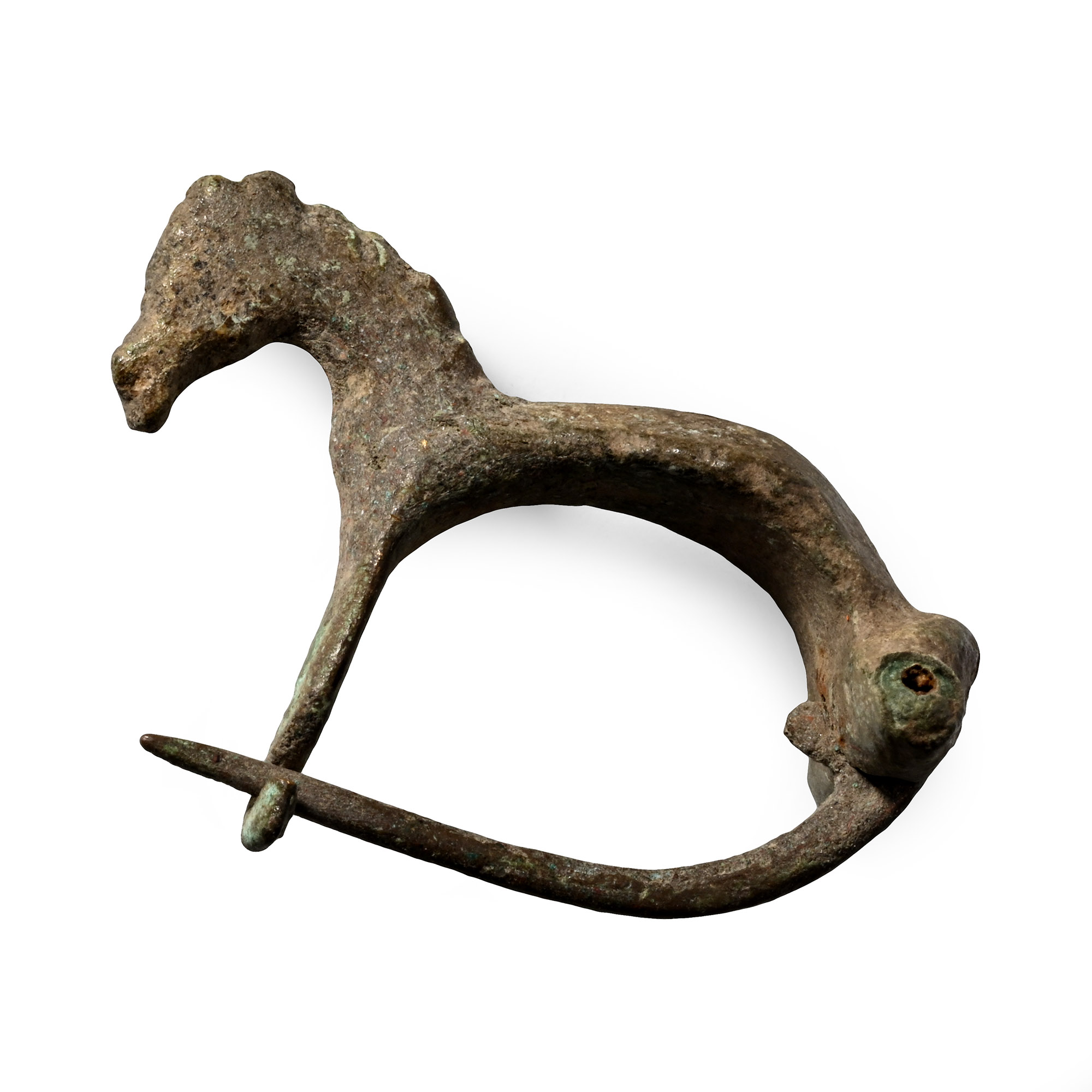
Roman Bronze Horse Brooch
CIRCA 2ND CENTURY A.D.
1 3/8 in. (6.56 grams, 34 mm).
Formed as a standing horse, the hind legs forming a crossbar, the forelegs forming a catchplate, and linear detailing to the mane. [No Reserve]
ProvenanceFrom the private coin collection of a West London, UK, gentleman, formed since the mid 1980s.
LiteratureCf. Hattatt, R., Ancient Brooches and Other Artefacts, Oxford, 1989, item 1644.
CONDITIONTimeLine Auctions follows a vetting process to ensure the authenticity and legality of all items, reinforcing our commitment to integrity and responsible trading. Each antiquity, antique, and coin lot undergoes thorough examination by a vetting committee of at least ten external specialists, professional trade association members, scientists, and archaeologists: Our Vetting Process
AUCTIONS:
TimeLine is a leading auction house specialising in antiquities, ancient art, collectables, natural history, coins, medals, and books. Our auctions offer museums, collectors, historians, and enthusiasts the opportunity to acquire unique and historically significant pieces.
-
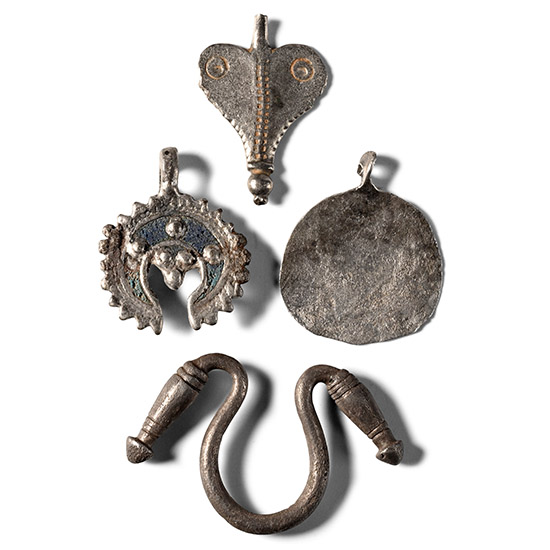
Roman to Migration Period Silver Pendant Group
1st-8th century A.D.Sold for (Inc. bp): £169
Including a vineleaf with knop finial, recurved helmet-handle type and others. 7.78 grams total, 22-32 mm
Ex German art market, 2000s. Acquired from an EU collector living in London. From the collection of a Surrey, UK, gentleman. -
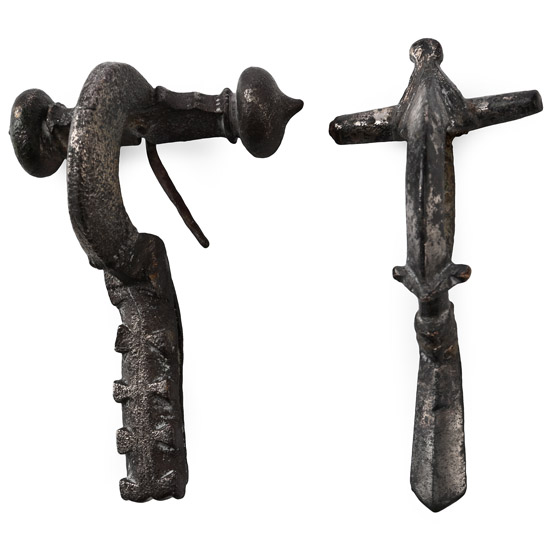
Roman Silvered Bronze Crossbow Brooch Group
4th century A.D.Estimate: £100 - 140 (+bp*)
Current Winning Bid: £60
Comprising two crossbow brooches, each with a keeled bow and flaring foot, both with a partial pin and integral catch beneath the footplate. 64.9 grams total, 62-66 mm
From an Essex collection. Private collection, Suffolk. -
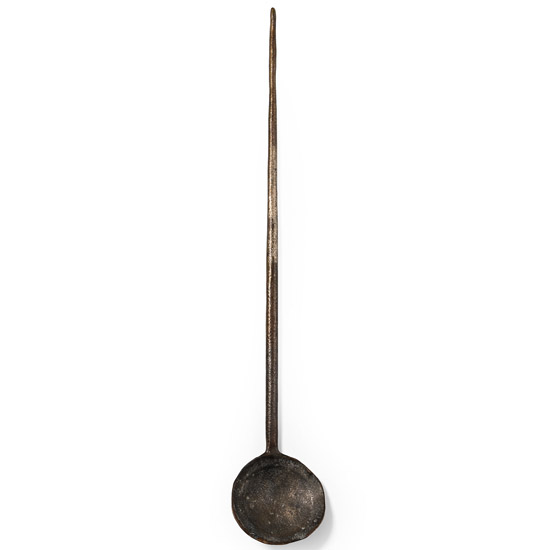
Roman Tinned Bronze Cochlear Spoon
Circa 2nd-3rd century A.D.Sold for (Inc. bp): £130
Featuring a long, pointed handle and a round bowl. 6.91 grams, 13.5 cm
From the private collection of a South London, UK, gentleman, formed since the early 1970s; thence by descent 2006.
