
Loading, please wait...
LOT 0730
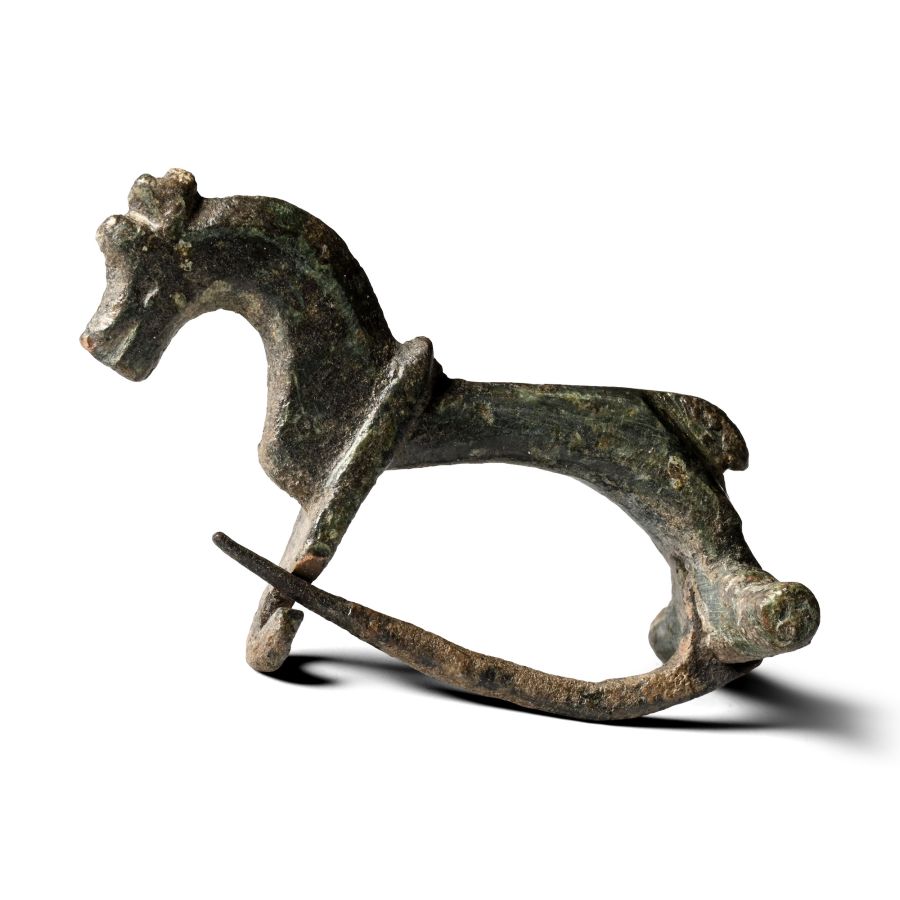
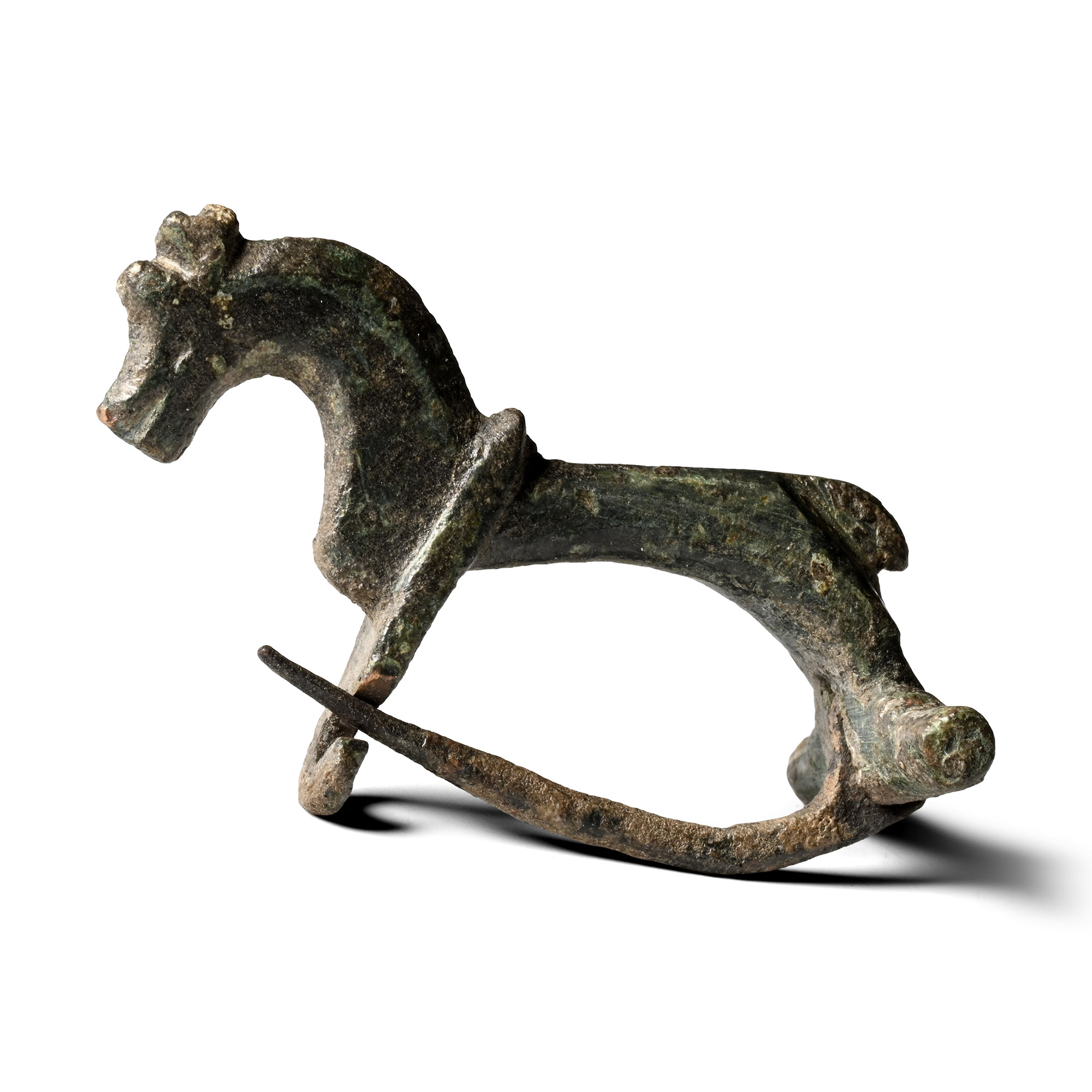
Roman Bronze Horse Brooch
2ND-3RD CENTURY A.D.
1 3/4 in. (14.4 grams, 46 mm).
Formed as a standing horse with an arched neck, the front legs forming the pin-catch.
ProvenanceEx German art market, 2000s.
Acquired from an EU collector living in London.
From the collection of a Surrey, UK, gentleman.
TimeLine Auctions follows a vetting process to ensure the authenticity and legality of all items, reinforcing our commitment to integrity and responsible trading. Each antiquity, antique, and coin lot undergoes thorough examination by a vetting committee of at least ten external specialists, professional trade association members, scientists, and archaeologists: Our Vetting Process
AUCTIONS:
TimeLine is a leading auction house specialising in antiquities, ancient art, collectables, natural history, coins, medals, and books. Our auctions offer museums, collectors, historians, and enthusiasts the opportunity to acquire unique and historically significant pieces.
-
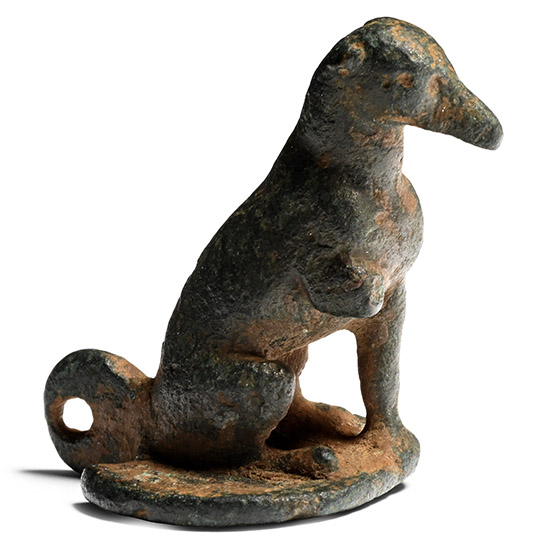
Roman Bronze Sitting Dog Lamp Lid
1st-2nd century A.D.Sold for (Inc. bp): £130
The hound sitting on a flat lid with a loop to the rear, muscular body and a long, slender snout, right front leg raised (now absent). 48.1 grams, 39 mm
Ex German art market, 2000s. Acquired from an EU collector living in London. From the collection of a Surrey, UK, gentleman. -
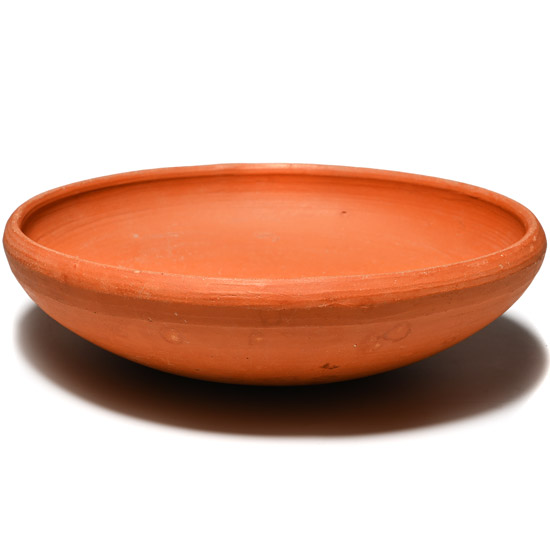
Roman Red Ware Bowl
3rd-4th century A.D.Sold for (Inc. bp): £124
Broad and squat in profile with inturned rim and external carination. 410 grams, 16.7 cm wide
From the collection of David Donlan (1947-2025), a dedicated and lifelong collector with a passion for the ancient world and the natural sciences, forming his collection from 1960s onwards, using many reputable dealers across the United Kingdom, including the well-regarded Coincraft and The Parthenon Gallery. -
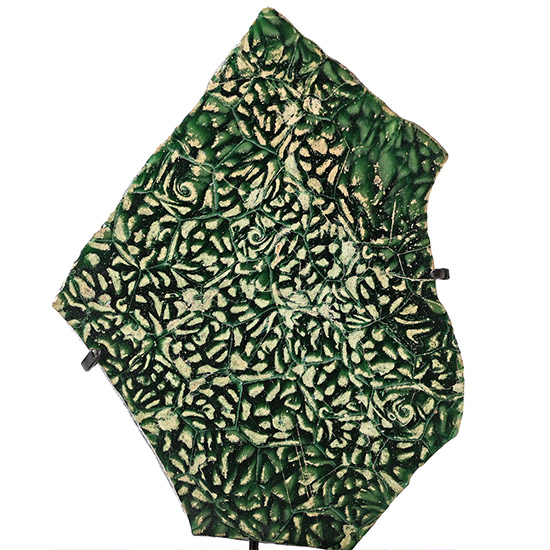
Large Roman Green Mosaic Glass Fragment
Late 1st century B.C.-early 1st century A.D.Estimate: £2,000 - 3,000 (+bp*)
Opening Bid: £1,000
Green glass with white swirls and petals, accompanied by a custom-made display stand. 208 grams, 16 cm (465 gram total including stand)
Dr Jutaro Kawabe, Nagoya, Japan, assembled during the 1960s-1980s. with Hoshigaoka Gallery until the late 1990s. This lot has been checked against the Interpol Database of stolen works of art and is accompanied by search certificate number no.13093-248078.
The decoration is well documented in the Eastern Roman Empire, especially the Syro-Palestinian coast. The most frequently occurring colour in these glass mosaics is opaque red, but green and blue tints are not uncommon.
