
Loading, please wait...
LOT 0739
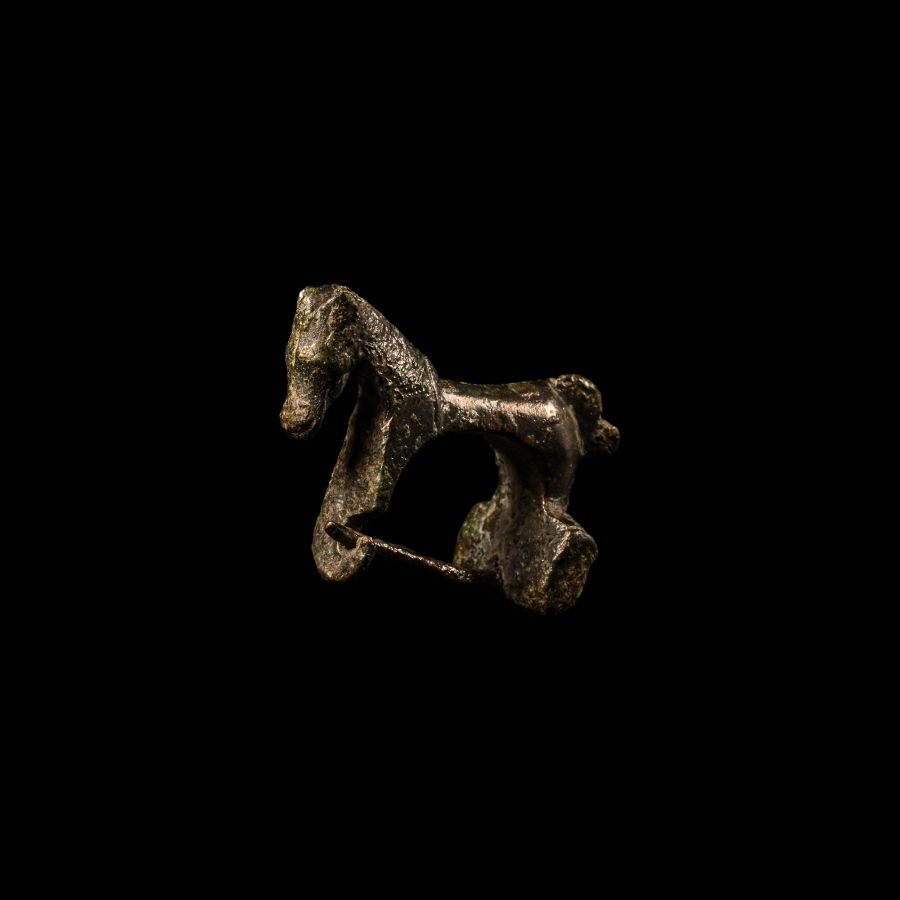
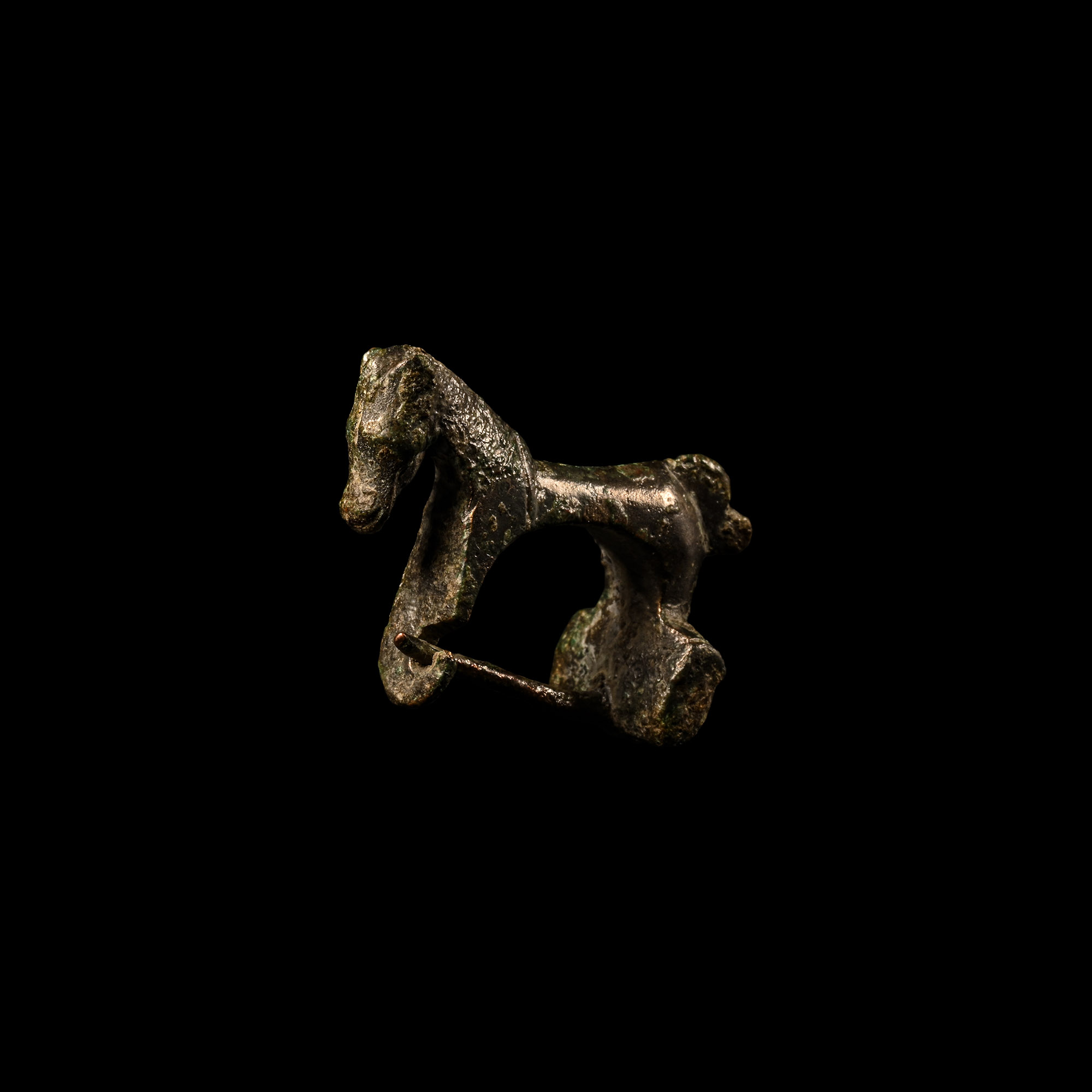
Roman Bronze Horse Brooch
CIRCA 2ND CENTURY A.D.
1 1/4 in. (10.8 grams, 31 mm).
Modelled in the round, the neck with small engraved lines indicating mane, narrow body, short tail, the forelegs forming the pin’s catch. [No Reserve]
ProvenanceAcquired on the UK art market.
Property of a Ruislip, UK, gentleman, by inheritance.
Cf. Hattatt, R., Ancient Brooches and Other Artefacts, Oxford, 1989, item 1643; a similar horse (with rider) in Melchart, W., Antike Kostbarkeiten aus Osterreichischem privatbesitz, Wien, 1997, fig.40.
FootnotesThe style of the animal is typical of the Pannonian area. It is different from similar fibulae in the western part of the empire, where there is more suggestion of movement. However, in general the head and body are modelled with realism, and the forelegs are acting as a wide flat catch-plate.
CONDITIONTimeLine Auctions follows a vetting process to ensure the authenticity and legality of all items, reinforcing our commitment to integrity and responsible trading. Each antiquity, antique, and coin lot undergoes thorough examination by a vetting committee of at least ten external specialists, professional trade association members, scientists, and archaeologists: Our Vetting Process
AUCTIONS:
TimeLine is a leading auction house specialising in antiquities, ancient art, collectables, natural history, coins, medals, and books. Our auctions offer museums, collectors, historians, and enthusiasts the opportunity to acquire unique and historically significant pieces.
-
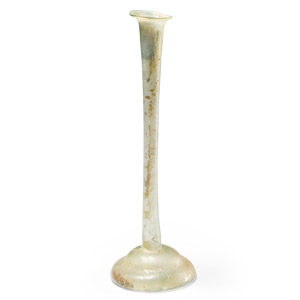
Roman Glass Candlestick Unguentarium
2nd-3rd century A.D.Sold for (Inc. bp): £143
Tall thin translucent pale green vessel with wide base and flared rim. 15 grams, 15.5 cm high
Acquired 1980-2015. Ex Abelita family collection. -
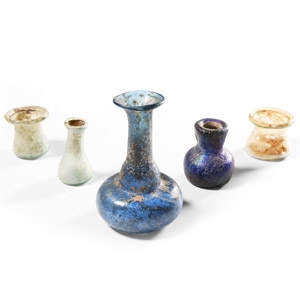
Roman Glass Vessel Collection
1st-4th century A.D. and laterSold for (Inc. bp): £286
Comprising various types including bottles and flasks in blue and pale green. 32 grams total, 21-57 mm
Acquired 1970s-1996. Property of a North American collector. London collection, 2016. -
.jpg)
Roman Bronze-Handled Key with Panther
1st-4th century A.D.Estimate: £600 - 800 (+bp*)
Opening Bid: £300
The bronze handle modelled as the forequarters of a panther leaping from a crown of fronds, with stylised facial detailing; iron stem, bit and wards. 74 grams, 77 mm
Acquired on the German art market around 2000s. From the collection of an EU gentleman living in the UK.
