
Loading, please wait...
LOT 0724
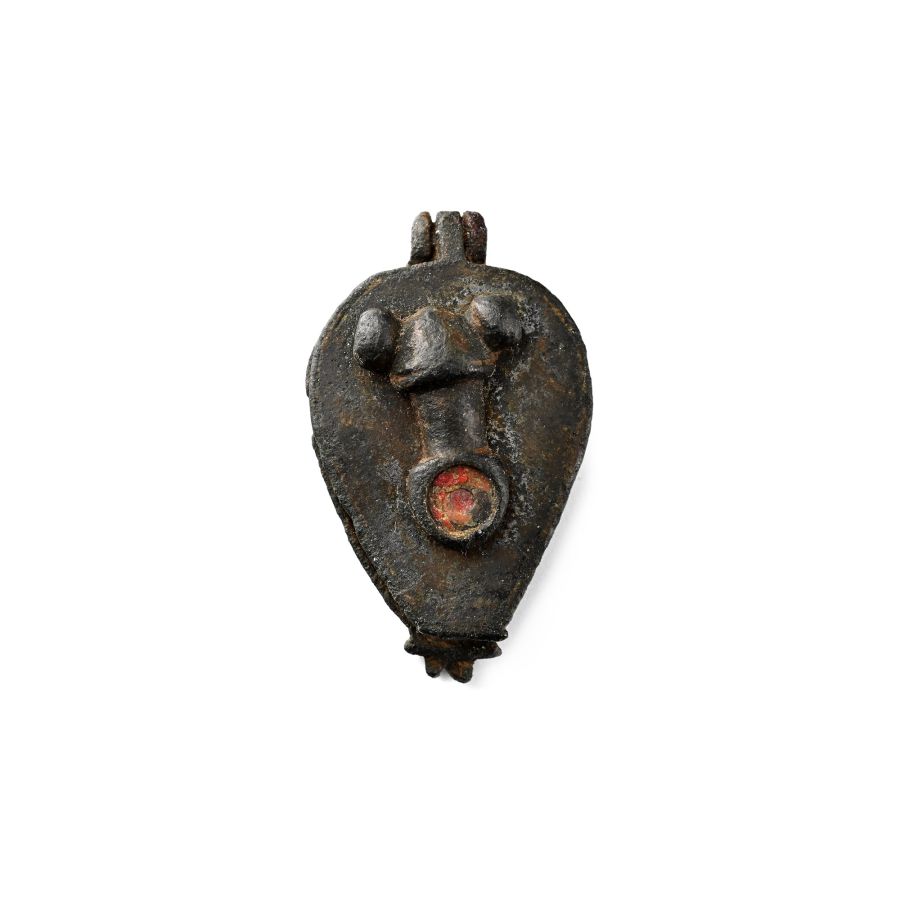
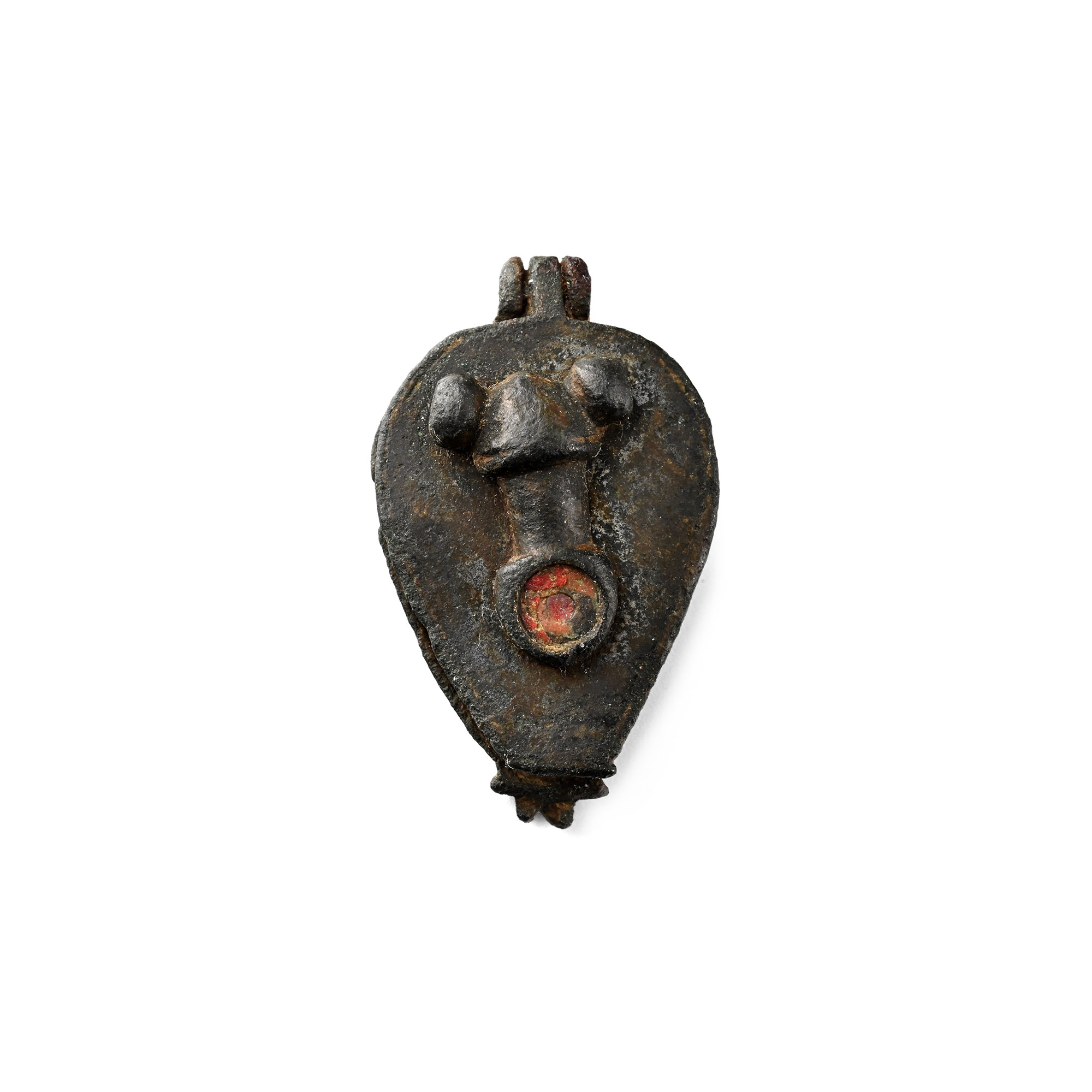
Roman Bronze Hinged Seal Box with Phallus
2ND-3RD CENTURY A.D.
1 1/4 in. (8.3 grams, 32 mm).
Teardrop-shaped in plan with three holes to underside, enamelled phallus to lid. [No Reserve]
ProvenanceAcquired on the UK art market during the late 20th century.
From the private collection of David King (1940-2024), Hoddesdon, Hertfordshire, UK.
This lot is accompanied by an illustrated lot declaration signed by the Head of the Antiquities Department, Dr Raffaele D'Amato.
TimeLine Auctions follows a vetting process to ensure the authenticity and legality of all items, reinforcing our commitment to integrity and responsible trading. Each antiquity, antique, and coin lot undergoes thorough examination by a vetting committee of at least ten external specialists, professional trade association members, scientists, and archaeologists: Our Vetting Process
AUCTIONS:
TimeLine is a leading auction house specialising in antiquities, ancient art, collectables, natural history, coins, medals, and books. Our auctions offer museums, collectors, historians, and enthusiasts the opportunity to acquire unique and historically significant pieces.
-
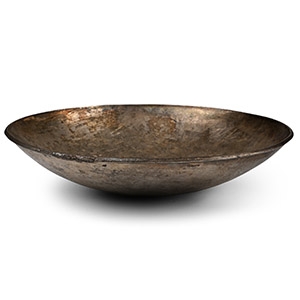
Romano-Gandharan Silver Phiale with Pointille Karoshti Inscription
1st century B.C.-1st century A.D.Sold for (Inc. bp): £2,860
Broad dished body with carinated rim; legend to the exterior rim, the inscription meaning '(Property) of Virghosa, sadera 15, drachma 2, dhanea 3, a(NDikA)2.' 281 grams, 20.7 cm wide
Acquired from a private UK collection prior to 1979. Ex Julian Sherrier collection, a leading figure in Gandharan art. Ex Christie's, New York, 14th September 2010, no.35 (part). This lot has been cleared against the Art Loss Register database, and is accompanied by an illustrated lot declaration signed by the Head of the Antiquities Department, Dr Raffaele D'Amato. -
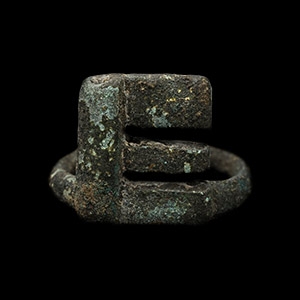
Roman Bronze Key Ring
1st-4th century A.D.Sold for (Inc. bp): £65
Comprising a narrow hoop, rectangular bezel with flange cut with teeth, tubular frame to rear. 5.68 grams, 23.55 mm
Acquired on the European art market in the 1990s. From the collection of G.M.R.H., London, UK. This lot is accompanied by an illustrated lot declaration signed by the Head of the Antiquities Department, Dr Raffaele D'Amato. -
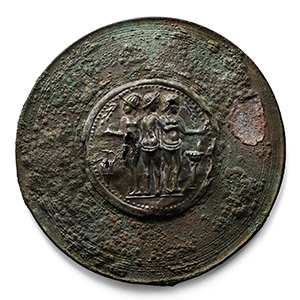
Large Roman Bronze Mirror with Three Graces Silver Plaque
1st-4th century A.D.Sold for (Inc. bp): £650
Discoid in plan with raised rim and concentric rings; central applied sheet-silver plaque with three standing females between a jug and a bowl, each on a stand; pelletted rim. 497 grams, 16.6 cm
Ex German art market, 2000s. Acquired from an EU collector living in London. From the collection of a Surrey, UK, gentleman. This lot is accompanied by an illustrated lot declaration signed by the Head of the Antiquities Department, Dr Raffaele D'Amato.
