
Loading, please wait...
LOT 0557
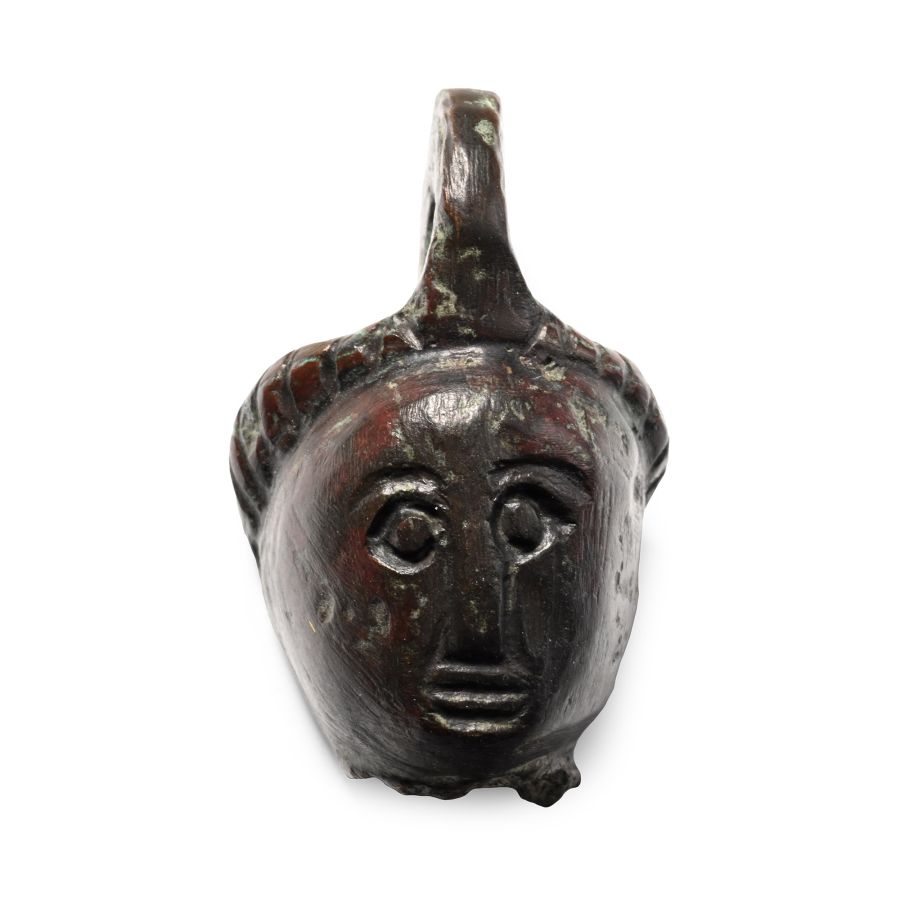
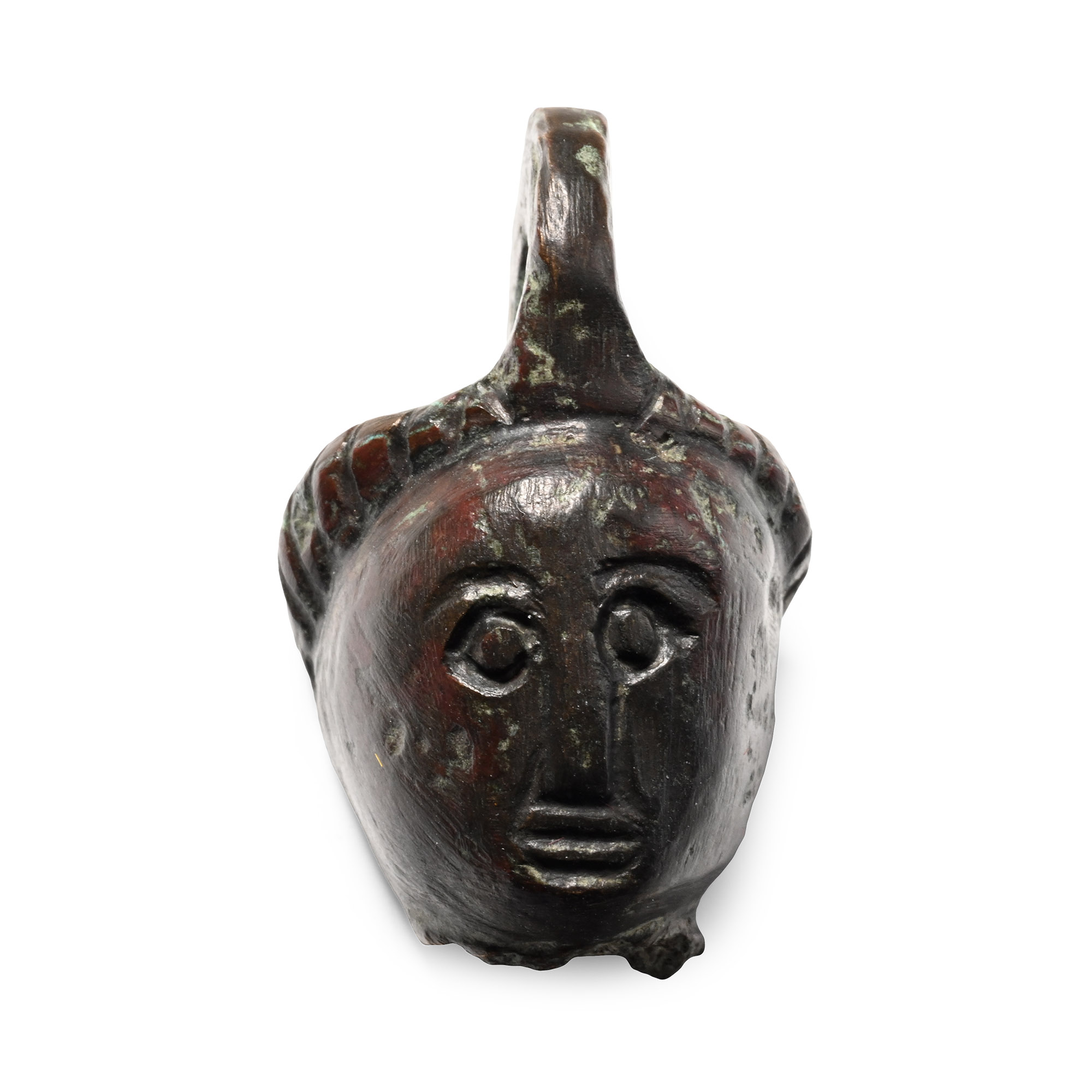
Roman Bronze Head Pendant
4TH CENTURY A.D.
1 1/4 in. (26.1 grams, 33 mm).
Modelled as a stylised face with annular eyes and a slit mouth, convex to the reverse, with a large loop above. [No Reserve]
ProvenanceFrom the private coin collection of a West London, UK, gentleman, formed since the mid 1980s.
CONDITIONTimeLine Auctions follows a vetting process to ensure the authenticity and legality of all items, reinforcing our commitment to integrity and responsible trading. Each antiquity, antique, and coin lot undergoes thorough examination by a vetting committee of at least ten external specialists, professional trade association members, scientists, and archaeologists: Our Vetting Process
AUCTIONS:
TimeLine is a leading auction house specialising in antiquities, ancient art, collectables, natural history, coins, medals, and books. Our auctions offer museums, collectors, historians, and enthusiasts the opportunity to acquire unique and historically significant pieces.
-
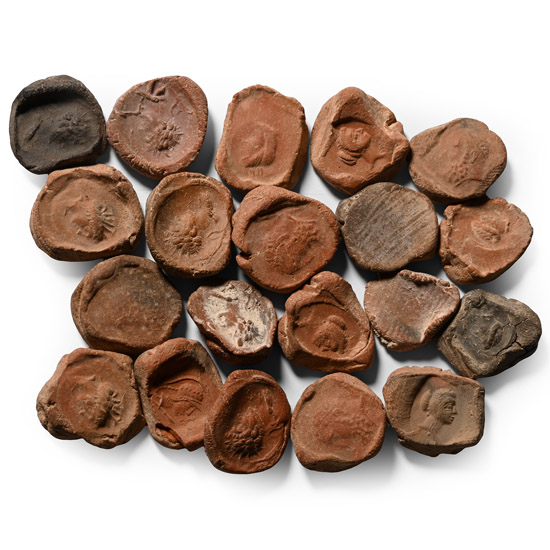
Roman Terracotta Bullae, Tesserae or Token Group
3rd century B.C.-1st century A.D.Sold for (Inc. bp): £312
A mixed group of ceramic bullae, tesserae or theatre tokens bearing low-relief motifs, mainly consisting of profile busts of deities. 37.4 grams total, 17-20 mm
From the private collection of a European gentleman (1942-2024), formed since the 1970s.
The term 'tessera' was used in Roman times to convey the Greek term σύμβολον (token). Small tiles are known as tokens, often shaped like coins, made of metal (copper, lead, iron), clay, bone, wood, or glass, stamped as well as engraved. The tokens, however, are not exclusively coin-shaped, as the Latin term 'tessera' refers to a four-sided shape. Tokens and tesserae seem to have been used both in Athens and Rome for the distribution of goods. According to written sources, the term ‘token’ is identified with credentials of the official authorities. They have also been interpreted as tokens of identity, as entrance tickets to theatre performances, tribunals or assemblies of citizens, archival material of seal engraving, as pawns in games, Charon’s obols and even as amulets. -
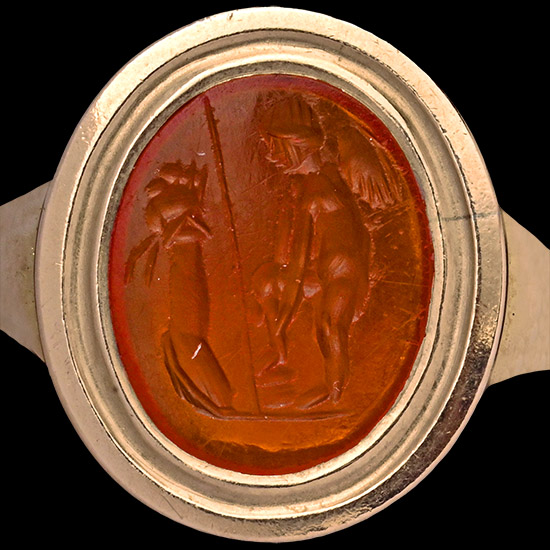
Roman Carnelian Gemstone with Eros Before an Altar in Gold Ring
1st century A.D.Sold for (Inc. bp): £2,860
Finely engraved Roman carnelian intaglio showing nude winged Amor in front of a pillar with his weapons, helmet, shield, and spear, putting on a shin guard, standing before an altar, set in a later gold ring; supplied with a museum-quality impression. 3.55 grams, 21.09 mm overall, 18.46 mm internal diameter (approximate size British Q, USA 8, Europe 17.49, Japan 16)
Acquired on the European art market. This lot has been checked against the Interpol Database of stolen works of art and is accompanied by search certificate number no.13323-258009.
This particular iconography shows the god of love arming himself, standing in front of an altar surmounted by a helmet, and with a hoplon shield at its bottom. He is putting a greave on his right leg, and a spear occupies the central part of the scene. Figuratively, Amor is maybe represented arming himself for a 'love deed'. But the scene can be referred to the battle against the Titans, to which all the Olympian gods took part. -
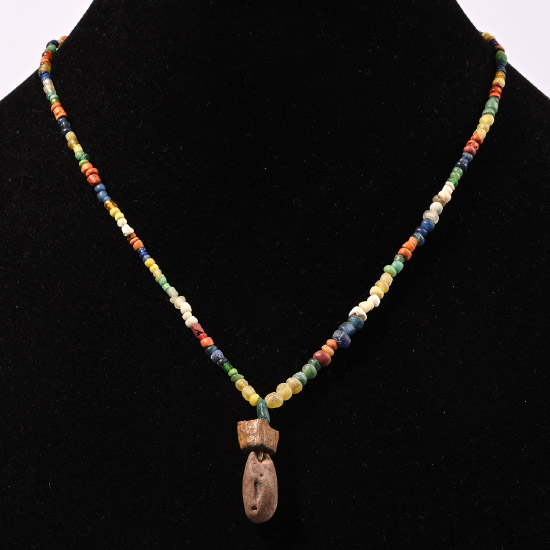
Roman Mixed Glass and Other Bead Necklace String
1st-4th century A.D. and laterSold for (Inc. bp): £13
Composed of polychrome oblate and annular beads with two larger beads as a central feature, restrung. 10.5 grams, 38 cm
Ex Ancient Art Shop, Windsor, UK, 1990s. Ex private West County, UK, collection.
