Loading, please wait...

Use mousewheel to zoom in and out, click to enlarge

Details

LOT 0624

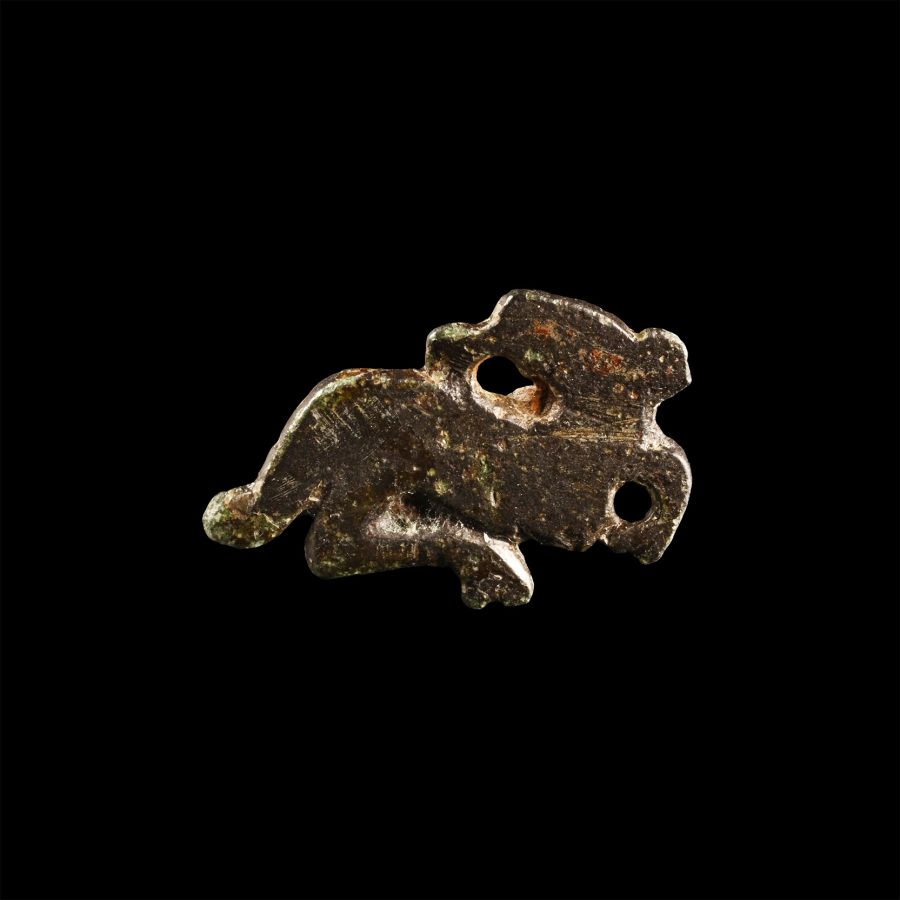
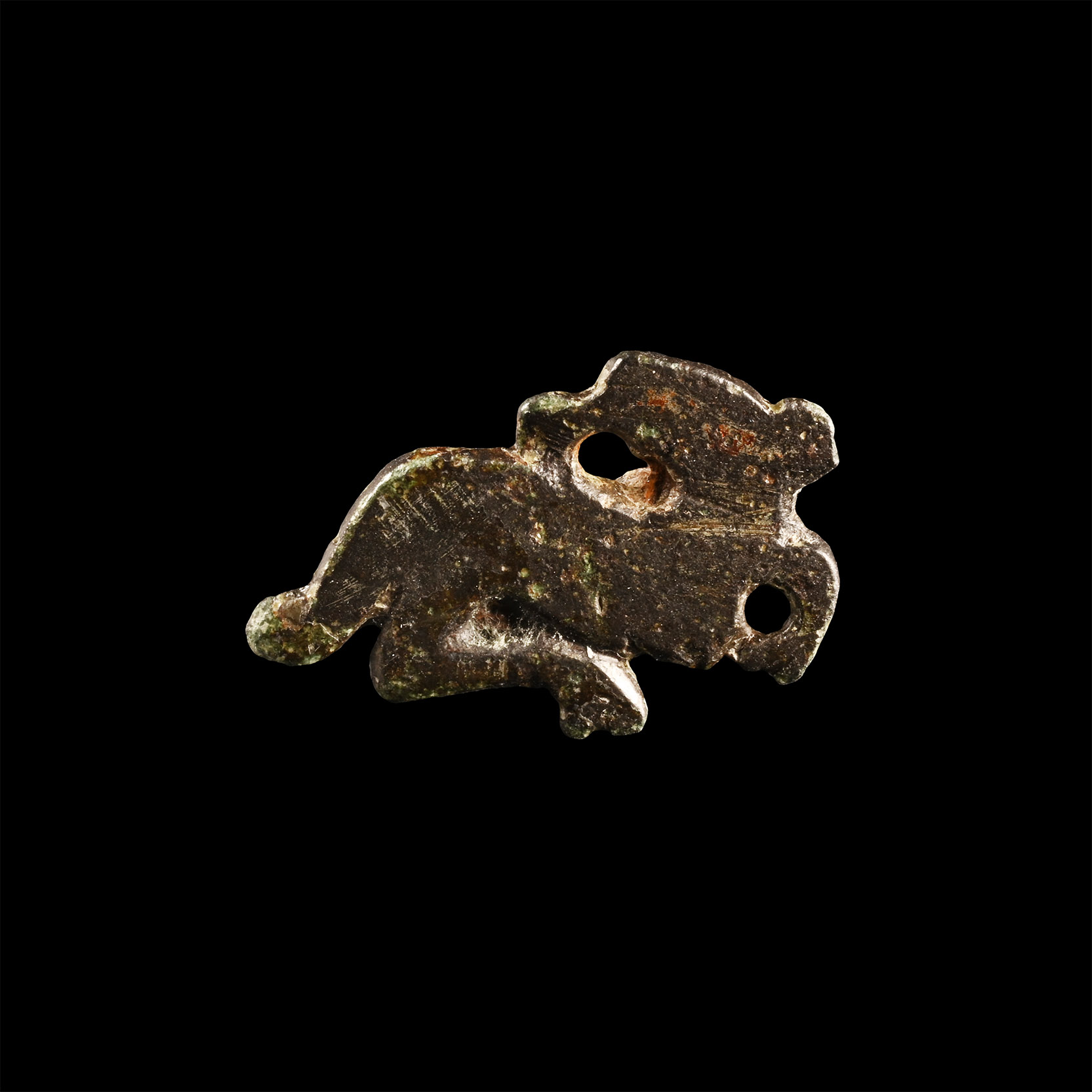
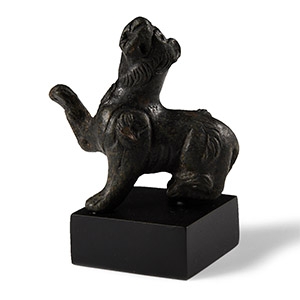
Roman Bronze Hare Plate Brooch

2ND CENTURY A.D.

1 1/4 in. (6.9 grams, 31 mm).

With silvered finish, legs extended and head reversed, pin-lug and catch to the reverse. [No Reserve]

Provenance

Ex DRG Coins and Antiquities, Essex, UK.
Ex private Merseyside, UK, collection.

Literature

Cf. Hattatt, R., Iron Age and Roman Brooches, Oxford, 1985, item 612.

CONDITION

VETTING:

TimeLine Auctions follows a vetting process to ensure the authenticity and legality of all items, reinforcing our commitment to integrity and responsible trading. Each antiquity, antique, and coin lot undergoes thorough examination by a vetting committee of at least ten external specialists, professional trade association members, scientists, and archaeologists: Our Vetting Process


AUCTIONS:

TimeLine is a leading auction house specialising in antiquities, ancient art, collectables, natural history, coins, medals, and books. Our auctions offer museums, collectors, historians, and enthusiasts the opportunity to acquire unique and historically significant pieces.

LOT 0624

Roman Bronze Hare Plate Brooch

Sold for (Inc. bp): £20

Print page

RELATED LOTS

  • Roman Terracotta Foot Lamp
    Roman Terracotta Foot Lamp
    2nd century A.D.

    Sold for (Inc. bp): £3,380

    Mould-made and shaped as a sandaled left foot, filling-hole surrounded by a ridge in the ankle area, the sandal with two leather straps tied together near the ankle, wick-hole in the big toe; inscription 'ƩΑΛΣΙϹ' to the base, heel chipped. 112 grams, 12.2 cm


    With Gorny & Mosch, Auction 194, 14 December 2010, lot 505. This lot has been checked against the Interpol Database of stolen works of art and is accompanied by search certificate number no.11799-206830.

    This lamp belongs to a type of plastic lamp made in Anatolia and widespread throughout the Eastern Empire. The sandaled foot was part of the classification of plastic lamps dedicated to the representation of the human body. These lamps were the luxuries of the poor, being brought to temples as votive offerings, however some took their place in the domestic lararia, or were kept by children as playthings.

    Lot Details

  • Roman Chalcedony Gemstone with Aphrodite Kallipygos
    Roman Chalcedony Gemstone with Aphrodite Kallipygos
    1st century A.D.

    Sold for (Inc. bp): £910

    The goddess seen from behind, drapery around her legs, resting her left hand on a column and holding up an object in her right hand. 0.84 grams, 12 mm


    Acquired in the late 1980s-early 1990s. Important North West London collection.

    The famous statue of Aphrodite Kallipygos, the model for this gemstone, recalls a story reported in the Deipnosophists of Athenaeus regarding the foundation of a temple to her in ancient Syracuse. According to Athenaeus, two beautiful sisters from a farm near Syracuse quarrelled over which of them had the most shapely buttocks, and approached a young passer-by to judge. They showed themselves to the traveller, the son of a rich man, and he voted for the older sister. Later, he fell in love with her and fell ill with lovesickness. Upon learning of what had happened, the man's younger brother went to see the girls and fell in love with the younger sister. Consequently the brothers refused to consider any other brides forcing the father to arrange for the sisters to come and marry them. The townspeople nicknamed the sisters ‘Kallipygoi’ (‘Women with Beautiful Behinds’) and the young men, with their newfound prosperity, dedicated a temple to Aphrodite, naming her ‘Kallipygos’.

    Lot Details

  • Roman Bronze Jupiter Dolichenus Eagle Pair
    Roman Bronze Jupiter Dolichenus Eagle Pair
    2nd-3rd century A.D.

    Sold for (Inc. bp): £910

    The imperial birds modelled in the round, each standing on the head of a horned bull, wings partially spread; semi-naturalistic detailing to the head and feathers; suspension loop behind the neck. 487 grams total, 89-92 mm


    Acquired in Europe before 1992.

    The cult of Jupiter Dolichenus was a variant of worship of Zeus from Asia Minor whose mystery cult was widespread in the Roman Empire from the early 2nd to mid-3rd centuries A.D., especially in the military. The god is usually represented mounting a bull, with the double axe (labrys or bipennis) in his right raised hand, and dressed in the military attire of a Roman general.

    Lot Details

Stay up-to-date with the latest from TimeLine Auctions by joining our mailing list