
Loading, please wait...
LOT 0177
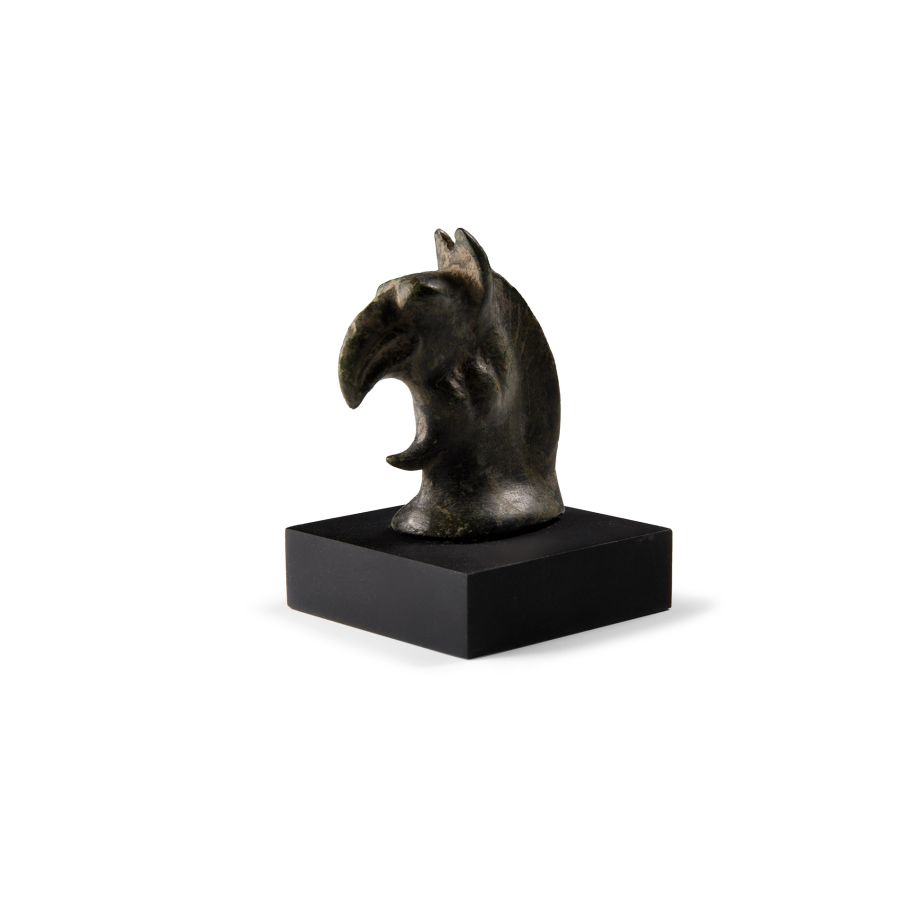
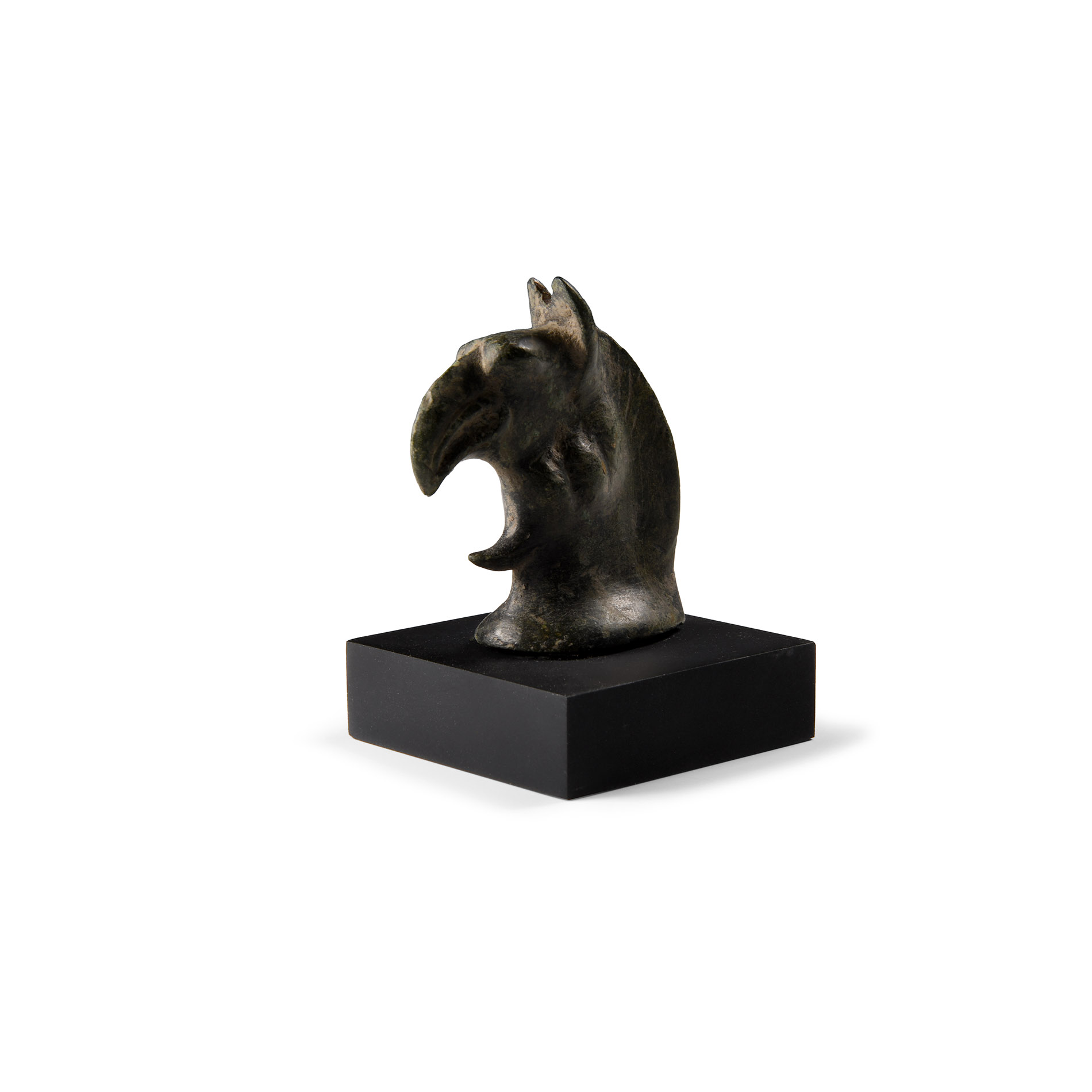
Roman Bronze Griffin Helmet Attachment
2ND-3RD CENTURY A.D.
2 in. (77 grams, 53 mm).
Free-standing with stylised features, bulging eyes, hooked beak, pricked ears; piriform base for possible attachment to a helmet crest.
Provenance‘The Ancient Menagerie Collection’ formerly the property of a Cambridgeshire lady, collected since the 1990s and acquired from auctions and dealers throughout Europe and the USA, now ex London collection.
LiteratureCf. Mitten and Doeringer, Master Bronzes From The Classical World, New York, 1968, item 286, for a similar griffin head.
CONDITIONTimeLine Auctions follows a vetting process to ensure the authenticity and legality of all items, reinforcing our commitment to integrity and responsible trading. Each antiquity, antique, and coin lot undergoes thorough examination by a vetting committee of at least ten external specialists, professional trade association members, scientists, and archaeologists: Our Vetting Process
AUCTIONS:
TimeLine is a leading auction house specialising in antiquities, ancient art, collectables, natural history, coins, medals, and books. Our auctions offer museums, collectors, historians, and enthusiasts the opportunity to acquire unique and historically significant pieces.
-
.jpg)
Roman Bronze Lying Dog Bowl Mount
1st-4th century A.D.Sold for (Inc. bp): £52
Modelled in the half-round with naturalistic detailing. 26.3 grams, 34 mm
‘The Ancient Menagerie Collection’ formerly the property of a Cambridgeshire lady, collected since the 1990s and acquired from auctions and dealers throughout Europe and the USA, now ex London collection. -
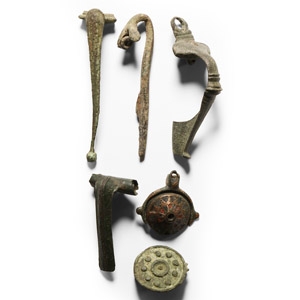
Roman 'Essex' Bronze Brooch Collection
1st-4th century A.D.Sold for (Inc. bp): £65
Six brooches of various types, including one example with remains of polychrome enamelling; incomplete. 46 grams total, 22-62 mm
Found Essex, UK. -
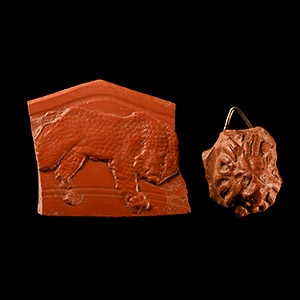
Roman Redware Sherd Group with Lions
4th-5th century A.D.Sold for (Inc. bp): £85
The larger fragment with stepped neck and rim, bearing a leaping lion right in raised relief; the smaller fragment with leonine protome; both in terra sigillata africana; modern suspension loop to reverse. 54 grams total, 35-60 mm
Acquired 1960s-1990s. From the late Alison Barker collection, a retired London barrister.
The most ancient production of red African ware began in the Flavian Age. Towards the second half of the 3rd century A.D. – but most probably before – the production reached its zenith and African redware pottery was imported from all the Imperial provinces.
