
Loading, please wait...
LOT 0654
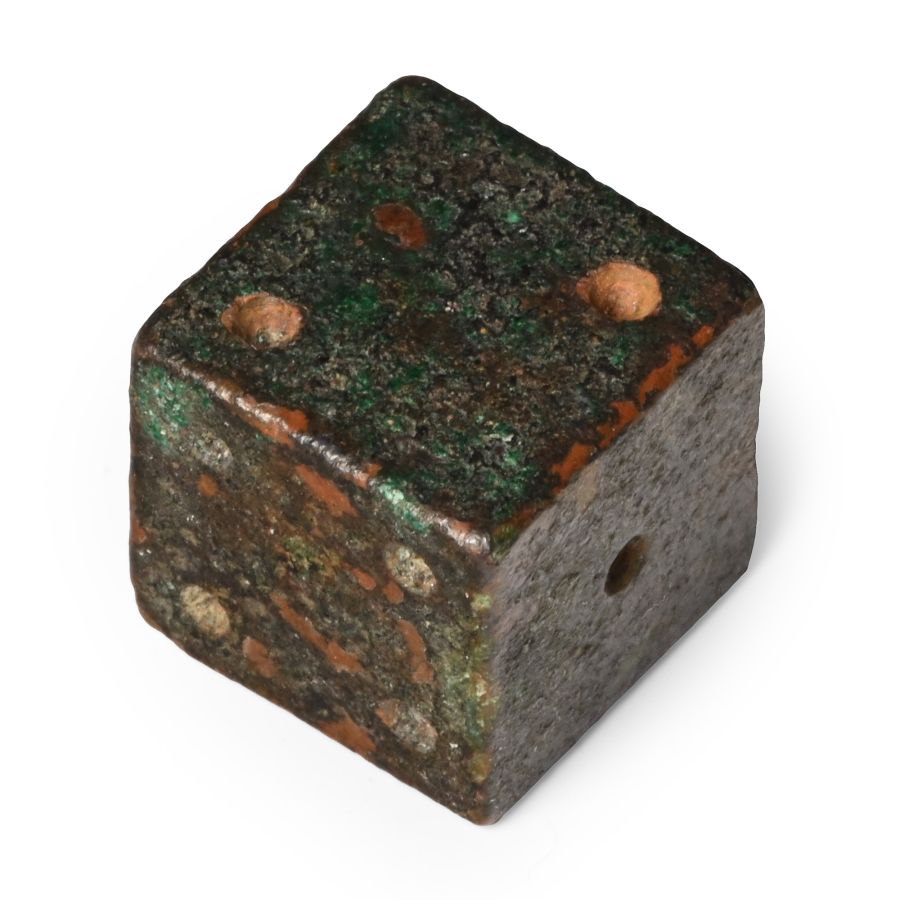
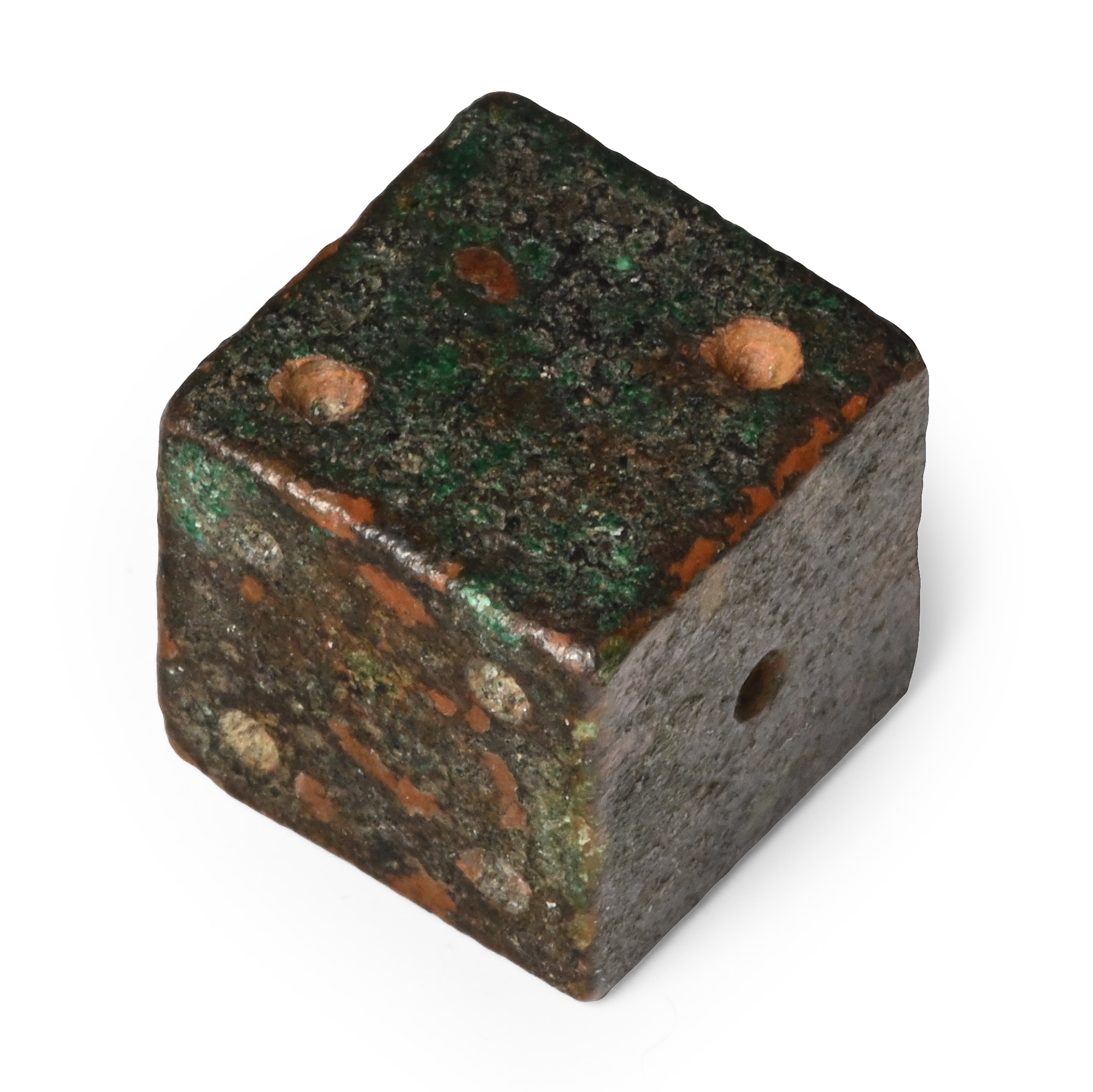
Roman Bronze Gaming Dice
1ST-4TH CENTURY A.D.
1/2 in. (15 grams, 12 mm).
A cuboid dice with pellet markings arranged 1:6, 2:5, 3:4. [No Reserve]
ProvenanceFrom a Lincolnshire gentleman's collection, acquired early 2000s.
Property of a private collector, West London, UK.
This lot is accompanied by an illustrated lot declaration signed by the Head of the Antiquities Department, Dr Raffaele D’Amato.
TimeLine Auctions follows a vetting process to ensure the authenticity and legality of all items, reinforcing our commitment to integrity and responsible trading. Each antiquity, antique, and coin lot undergoes thorough examination by a vetting committee of at least ten external specialists, professional trade association members, scientists, and archaeologists: Our Vetting Process
AUCTIONS:
TimeLine is a leading auction house specialising in antiquities, ancient art, collectables, natural history, coins, medals, and books. Our auctions offer museums, collectors, historians, and enthusiasts the opportunity to acquire unique and historically significant pieces.
-
Roman Glass Lachrymatory
1st-2nd century A.D.Sold for (Inc. bp): £98
With long, narrow neck separated from the body by a constriction; funicular mouth. 19 grams, 12.3 cm
Ex W.Kern, Zurich, 1950s-1970s (d.1980s). Accompanied by a copy of an Art Loss Register certificate no.S00086748. This lot is accompanied by an illustrated lot declaration signed by the Head of the Antiquities Department, Dr Raffaele D’Amato.
A lachrymatory (from Latin lacrima, tear) is a type of earthenware or, more commonly, glass container found in Roman and Greek tombs, thought to be bottles into which the relatives of the deceased had dropped their tears. They most likely contained ointments, and the discovery of so many of these containers (unguentaria) in tombs is due to the use of ointments in funeral ceremonies. These lachrymatories are usually shaped like a spindle or flask with a long neck and a bulb-shaped body. -
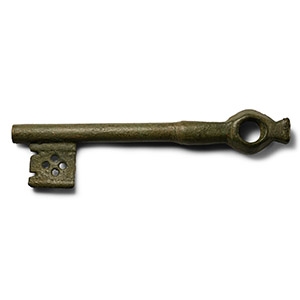
Large Romano-British Bronze Door Key
1st-3rd century A.D.Sold for (Inc. bp): £182
With slender barrel, pierced bulb handle, square ward with four piercings and two bits to the forward edge. 106 grams, 14.2 cm
Found North Yorkshire, UK, circa 2005. Acquired in the UK circa 2008. Ian Wilkinson collection, Nottinghamshire, UK, formed since 1985. This lot is accompanied by an illustrated lot declaration signed by the Head of the Antiquities Department, Dr Raffaele D’Amato. -
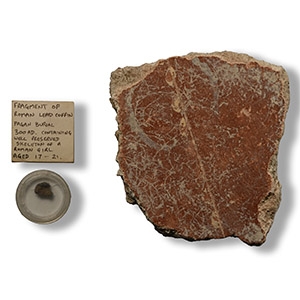
Roman Lead Coffin and Painted Fresco Fragments
3rd-4th century A.D.Sold for (Inc. bp): £91
Wall-plaster fragment with remains of laths to the reverse, dressed surface with painted red and white detailing; with a fragment of a lead coffin believed to have contained the remains of a Roman girl about 17-21 years of age; with old collector's ticket. 218 grams total, 9-98 mm
The coffin fragment found at Brough, Nottinghamshire, UK, 1970s-1980s. Acquired from Ancient & Oriental, UK, in the 1990s. Ian Wilkinson collection, Nottinghamshire, UK, formed since 1985. This lot is accompanied by an illustrated lot declaration signed by the Head of the Antiquities Department, Dr Raffaele D’Amato.
