
Loading, please wait...
LOT 0814
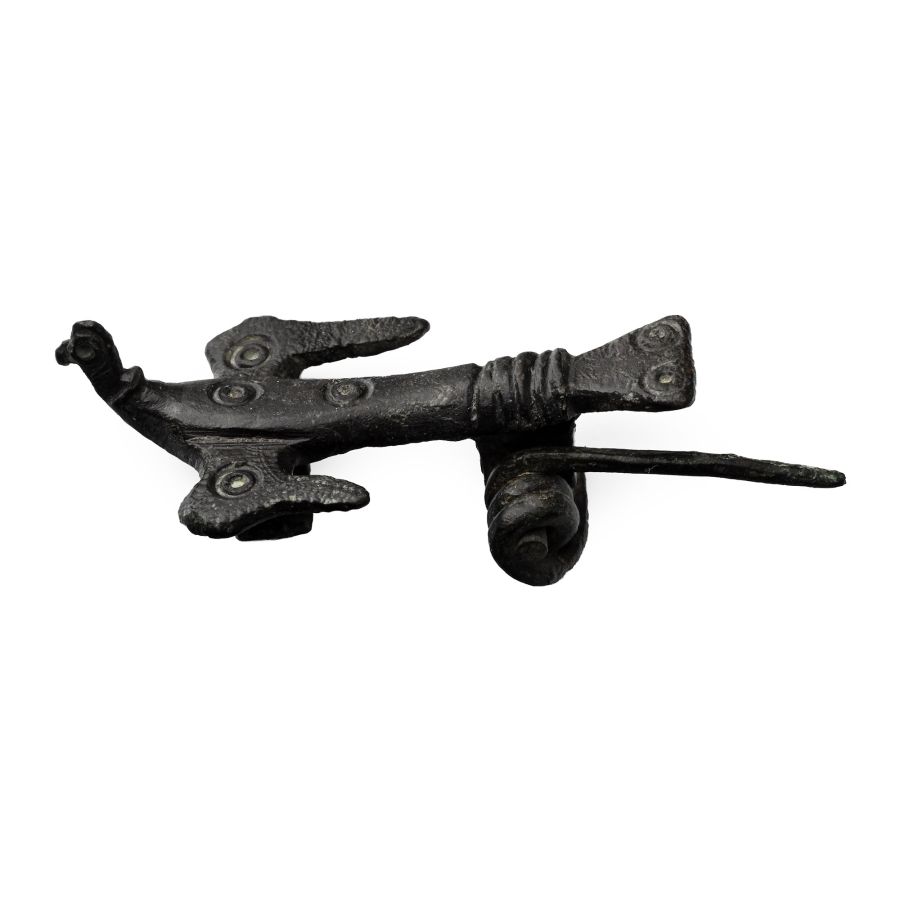
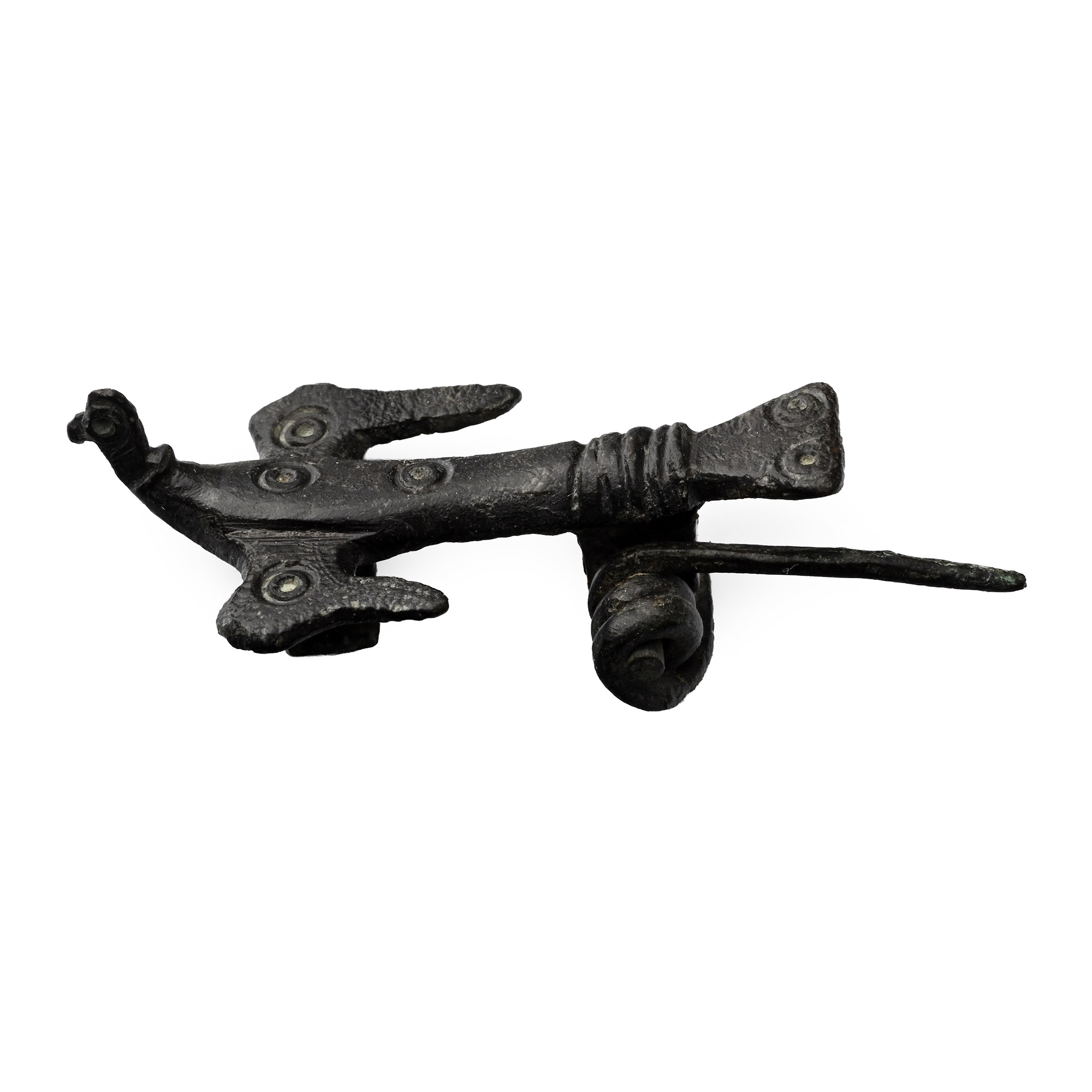
Roman Bronze Flying Bird Plate Brooch
2ND CENTURY A.D.
1 3/8 in. (7.79 grams, 37 mm).
Aviform brooch with ring-and-dot motifs to wings, tail and head; pin-lug, chord, pin and catchplate to underside.
ProvenanceEx German art market, 2000s.
Acquired from an EU collector living in London.
From the collection of a Surrey, UK, gentleman.
This lot is accompanied by an illustrated lot declaration signed by the Head of the Antiquities Department, Dr Raffaele D'Amato.
TimeLine Auctions follows a vetting process to ensure the authenticity and legality of all items, reinforcing our commitment to integrity and responsible trading. Each antiquity, antique, and coin lot undergoes thorough examination by a vetting committee of at least ten external specialists, professional trade association members, scientists, and archaeologists: Our Vetting Process
AUCTIONS:
TimeLine is a leading auction house specialising in antiquities, ancient art, collectables, natural history, coins, medals, and books. Our auctions offer museums, collectors, historians, and enthusiasts the opportunity to acquire unique and historically significant pieces.
-
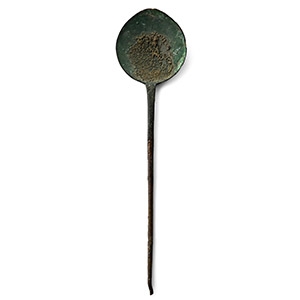
Roman Bronze Rat-Tailed Spoon
1st-4th century A.D.Sold for (Inc. bp): £85
With broad, gently curved bowl, tapering handle with transverse hatching at the junction with the bowl. 10.9 grams, 15.5 cm
Acquired on the UK art market during the late 20th century. From the private collection of David King (1940-2024), Hoddesdon, Hertfordshire, UK. This lot is accompanied by an illustrated lot declaration signed by the Head of the Antiquities Department, Dr Raffaele D'Amato. -
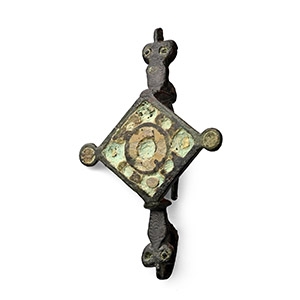
Roman Enamelled Bronze Brooch
2nd-3rd century A.D.Sold for (Inc. bp): £156
Comprising a lozengiform plate with enamelled design and lateral lobes, bow formed by vertical extensions, enamelled rings; hinged pin to reverse. 9.8 grams, 60 mm
Ex German art market, 2000s. Acquired from an EU collector living in London. From the collection of a Surrey, UK, gentleman. This lot is accompanied by an illustrated lot declaration signed by the Head of the Antiquities Department, Dr Raffaele D'Amato. -
.jpg)
Roman Iridescent Glass Double Unguentarium
2nd-3rd century A.D.Estimate: £600 - 800 (‡+bp*)
Opening Bid: £333
With rolled rim to each tapering tube, applied trail detailing to the body, lateral angled handles and large applied loop handle above; iridescent surface. 59 grams, 17 cm
Acquired in the mid 1980s-1990s. Private collection, Switzerland, thence by descent. Private collection, since the late 1990s. This lot has been checked against the Interpol Database of stolen works of art and is accompanied by search certificate number no.12237-222167. This lot is accompanied by an illustrated lot declaration signed by the Head of the Antiquities Department, Dr Raffaele D’Amato. This lot is accompanied by an illustrated lot declaration signed by the Head of the Antiquities Department, Dr Raffaele D'Amato.
