
Loading, please wait...


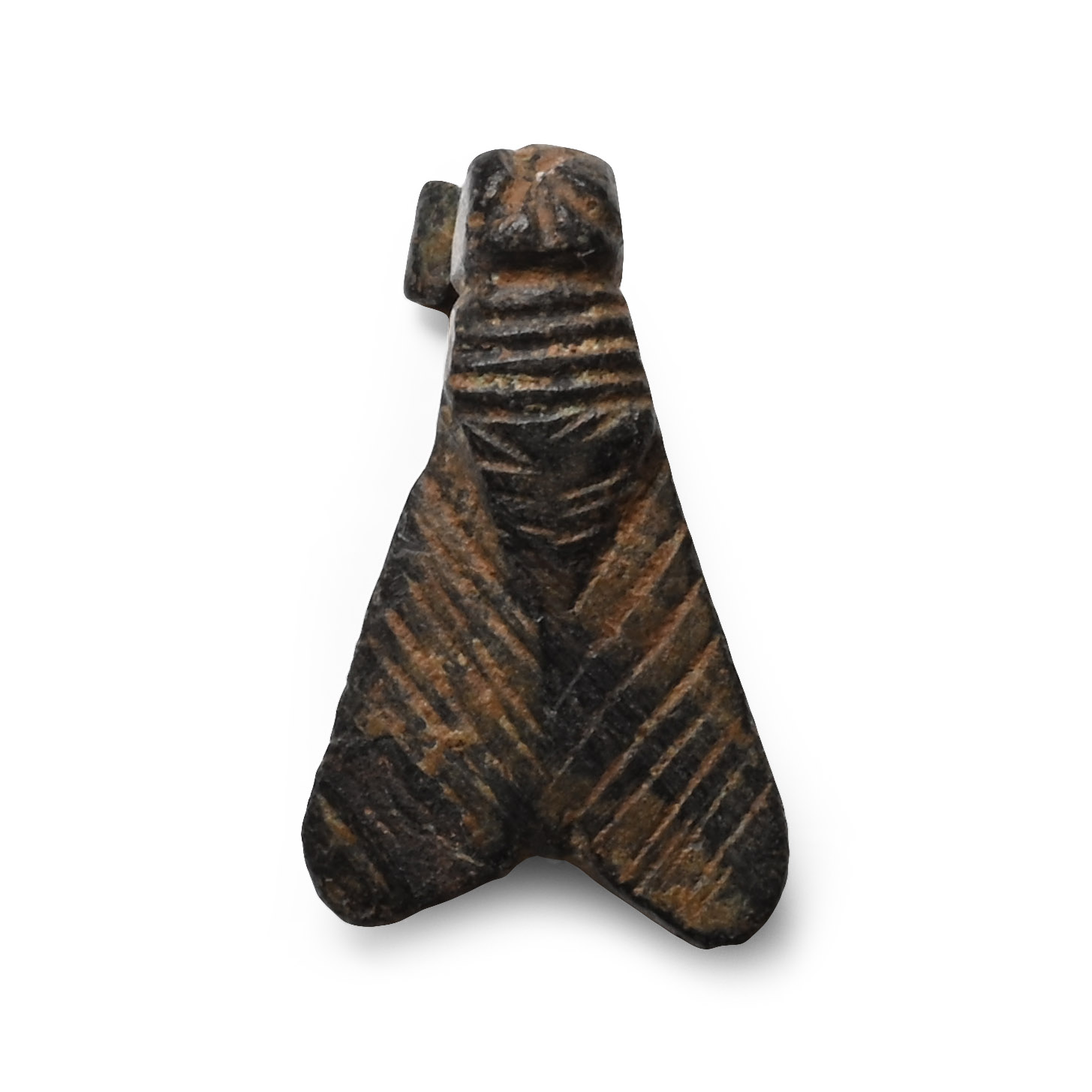
LOT 0892
Roman Bronze Fly Brooch
4TH CENTURY A.D.
3/4 in. (1.9 grams, 19 mm).
With ribbing at the neck and delineation of the wings; catchplate to the reverse. [No Reserve]
ProvenanceFrom the collection of a gentleman, acquired on the London art market in the 1990s.
LiteratureSee Strokov, A.A., ‘Two-chamber vaults of the Cimmerian Bosporus in the Migration Period’ in Rácz, Z., Szenthe, G., Attila’s Europe, structural transformation and strategies of success in the European Hun Period, Budapest, 2021, fig.9, no.9.
CONDITIONTimeLine Auctions follows a vetting process to ensure the authenticity and legality of all items, reinforcing our commitment to integrity and responsible trading. Each antiquity, antique, and coin lot undergoes thorough examination by a vetting committee of at least ten external specialists, professional trade association members, scientists, and archaeologists: Our Vetting Process
AUCTIONS:
TimeLine is a leading auction house specialising in antiquities, ancient art, collectables, natural history, coins, medals, and books. Our auctions offer museums, collectors, historians, and enthusiasts the opportunity to acquire unique and historically significant pieces.
-
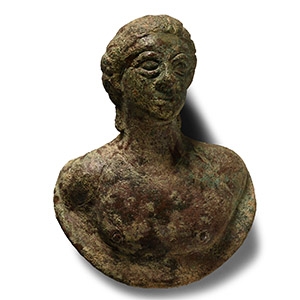
Roman Bronze Bust of a Kouros
2nd-3rd century A.D.Sold for (Inc. bp): £312
Modelled in the round with elaborate braided hair, large lentoid eyes, bare chest; hollow to reverse. 99 grams, 75 mm
Acquired in the mid 1980s-1990s. Private collection, Switzerland, thence by descent. Private collection, since the late 1990s. -
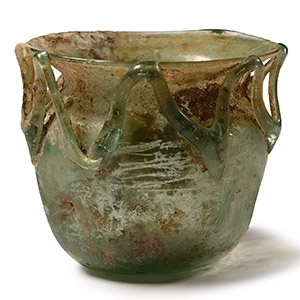
Roman Glass Jar with Trail
3rd-4th century A.D.Estimate: £400 - 600 (+bp*)
Opening Bid: £190
With bulbous body, flared rim and applied zigzag trail to neck, dimple base. 70 grams, 69 mm
From a London, UK, collection, 1990s. -
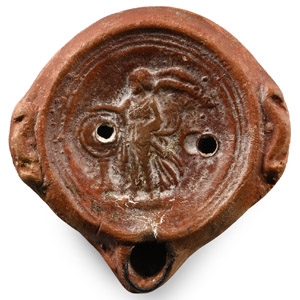
Roman Terracotta Oil Lamp with Victory
1st-4th century A.D.Sold for (Inc. bp): £98
Very flat lamp with lateral scrolled lugs, short nozzle, discus with low-relief figure of Victory with a wreath. 76 grams, 78 mm
From the collection of a gentleman, acquired on the London art market in the 1990s.
