
Loading, please wait...
LOT 0744
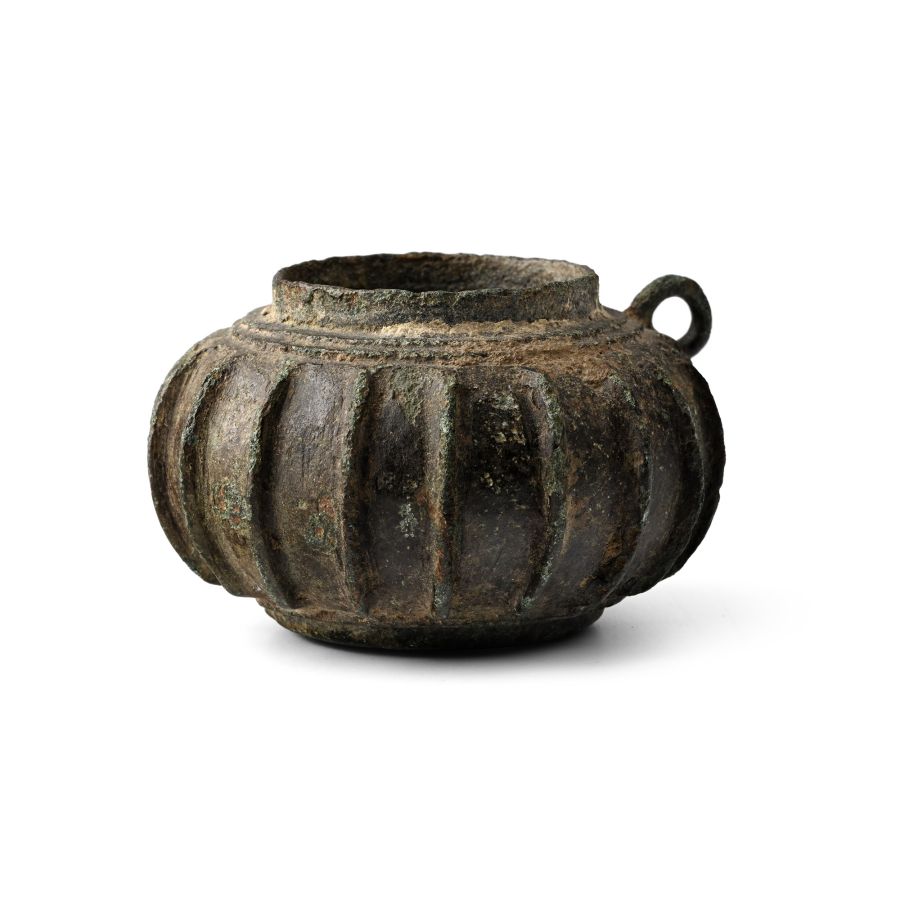
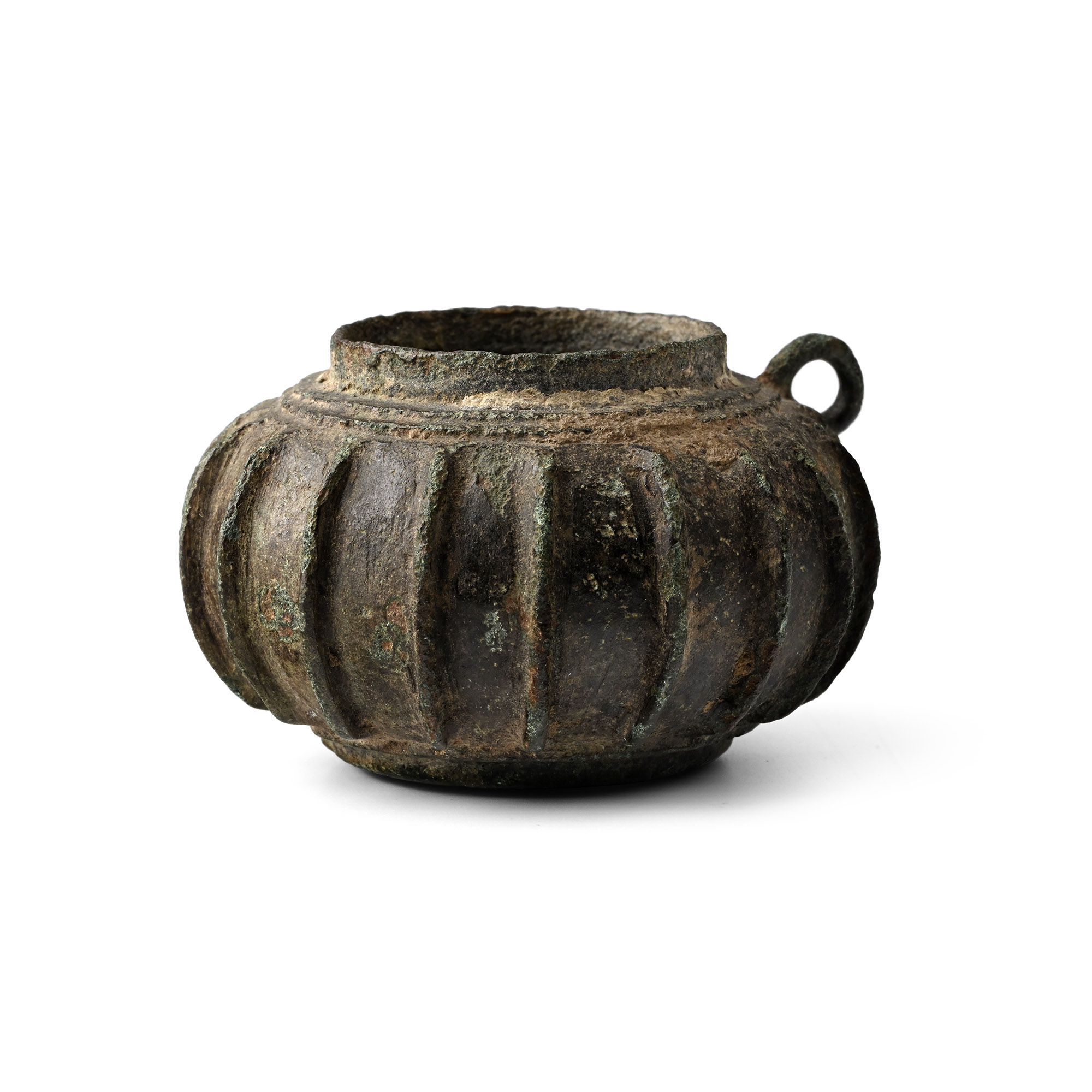
Roman Bronze Fluted Pyxis
1ST-4TH CENTURY A.D.
2 1/2 in. (99 grams, 65 mm).
Squat in profile with discoid foot, vertical flanges to the sidewall, raised rings to the shoulder and low neck; loop handle. [No Reserve]
ProvenanceAcquired on the UK art market during the late 20th century.
From the private collection of David King (1940-2024), Hoddesdon, Hertfordshire, UK.
This lot is accompanied by an illustrated lot declaration signed by the Head of the Antiquities Department, Dr Raffaele D'Amato.
TimeLine Auctions follows a vetting process to ensure the authenticity and legality of all items, reinforcing our commitment to integrity and responsible trading. Each antiquity, antique, and coin lot undergoes thorough examination by a vetting committee of at least ten external specialists, professional trade association members, scientists, and archaeologists: Our Vetting Process
AUCTIONS:
TimeLine is a leading auction house specialising in antiquities, ancient art, collectables, natural history, coins, medals, and books. Our auctions offer museums, collectors, historians, and enthusiasts the opportunity to acquire unique and historically significant pieces.
-
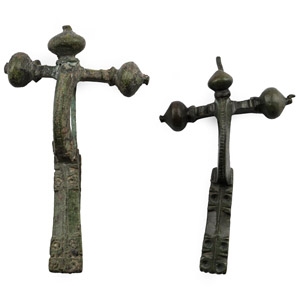
Roman Bronze Crossbow Brooch Group
4th century A.D.Sold for (Inc. bp): £52
Comprising two brooches with onion knop finials; one with a pin, the other with remains of a pin. 50 grams total, 63-71 mm
Ex German art market, 2000s. Acquired from an EU collector living in London. From the collection of a Surrey, UK, gentleman. This lot is accompanied by an illustrated lot declaration signed by the Head of the Antiquities Department, Dr Raffaele D'Amato. -
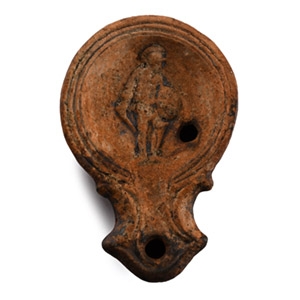
Roman Terracotta Oil Lamp
1st century A.D.Sold for (Inc. bp): £468
Short nozzle with lateral volute scrolls, broad discus with concentric circles, central motif of a standing figure in crested helmet and one greave holding a round shield and short sword; probably a scutarius gladiator; incise 'VIL' maker's mark to underside. 103 grams, 10.2 cm
From a private UK collection formed in the 1980s. This lot is accompanied by an illustrated lot declaration signed by the Head of the Antiquities Department, Dr Raffaele D'Amato. -
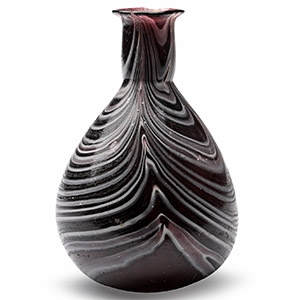
Roman Aubergine-Banded Glass Vase
1st century A.D.Estimate: £1,000 - 1,400 (+bp*)
Opening Bid: £500
Piriform in profile with tapering cylindrical neck, flared rim and rolled lip, with dragged trails; rim chipped. 32.58 grams, 73 mm
Private collection, 1982. Acquired by the present owner through the UK art market. This lot is accompanied by an illustrated lot declaration signed by the Head of the Antiquities Department, Dr Raffaele D'Amato.
