
Loading, please wait...
LOT 0867
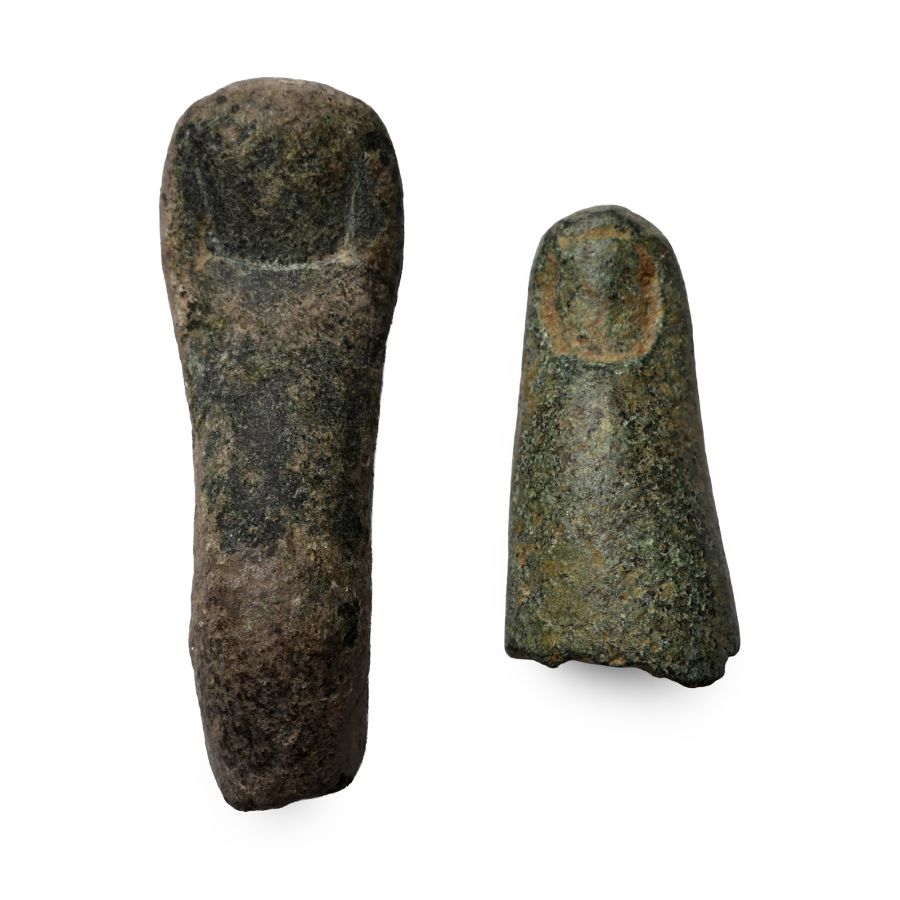
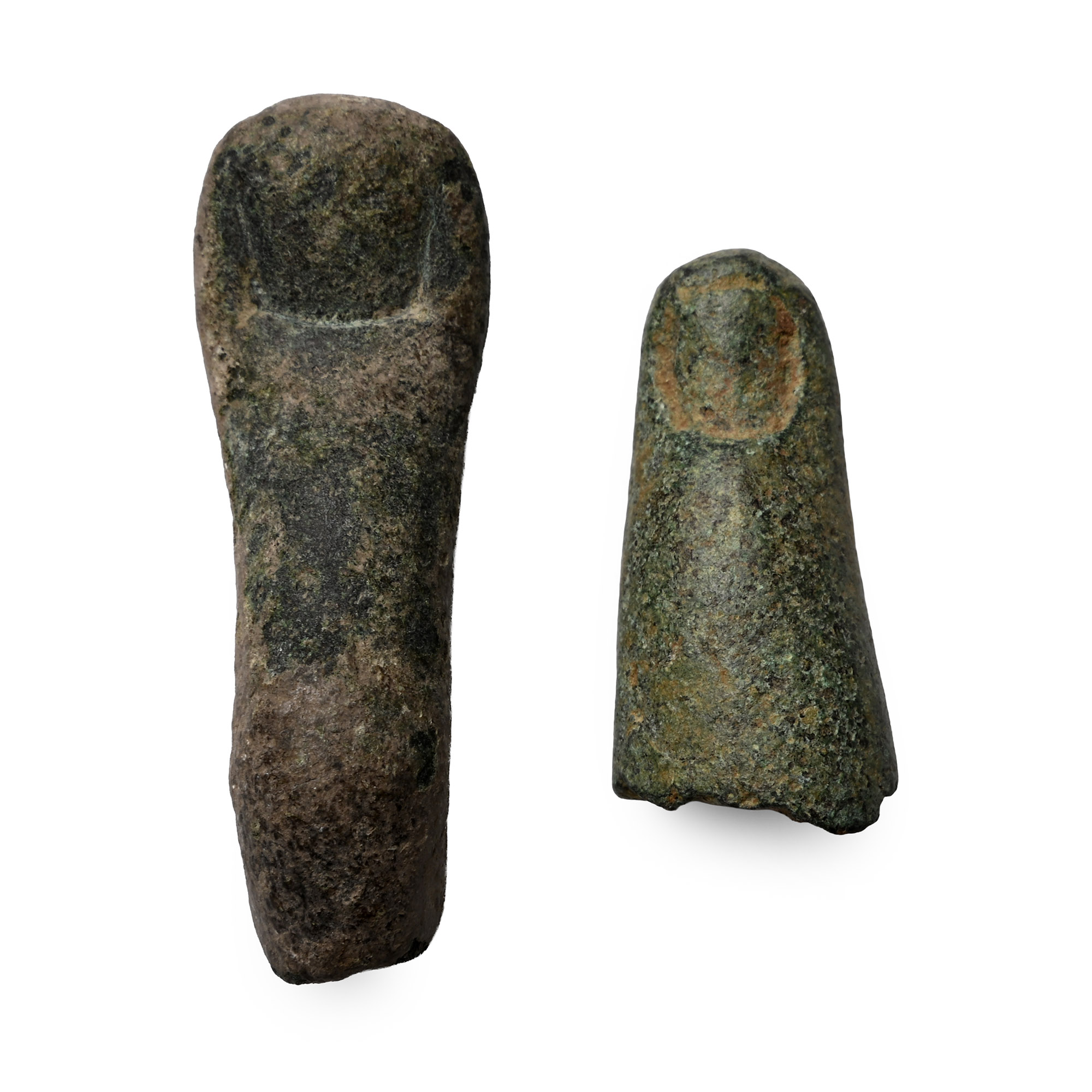
Roman Bronze Fingers
1ST-4TH CENTURY A.D.
1 1/8 - 1 5/8 in. (46.9 grams total, 28-41 mm).
Each with a square nail and rounded end. [2]
ProvenanceFrom the collection of a gentleman, acquired on the London art market in the 1990s.
This lot is accompanied by an illustrated lot declaration signed by the Head of the Antiquities Department, Dr Raffaele D'Amato.
TimeLine Auctions follows a vetting process to ensure the authenticity and legality of all items, reinforcing our commitment to integrity and responsible trading. Each antiquity, antique, and coin lot undergoes thorough examination by a vetting committee of at least ten external specialists, professional trade association members, scientists, and archaeologists: Our Vetting Process
AUCTIONS:
TimeLine is a leading auction house specialising in antiquities, ancient art, collectables, natural history, coins, medals, and books. Our auctions offer museums, collectors, historians, and enthusiasts the opportunity to acquire unique and historically significant pieces.
-
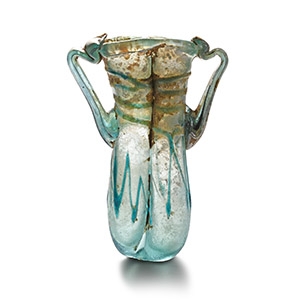
Roman Glass Double Unguentarium
3rd-5th century A.D.Sold for (Inc. bp): £390
Comprising two conjoined tapering tubular cells, with applied handles at the shoulder, decorated with applied trails. 72.5 grams, 11.3 cm
Acquired from a London, UK, gallery, 1980s.From a North American gentleman's collection, 1980-1990s. This lot is accompanied by an illustrated lot declaration signed by the Head of the Antiquities Department, Dr Raffaele D'Amato. -
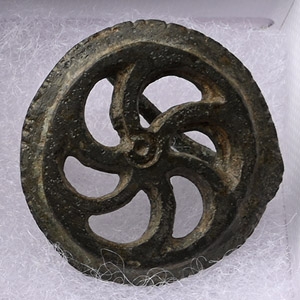
Romano-British Bronze Sun Wheel Plate Brooch
2nd century A.D.Sold for (Inc. bp): £85
With stepped rim, openwork radiating cured arms from a central hub; pin, pin-lugs, and catch to the reverse. 13.1 grams, 30 mm
Found Thames foreshore, London, UK. Acquired from Coincraft, London, UK. From the private collection of Kenneth Machin (1936-2020), Buckinghamshire, UK; his collection of antiquities and natural history was formed since 1948; thence by descent. Accompanied by a Coincraft certificate of authenticity. This lot is accompanied by an illustrated lot declaration signed by the Head of the Antiquities Department, Dr Raffaele D'Amato. -
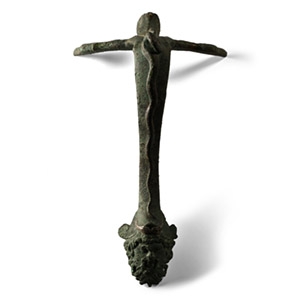
Roman Bronze Vessel Handle with Face
1st century A.D.Estimate: £1,200 - 1,700 (‡+bp*)
Opening Bid: £600
Swept in profile comprising a horizontal crescentic panel to attach to the rim, with inlaid silver detailing, recurved cobra-shaped thumb pad, raised serpent to the outer face of the tapering handle, finial a mask of Bacchus or Pan, facing with volute scrolls to the brow and thick splayed beard; silver diadem and eyes. 110 grams, 14.2 cm
Private collection. with Christie's, London, 11 June 1997, no.97 (part). with Bonhams, 13 April 2000, no.198. Private collection, Europe. Accompanied by copies of the relevant Christie's and Bonhams catalogue pages. Accompanied by a copy of an Art Loss Register certificate. This lot has been checked against the Interpol Database of stolen works of art and is accompanied by a search certificate number no.12529-232161. This lot has been cleared against the Art Loss Register database, and is accompanied by an illustrated lot declaration signed by the Head of the Antiquities Department, Dr Raffaele D’Amato. This lot is accompanied by an illustrated lot declaration signed by the Head of the Antiquities Department, Dr Raffaele D'Amato.
