
Loading, please wait...
LOT 0126
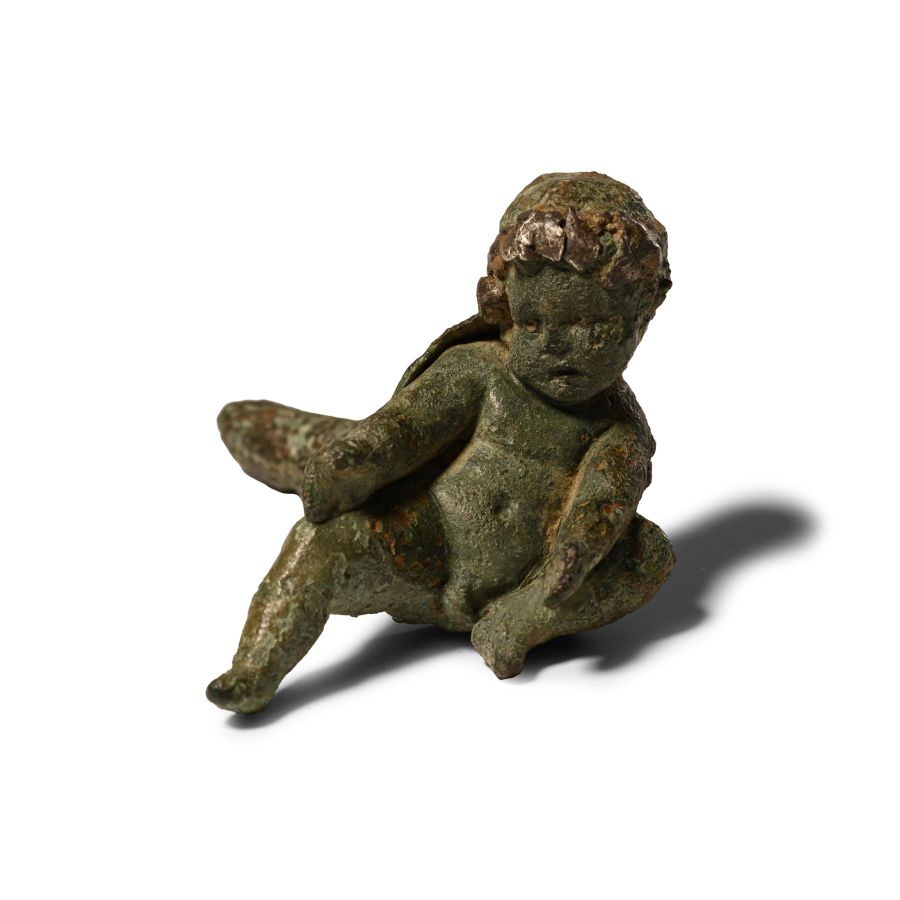
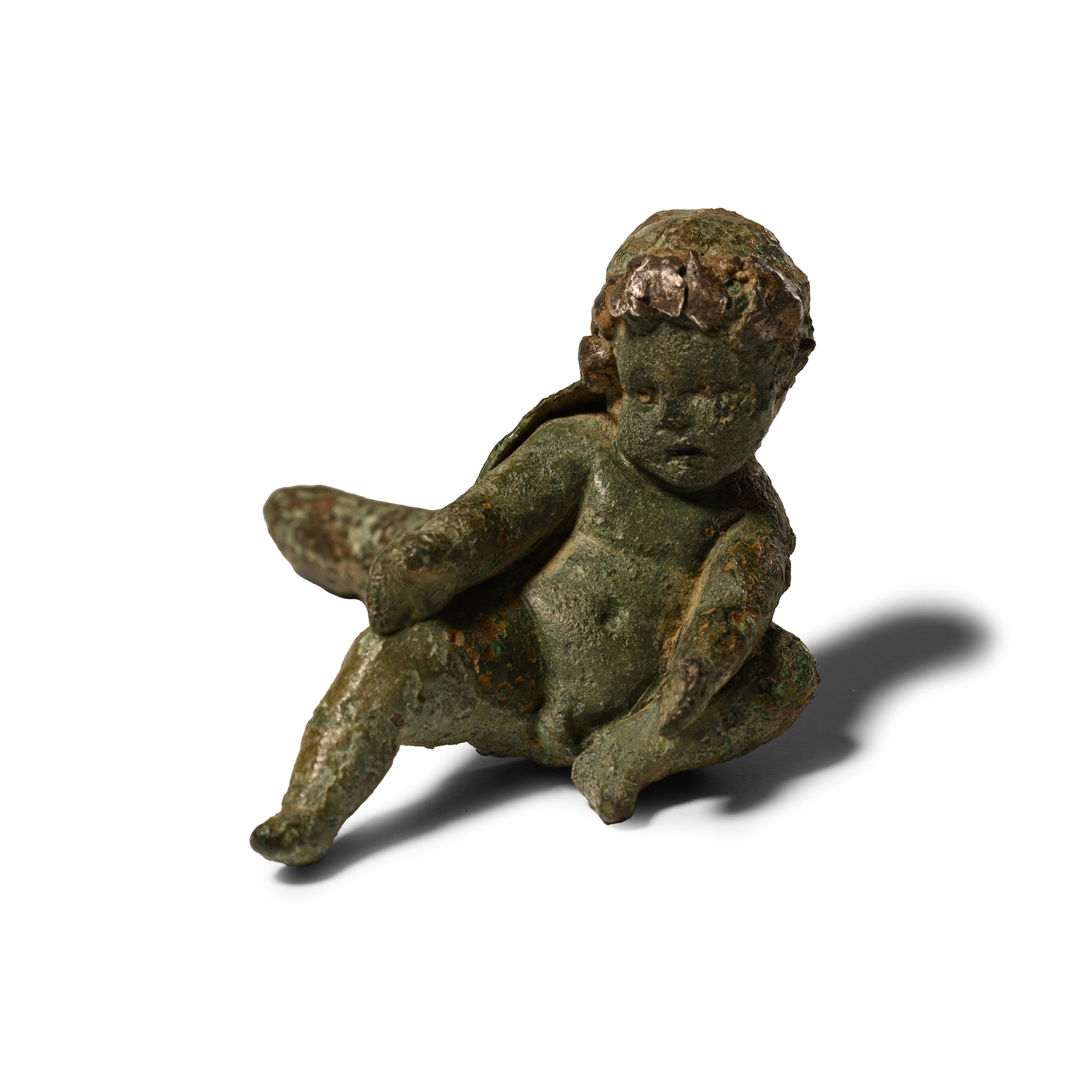
Roman Bronze Figure of Young Dionysus with Silver Inlays
1ST CENTURY A.D.
2 3/8 in. (70.1 grams, 61 mm).
Modelled in the round, a male infant with arms and right leg extended, left leg bent and raised; head looking downwards, with applied silver scales imitating a wreath; sturdy mounting peg to the reverse.
ProvenanceAcquired on the German art market, 2002.
European private collection.
This lot has been checked against the Interpol Database of stolen works of art and is accompanied by search certificate no.12053-211904.
This lot has been cleared against the Art Loss Register database, and is accompanied by an illustrated lot declaration signed by the Head of the Antiquities Department, Dr Raffaele D’Amato.
Cf. Rolland, H., Bronzes Antiques de Haute Provence, Paris, 1965, item 111, for type.
FootnotesThe model appears to form part of a figural group.
CONDITIONTimeLine Auctions follows a vetting process to ensure the authenticity and legality of all items, reinforcing our commitment to integrity and responsible trading. Each antiquity, antique, and coin lot undergoes thorough examination by a vetting committee of at least ten external specialists, professional trade association members, scientists, and archaeologists: Our Vetting Process
AUCTIONS:
TimeLine is a leading auction house specialising in antiquities, ancient art, collectables, natural history, coins, medals, and books. Our auctions offer museums, collectors, historians, and enthusiasts the opportunity to acquire unique and historically significant pieces.
LOT 0126
Roman Bronze Figure of Young Dionysus with Silver Inlays
Estimate £1,500 - 2,000€1,740 - 2,320 (for guidance only)$2,030 - 2,700 (for guidance only)
-
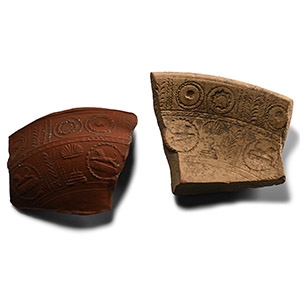
Romano-British Potter's Bowl Mould Fragment with Lions
3rd-4th century A.D.Sold for (Inc. bp): £260
Fragment of a potter's mould for the production of decorative tableware, with upper band of rosettes, fronds and other motifs within frilled borders, and on the angled body frond, shell and repeated motif of a leaping lion on a base with 'M·C·M' legend; supplied with a modern impression from the mould. 227 grams total, 10.4-11 cm
Found Suffolk, UK. From an old English collection. Ian Wilkinson collection, Nottinghamshire, UK, formed since 1985. This lot is accompanied by an illustrated lot declaration signed by the Head of the Antiquities Department, Dr Raffaele D’Amato.
The lion was also the badge of several Roman legions, such as XVI Flavia Firma, XIII Gemina, XVI Gallica. -
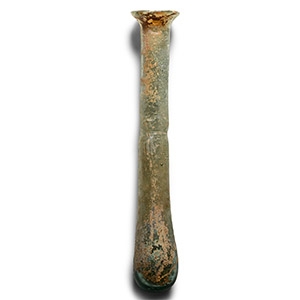
Roman Glass Lachrymatory
1st-2nd century A.D.Sold for (Inc. bp): £98
With long, narrow neck separated from the body by a constriction; funicular mouth. 19 grams, 12.3 cm
Ex W.Kern, Zurich, 1950s-1970s (d.1980s). Accompanied by a copy of an Art Loss Register certificate no.S00086748. This lot is accompanied by an illustrated lot declaration signed by the Head of the Antiquities Department, Dr Raffaele D’Amato.
A lachrymatory (from Latin lacrima, tear) is a type of earthenware or, more commonly, glass container found in Roman and Greek tombs, thought to be bottles into which the relatives of the deceased had dropped their tears. They most likely contained ointments, and the discovery of so many of these containers (unguentaria) in tombs is due to the use of ointments in funeral ceremonies. These lachrymatories are usually shaped like a spindle or flask with a long neck and a bulb-shaped body. -
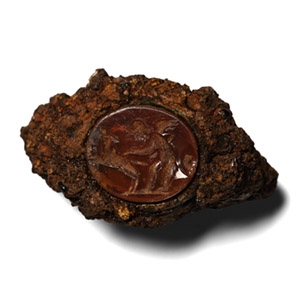
Roman Carnelian Gemstone with Cupid and Dog
2nd-3rd century A.D.Sold for (Inc. bp): £169
Fragment of iron hoop and bezel, inset carnelian cloison with intaglio scene of a putto restraining a barking dog. 2.49 grams, 22 mm
From the Fadel family collection, London, UK, 1970s. This lot is accompanied by an illustrated lot declaration signed by the Head of the Antiquities Department, Dr Raffaele D’Amato.
