
Loading, please wait...

LOT 0153
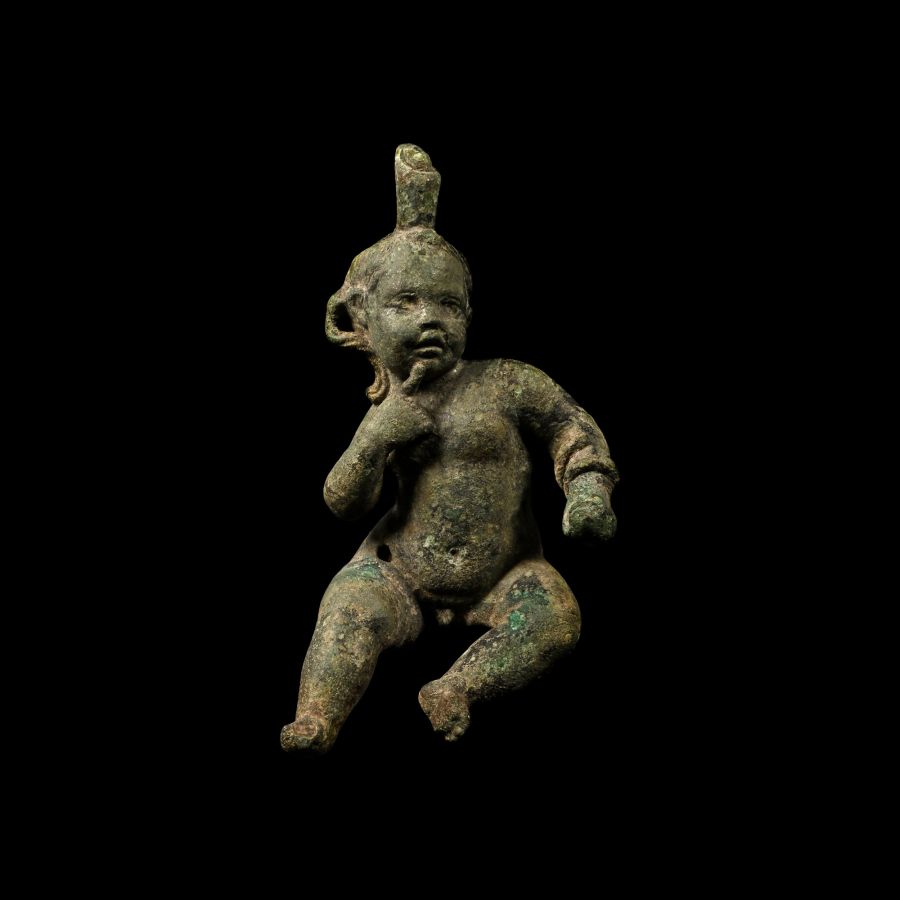
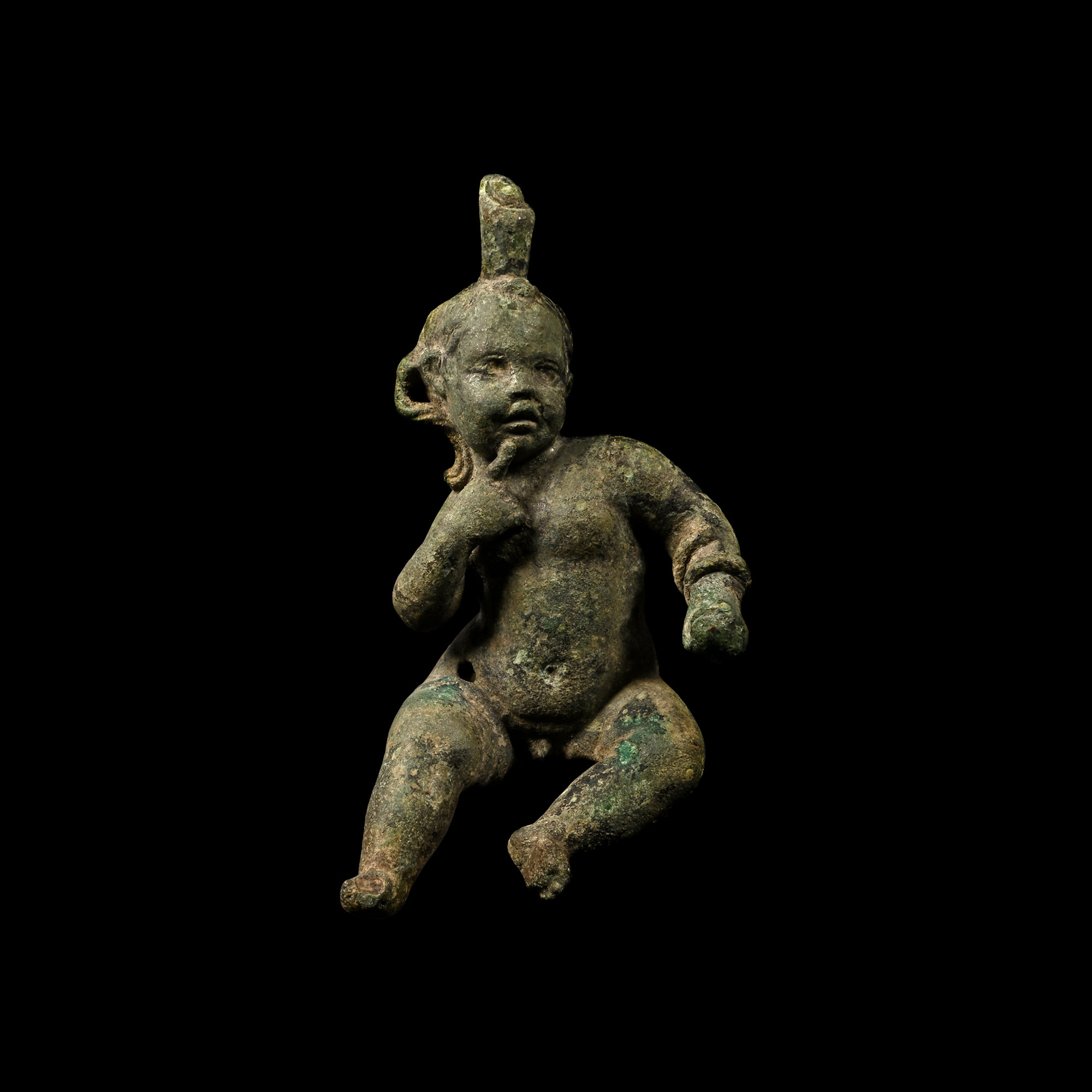
Roman Bronze Figure of Harpocrates, the God of Secrecy
1ST CENTURY A.D.
2 3/4 in. (145 grams, 72 mm).
Modelled in the round, sitting with miniature double-crown, serpent arm-ring on left wrist, sidelock; fixing socket to right thigh.
ProvenancePrivate collection, Me. A., Florida, USA, early 1990s.
European private collection, acquired in Germany, September 2000.
This lot has been checked against the Interpol Database of stolen works of art and is accompanied by a search certificate number no.12683-234609.
See Swan Hall, E., 'Harpocrates and Other Child Deities in Ancient Egyptian Sculpture' in Journal of the American Research Center in Egypt, Vol. 14, 1977, pp.55-58, fig.1, pl.XXVII; fig.4, for full discussion.
CONDITIONTimeLine Auctions follows a vetting process to ensure the authenticity and legality of all items, reinforcing our commitment to integrity and responsible trading. Each antiquity, antique, and coin lot undergoes thorough examination by a vetting committee of at least ten external specialists, professional trade association members, scientists, and archaeologists: Our Vetting Process
AUCTIONS:
TimeLine is a leading auction house specialising in antiquities, ancient art, collectables, natural history, coins, medals, and books. Our auctions offer museums, collectors, historians, and enthusiasts the opportunity to acquire unique and historically significant pieces.
LOT 0153
Roman Bronze Figure of Harpocrates, the God of Secrecy
Estimate £2,000 - 3,000€2,320 - 3,480 (for guidance only)$2,700 - 4,050 (for guidance only)
-
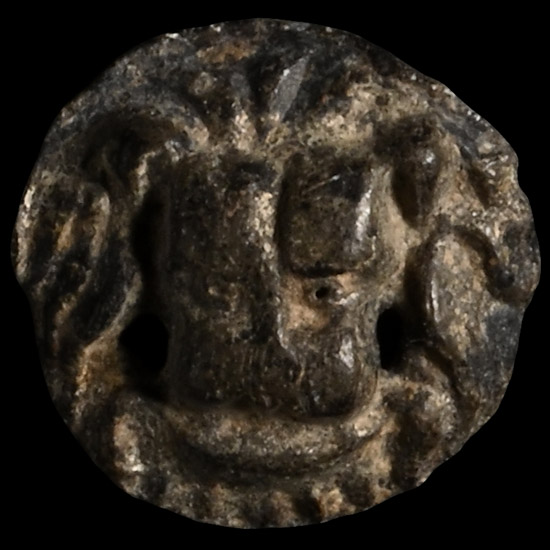
Roman Silver Lion's Head Mount
1st-4th century A.D.Sold for (Inc. bp): £33
Discoid mount with raised facial detailing framed by a striated mane. 0.46 grams, 9.61 mm
From the private collection of a European gentleman (1942-2024), formed since the 1970s. -
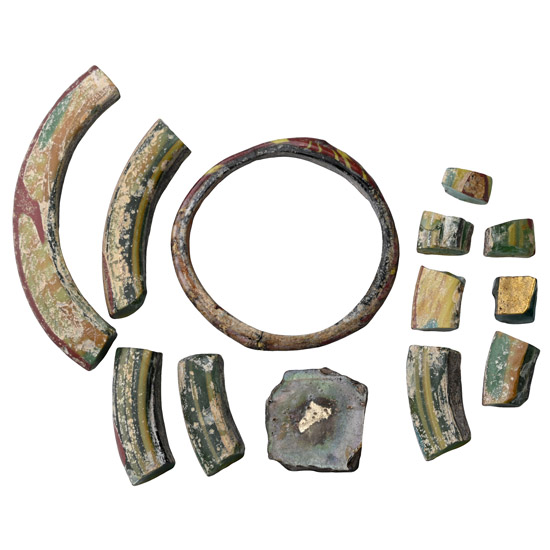
Roman Glass Bangle and Glass Fragment Collection
1st-4th century A.D.Sold for (Inc. bp): £13
Comprising: a D-section child's glass bangle with drawn decoration; polychrome glass bangle fragments; a thick, rectangular glass inlay(?). 53.2 grams total, 12-74 mm
From the private collection of a European gentleman (1942-2024), formed since the 1970s. -
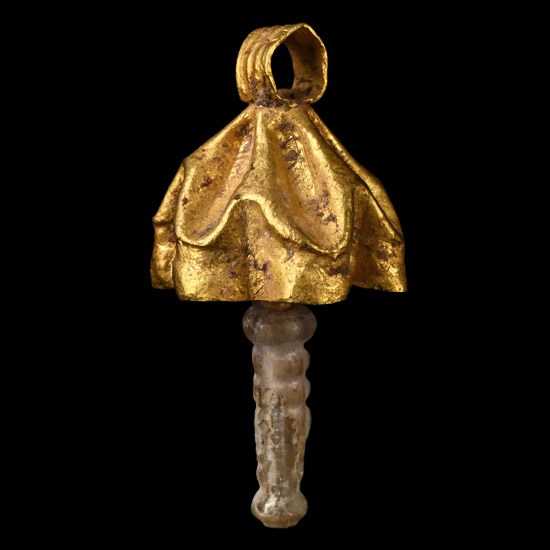
Roman Gold Bell Pendant
1st-4th century A.D.Sold for (Inc. bp): £156
Formed as a six-petalled flower with deeply grooved petals, a hanging loop at the centre with a separate bar attachment and a glass bead. 1.72 grams, 23.4 mm
From the private collection of a European gentleman (1942-2024), formed since the 1970s.
