
Loading, please wait...
LOT 0144
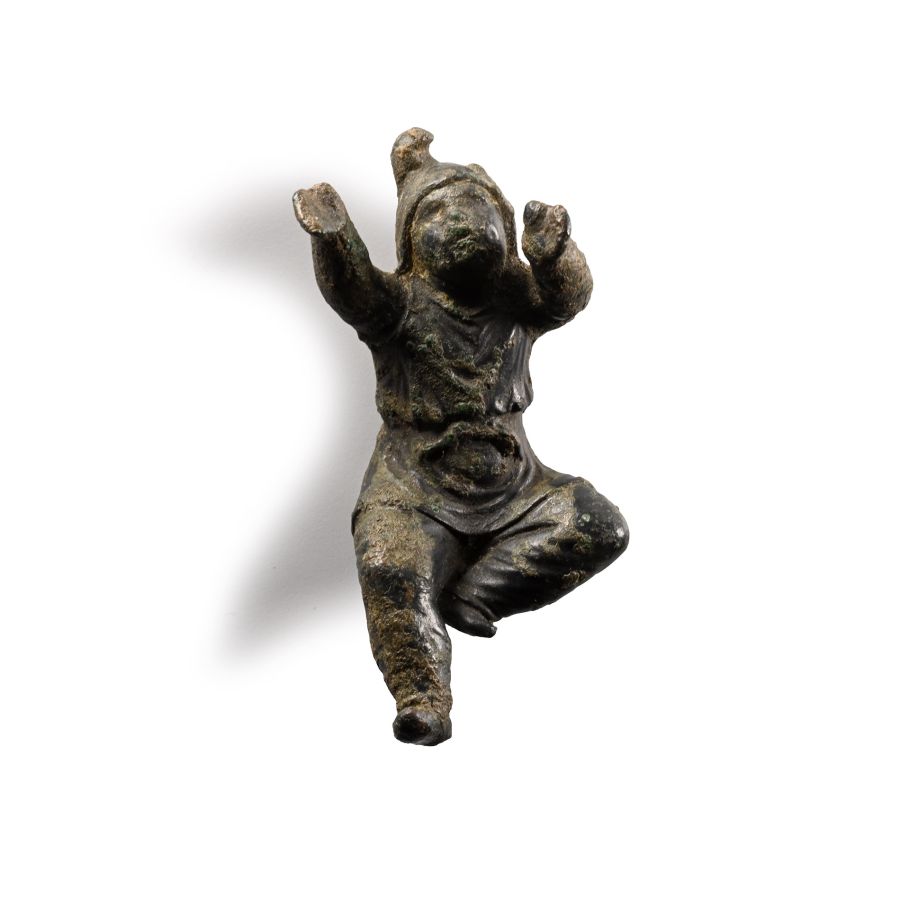
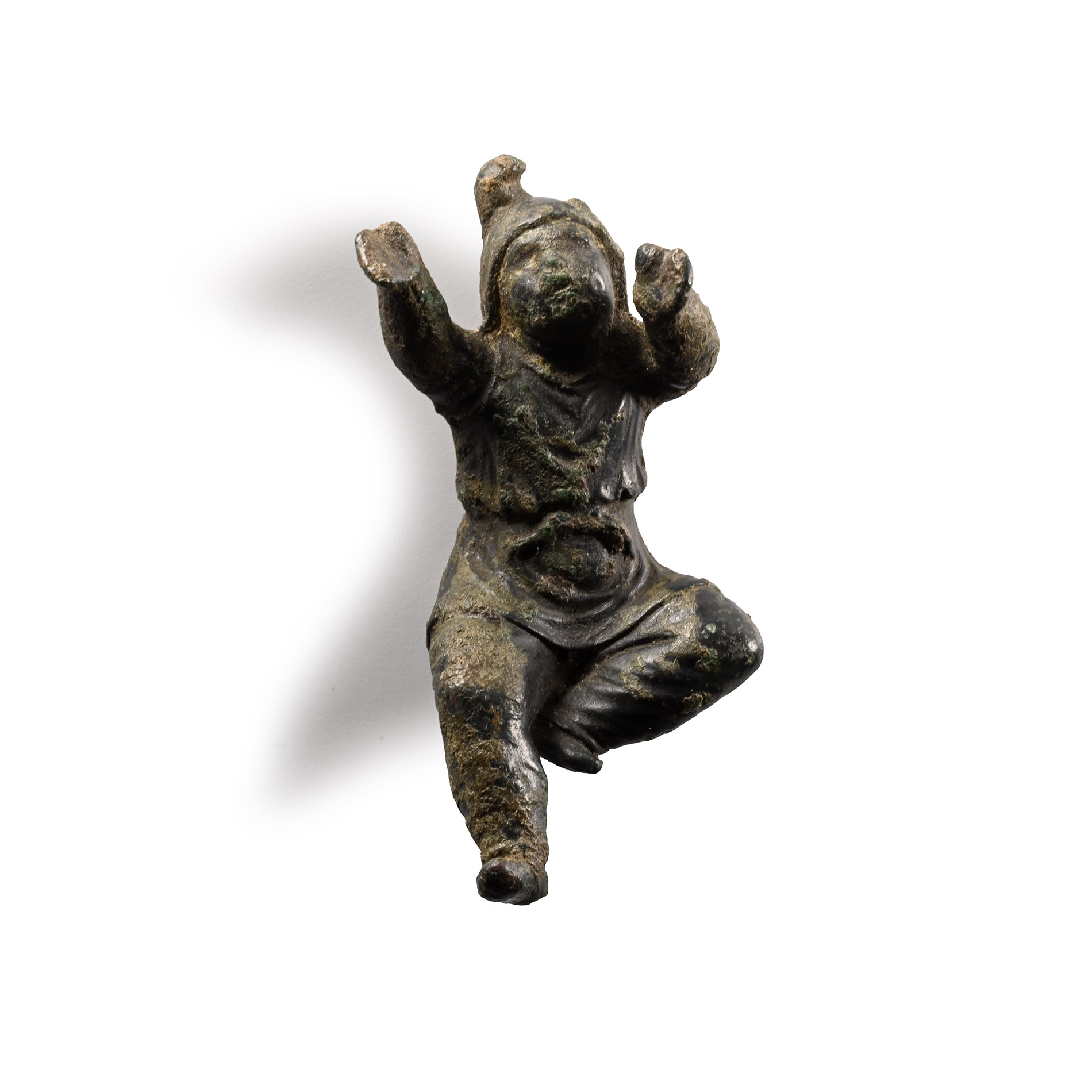
Roman Bronze Figure of a Boy in Oriental Dress
1ST-2ND CENTURY A.D.
2 3/8 in. (14.6 grams, 61 mm).
Sitting with one leg extended and the other bent beneath the body, arms raised in supplication; loose fitting trousers and knee-length tunic gathered at the waist, boots on the feet and a separate pointed hood on the head; Scythian or similar costume.
ProvenancePrivate Swiss collection, acquired 2001.
LiteratureSee Jacobson, E., The Art of the Scythians: The Interpenetration of Cultures at the Edge of the Hellenic World, Leiden, 1995, for discussion.
CONDITIONTimeLine Auctions follows a vetting process to ensure the authenticity and legality of all items, reinforcing our commitment to integrity and responsible trading. Each antiquity, antique, and coin lot undergoes thorough examination by a vetting committee of at least ten external specialists, professional trade association members, scientists, and archaeologists: Our Vetting Process
AUCTIONS:
TimeLine is a leading auction house specialising in antiquities, ancient art, collectables, natural history, coins, medals, and books. Our auctions offer museums, collectors, historians, and enthusiasts the opportunity to acquire unique and historically significant pieces.
LOT 0144
Roman Bronze Figure of a Boy in Oriental Dress
Estimate £1,000 - 1,400€1,160 - 1,620 (for guidance only)$1,350 - 1,890 (for guidance only)
-
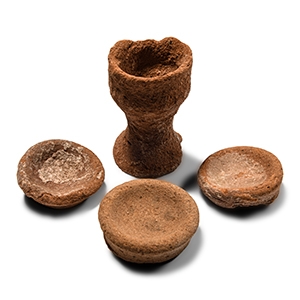
Roman Terracotta Vessel Collection
Circa 1st-4th century A.D.Sold for (Inc. bp): £52
Comprising a small chalice-shaped vessel with tall foot and three shallow miniature platters. 78 grams total, 34-54 mm
Property of a UK gentleman, acquired in the 1970s. Property of an East Sussex, UK, gentleman. -
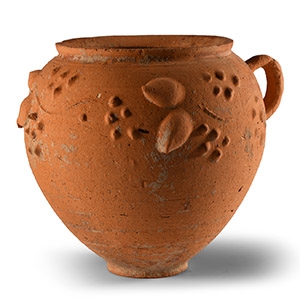
Roman Pale Red Barbotine Cup
Circa 1st century B.C.Estimate: £1,000 - 1,400 (+bp*)
Opening Bid: £500
With horizontal banding to the lower body, high-relief moulded vine and grape decoration to the shoulder, loop handle and raised rim; rare. 211 grams, 11.5 cm wide
Acquired 1980-2015. Ex Abelita family collection. -
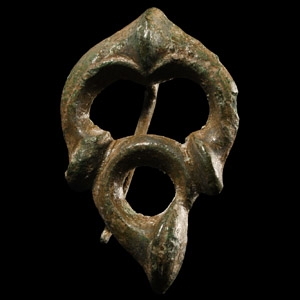
British Roman Military Bronze Trumpet-Whorl Plate Brooch
1st-2nd century A.D.Sold for (Inc. bp): £98
With openwork sub-triangular body made up of three curved trumpets motifs; to the reverse the double pin lug supporting the hinged copper alloy pin, and, at the opposite end is a flat longitudinal catch plate. 7.19 grams, 35 mm
Found whilst searching with a metal detector near Conistone with Kilnsey, North Yorkshire, UK, early 2022. This is a find of note and has been designated to be of Regional importance. Accompanied by a copy of the British Museum's Portable Antiquities Scheme (PAS) report no.SWYOR-A187CC.
