
Loading, please wait...
LOT 0577
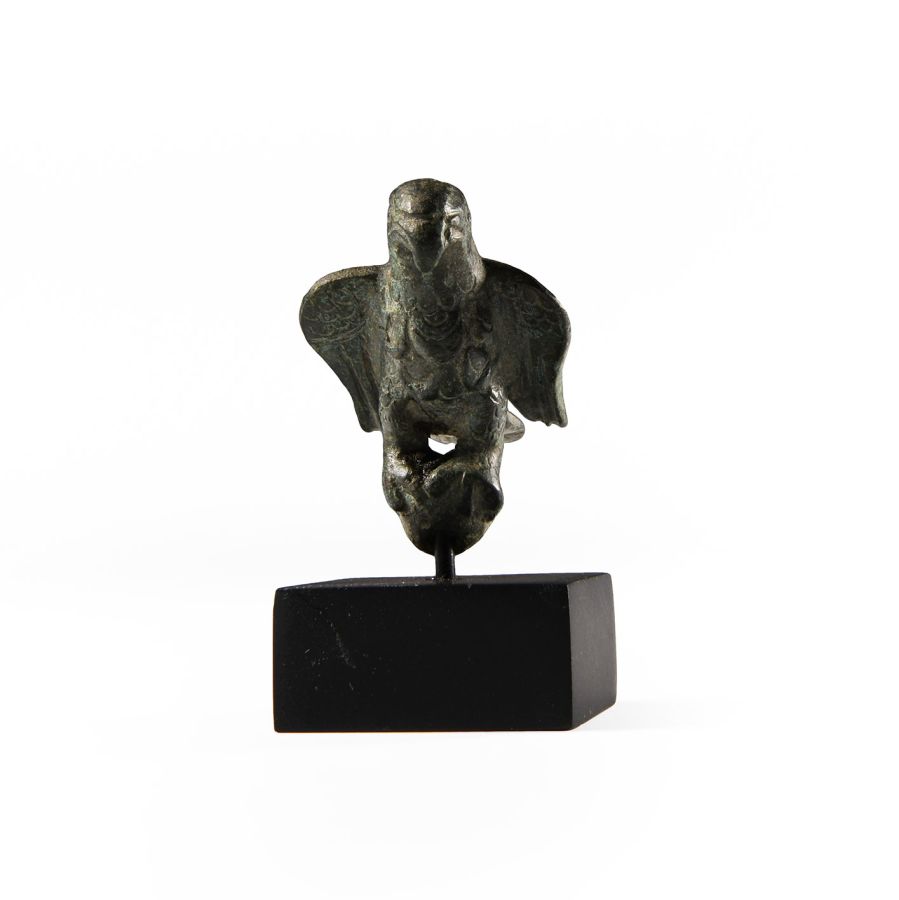
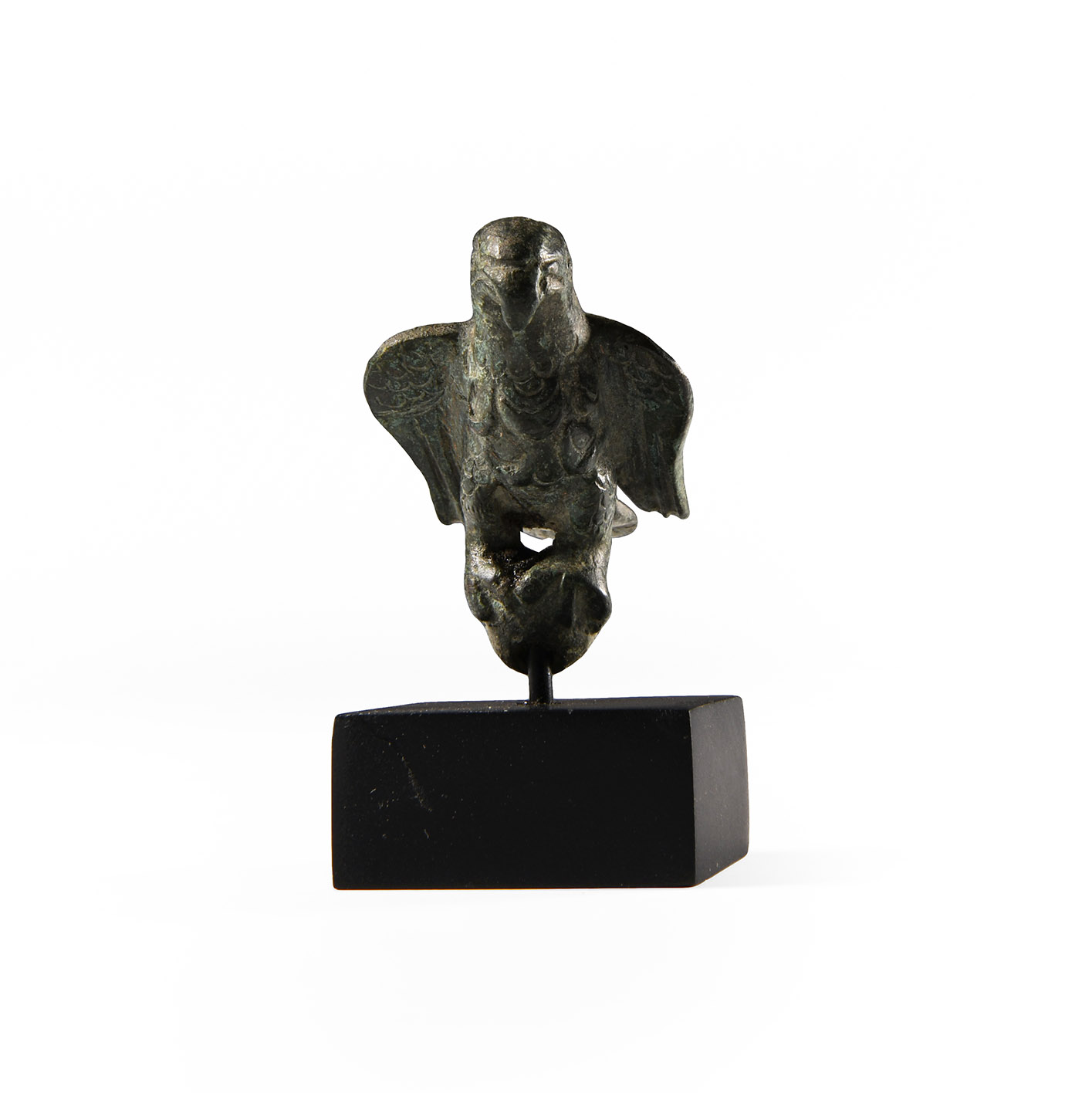
Roman Bronze Eagle on Globe Statuette
1ST-4TH CENTURY A.D.
1 1/2 in. (39 grams, 39 mm).
Modelled in the round with naturalistic detailing, standing on globe with wings held open.
Provenance‘The Ancient Menagerie Collection’ formerly the property of a Cambridgeshire lady, collected since the 1990s and acquired from auctions and dealers throughout Europe and the USA, now ex London collection.
CONDITIONTimeLine Auctions follows a vetting process to ensure the authenticity and legality of all items, reinforcing our commitment to integrity and responsible trading. Each antiquity, antique, and coin lot undergoes thorough examination by a vetting committee of at least ten external specialists, professional trade association members, scientists, and archaeologists: Our Vetting Process
AUCTIONS:
TimeLine is a leading auction house specialising in antiquities, ancient art, collectables, natural history, coins, medals, and books. Our auctions offer museums, collectors, historians, and enthusiasts the opportunity to acquire unique and historically significant pieces.
-

Roman Redware Sherd with Warriors from the Trojan Cycle
4th-5th century A.D.Sold for (Inc. bp): £104
Displaying an possibly unfinished scene composed of robed warriors or other figures wearing Phrygian caps, wide tunics with segmenta, oriental trousers (anaxyrida) and tugging on a rope; later attachment loop to the reverse. 163 grams, 10.1 cm
Acquired 1960s-1990s. From the late Alison Barker collection, a retired London barrister.
The scene probably represents an episode of the Trojan cycle, with the Trojans (usually represented in Late Antiquity with a Phrygian cap, wide sleeved tunics and Persian-style trousers) dragging the wooden horse inside the walls of Troy. In the late Roman Empire the Trojan cycle became often the subject of artistic representations, such as the famous Ilias Ambrosiana now preserved in Milan, or the miniatures of the Vergilius Romanus. -
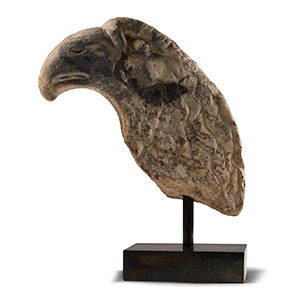
Roman Marble Eagle Head
1st-4th century A.D.Sold for (Inc. bp): £650
Carved facing left, with deep-set hooded eyes and a hooked beak, stylised feather detailing to the head; mounted on a custom-made display base. 1.88 kg total, 23 cm high including stand
Ex Simmons Gallery, London E11, UK. Ex London collection, 1980s-1990s.
In the Greco-Roman world, the eagle was the symbol of Zeus. It is most probable that this eagle flanked a statue of the god. A story is bruited abroad to the effect that Zeus, wanting to determine the centre of the world, let eagles fly of equal speed from west and east. The birds, flying in opposite directions, met at Pytho and that marked the central point of the whole world. -
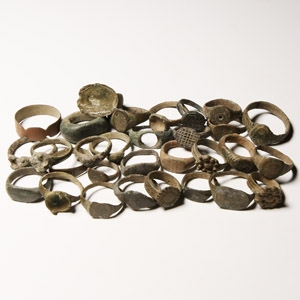
Roman to Medieval Bronze Ring Collection
1st-16th century A.D.Sold for (Inc. bp): £182
Composed of a variety of ring types and sizes from various time periods, including examples with decorative bezels. 86 grams total, 14-24 mm
Acquired on the German art market around 2000s. From the collection of an EU gentleman living in the UK.
