
Loading, please wait...
LOT 0933
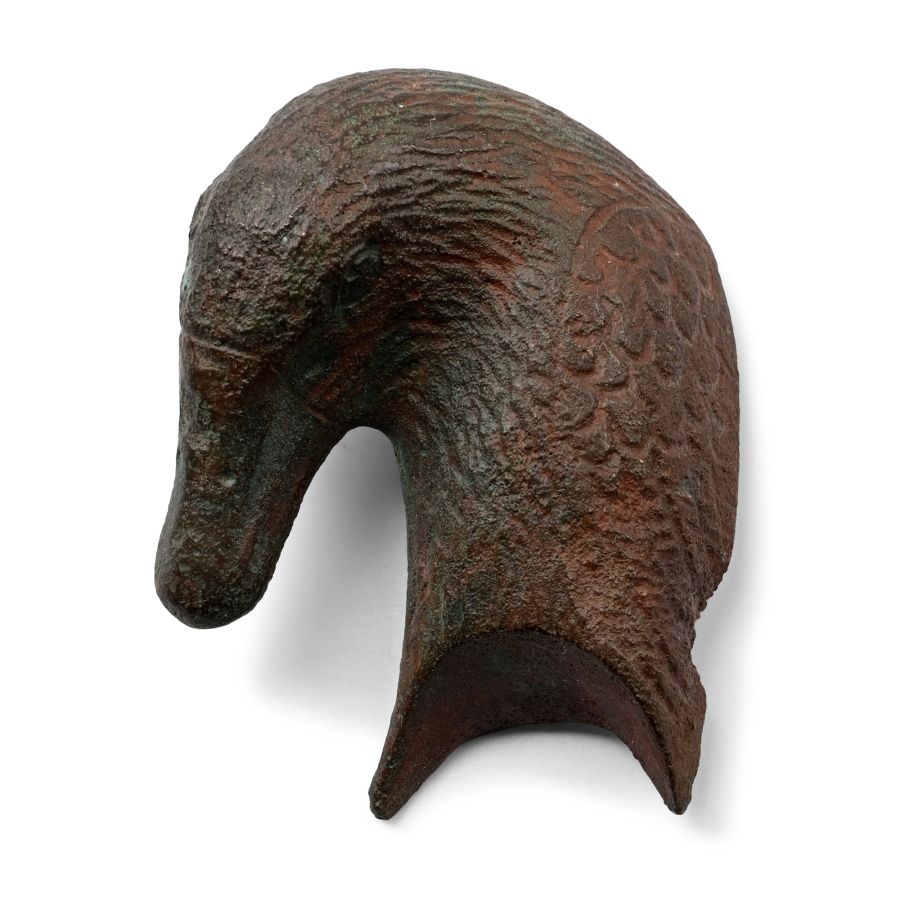
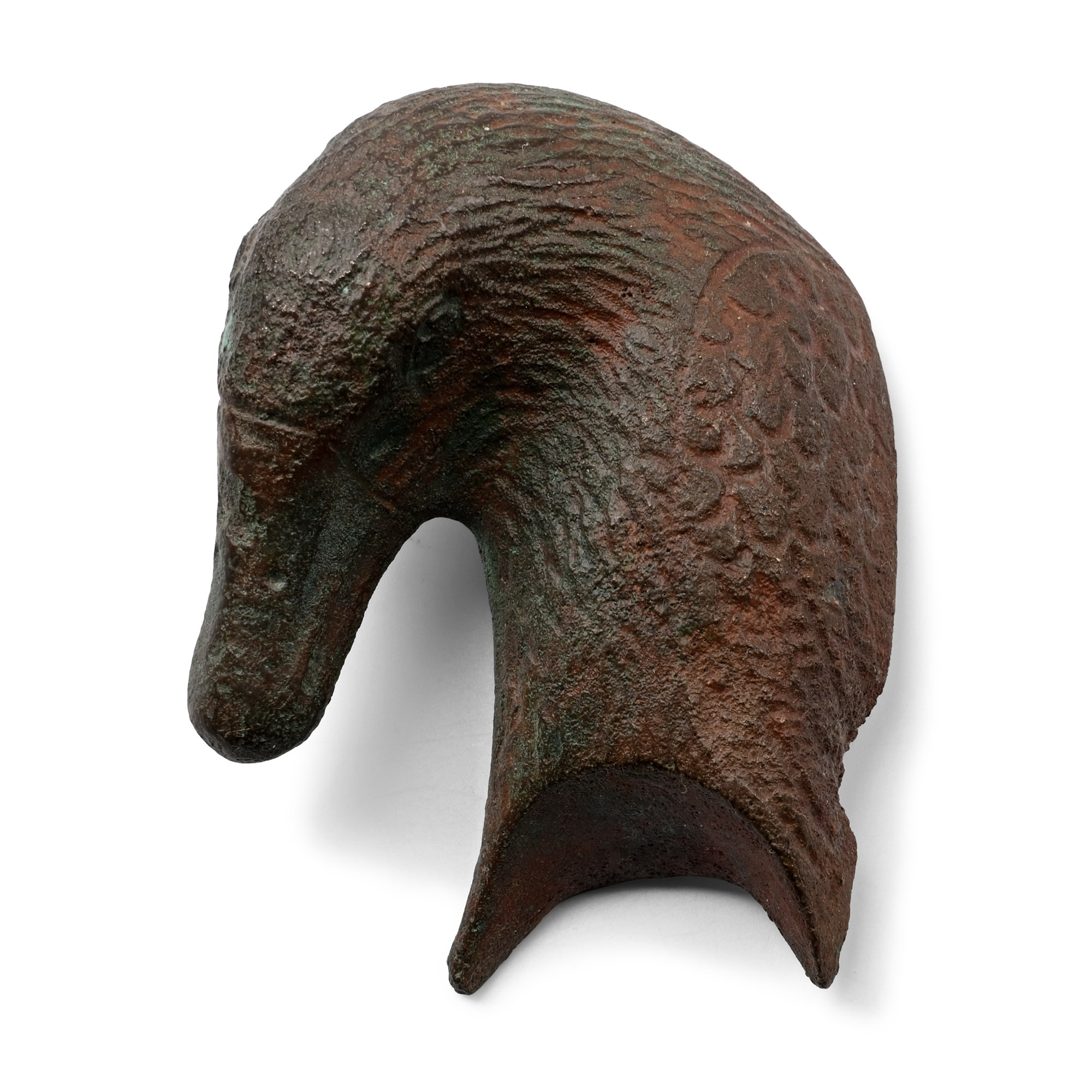
Roman Bronze Duck's Head Applique
1ST CENTURY A.D.
2 1/2 in. (89 grams, 65 mm).
Modelled in high-relief, hollow-formed with scooped lower end to neck, feather texture.
ProvenanceFrom the collection of a gentleman, acquired on the London art market in the 1990s.
CONDITIONTimeLine Auctions follows a vetting process to ensure the authenticity and legality of all items, reinforcing our commitment to integrity and responsible trading. Each antiquity, antique, and coin lot undergoes thorough examination by a vetting committee of at least ten external specialists, professional trade association members, scientists, and archaeologists: Our Vetting Process
AUCTIONS:
TimeLine is a leading auction house specialising in antiquities, ancient art, collectables, natural history, coins, medals, and books. Our auctions offer museums, collectors, historians, and enthusiasts the opportunity to acquire unique and historically significant pieces.
-
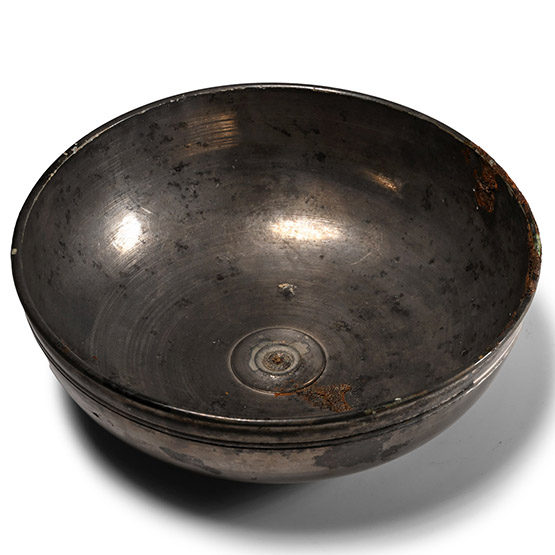
Roman Tinned Bronze Bowl
1st-3rd century A.D.Estimate: £1,200 - 1,700 (‡+bp*)
Opening Bid: £600
Hemispherical in profile with low foot, incised circumferential lines to rim; high-tin surface with silvery appearance. 177 grams, 10.3 cm
Acquired in the mid 1980s-1990s. Private collection, Switzerland, thence by descent. Private collection, since the late 1990s. This lot has been checked against the Interpol Database of stolen works of art and is accompanied by search certificate number no.12234-222176. -

Roman Carnelian Gemstone of the God Serapis
1st-2nd century A.D.Sold for (Inc. bp): £2,860
Orangey-red intaglio with a concave front and flat back, depicting the three-quarter bust of Serapis; displaying a tightly curled beard, shoulder-length wavy hair with a central parting brushed up from the forehead, wearing the characteristic calathus (woven basket or corn-measure) headgear, symbolising fertility; supplied with a museum-quality impression. 0.47 grams, 14 mm
Private English collection, formed between the late 1970s and early 1990s. Private collection, London, UK.
Serapis was a Graeco-Egyptian god combining the Egyptian gods Osiris and Apis, but with a decidedly Greek appearance. He was promoted by Ptolemy I in the 3rd century BC to help unite the Greek and Egyptian people. Later, Ptolemaic rulers spread his worship, and Serapis became popular across the Roman Empire. Outside Egypt, he was often identified as Isis's partner, replacing Osiris. Over time, he also adopted traits associated with the Greek gods, Hades and Dionysus. -
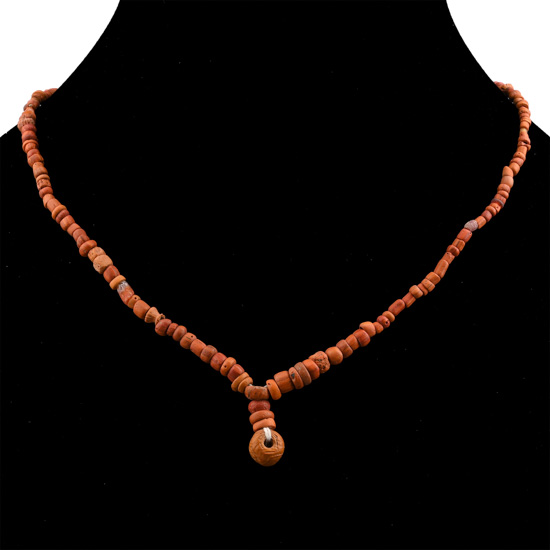
Roman and Other Red Glass Bead Necklace String
1st-4th century A.D. and laterSold for (Inc. bp): £208
Mixed group of gently graduating beads, large oblate bead as a central feature; restrung. 10.79 grams, 39 cm
From London, UK, gallery collection, 1990s.
