
Loading, please wait...
LOT 0870
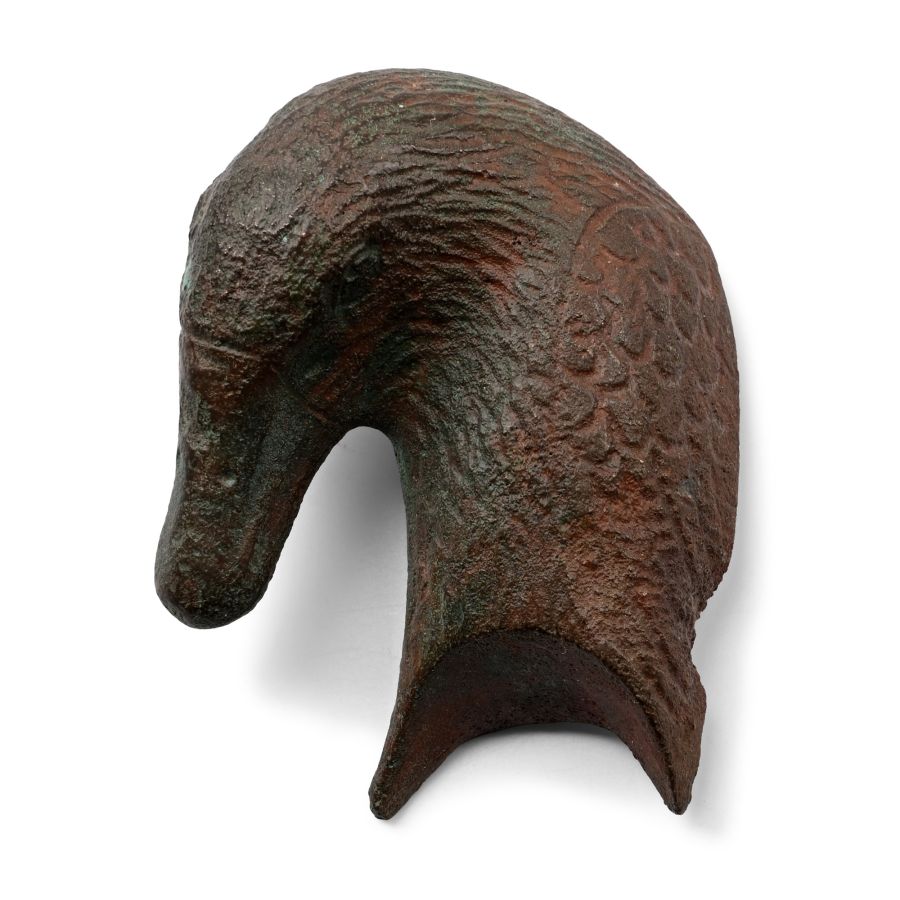
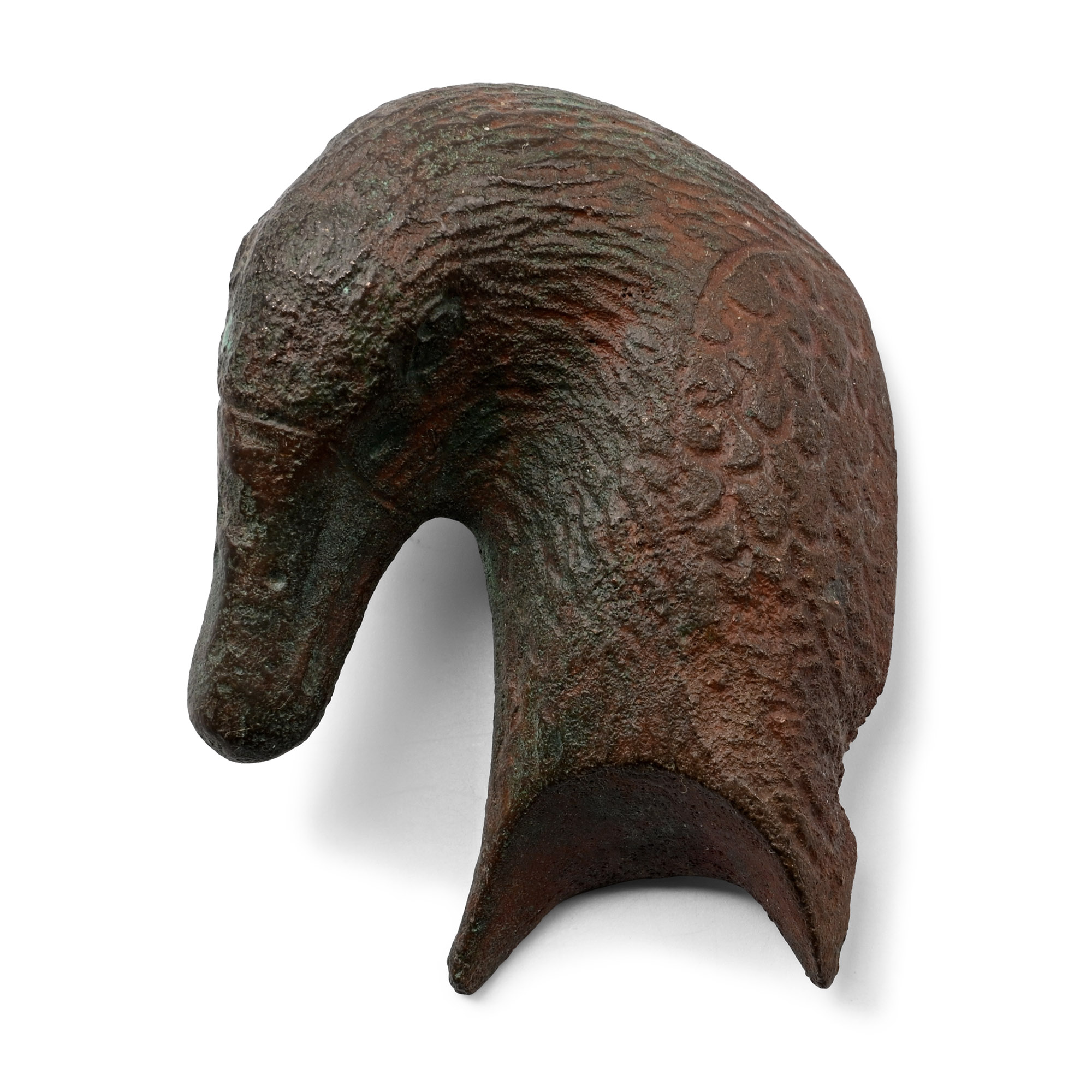
Roman Bronze Duck's Head Applique
1ST CENTURY A.D.
2 1/2 in. (89 grams, 65 mm).
Modelled in high-relief, hollow-formed with scooped lower end to neck, feather texture.
ProvenanceFrom the collection of a gentleman, acquired on the London art market in the 1990s.
This lot is accompanied by an illustrated lot declaration signed by the Head of the Antiquities Department, Dr Raffaele D'Amato.
TimeLine Auctions follows a vetting process to ensure the authenticity and legality of all items, reinforcing our commitment to integrity and responsible trading. Each antiquity, antique, and coin lot undergoes thorough examination by a vetting committee of at least ten external specialists, professional trade association members, scientists, and archaeologists: Our Vetting Process
AUCTIONS:
TimeLine is a leading auction house specialising in antiquities, ancient art, collectables, natural history, coins, medals, and books. Our auctions offer museums, collectors, historians, and enthusiasts the opportunity to acquire unique and historically significant pieces.
LOT 0870
Roman Bronze Duck's Head Applique
Estimate £200 - 300€230 - 350 (for guidance only)$270 - 410 (for guidance only)
-
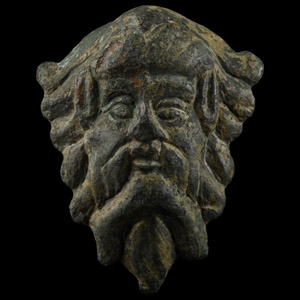
Roman Bronze Applique with Satyr
2nd century A.D.Sold for (Inc. bp): £351
Modelled in the half-round, appliqué mask of a satyr with long shaggy beard. 53.2 grams, 48 mm
Acquired in the 1990s. Private collection, since the late 2003. This lot is accompanied by an illustrated lot declaration signed by the Head of the Antiquities Department, Dr Raffaele D'Amato. -
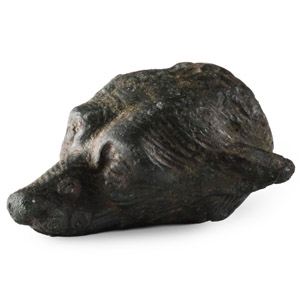
Roman Bronze Head of a Dog
1st-4th century A.D.Estimate: £200 - 300 (+bp*)
Opening Bid: £100
Slender head of a dog with naturalistic features, incised facial and fur details. 28.3 grams, 29 mm
Ex London, UK, art market, late 1990s. From a private UK collection. This lot is accompanied by an illustrated lot declaration signed by the Head of the Antiquities Department, Dr Raffaele D'Amato. -
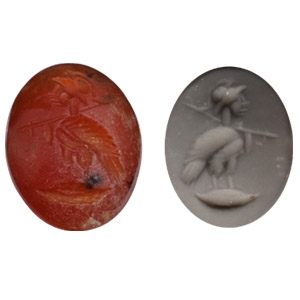
Roman Carnelian Intaglio with Harpy
1st-5th century A.D.Sold for (Inc. bp): £234
Intaglio harpy figure on a baseline; supplied with a museum-quality impression. 0.65 grams, 11 mm
Acquired in 1992. Private collection, thence by descent. Private collection, since the late 1990s. This lot is accompanied by an illustrated lot declaration signed by the Head of the Antiquities Department, Dr Raffaele D'Amato.
