
Loading, please wait...
LOT 0752
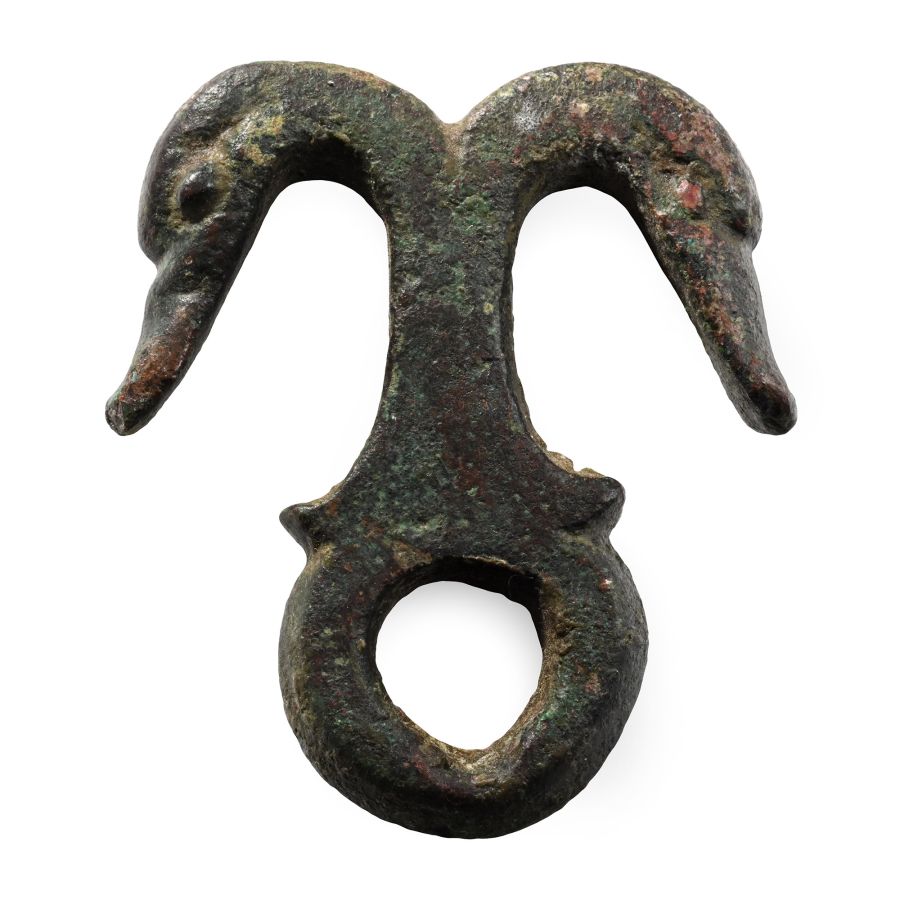
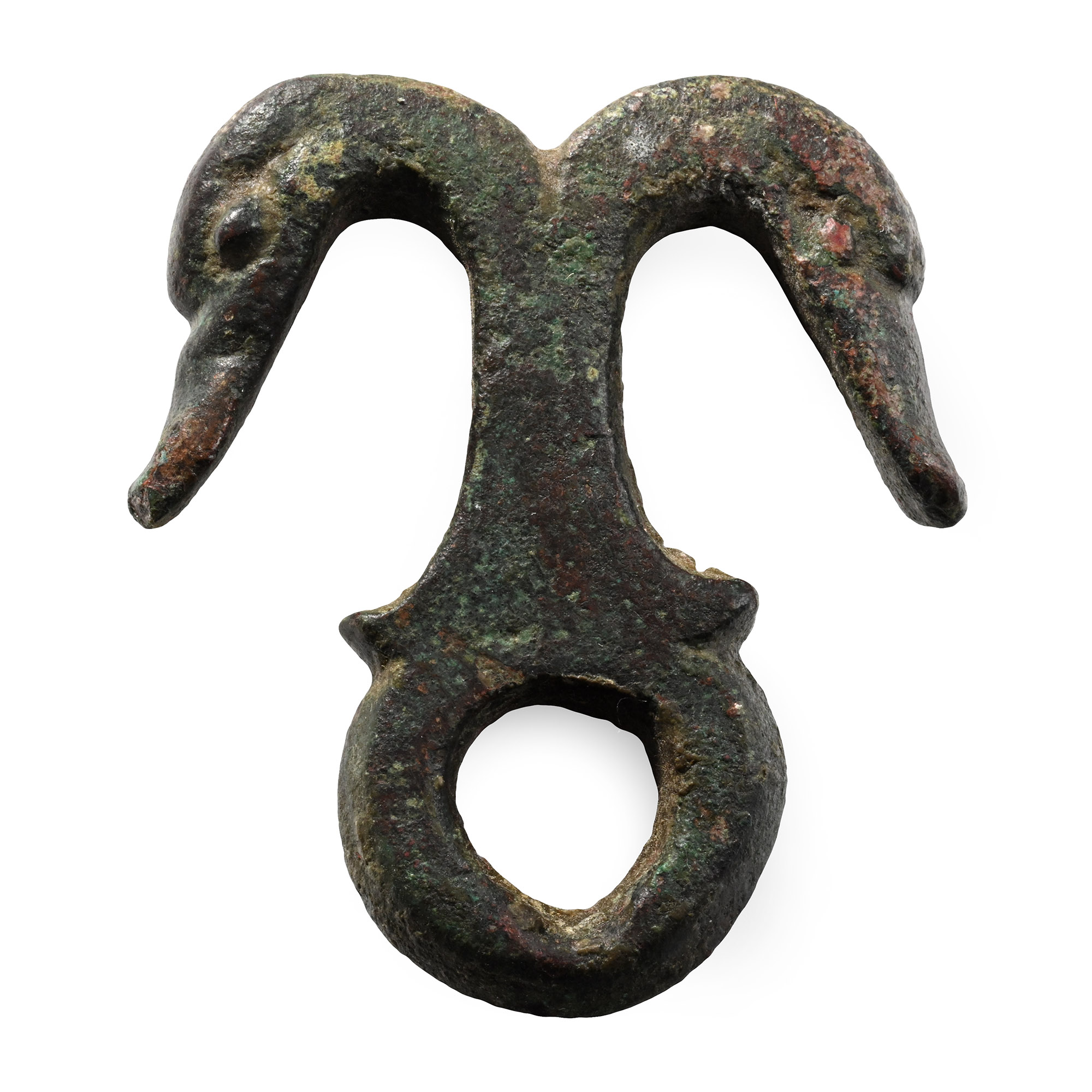
Roman Bronze Double Swan-Head Pendant Hanger
1ST CENTURY A.D.
1 3/4 in. (34.8 grams, 45 mm).
Composed of two elegantly curving swan's heads with pellet eyes, large loop below. [No Reserve]
ProvenanceFrom the private coin collection of a West London, UK, gentleman, formed since the mid 1980s.
CONDITIONTimeLine Auctions follows a vetting process to ensure the authenticity and legality of all items, reinforcing our commitment to integrity and responsible trading. Each antiquity, antique, and coin lot undergoes thorough examination by a vetting committee of at least ten external specialists, professional trade association members, scientists, and archaeologists: Our Vetting Process
AUCTIONS:
TimeLine is a leading auction house specialising in antiquities, ancient art, collectables, natural history, coins, medals, and books. Our auctions offer museums, collectors, historians, and enthusiasts the opportunity to acquire unique and historically significant pieces.
-
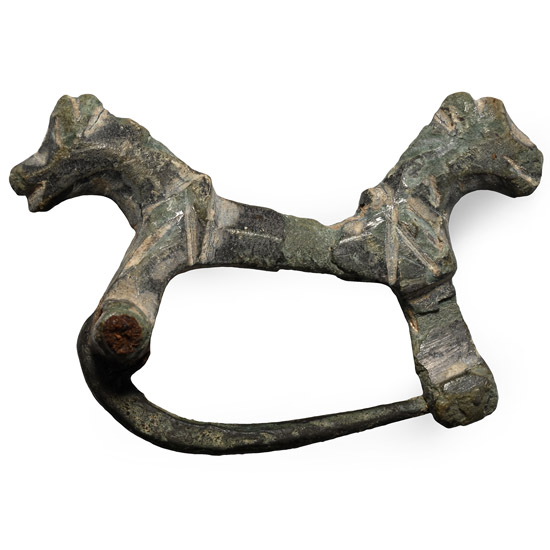
Roman Bronze Double-Horse Brooch
4th-5th century A.D.Sold for (Inc. bp): £111
Bow brooch formed as an arch with addorsed horse-heads with notched detailing, pin and catchplate below. 8.78 grams, 38 mm
From the private coin collection of a West London, UK, gentleman, formed since the mid 1980s. -
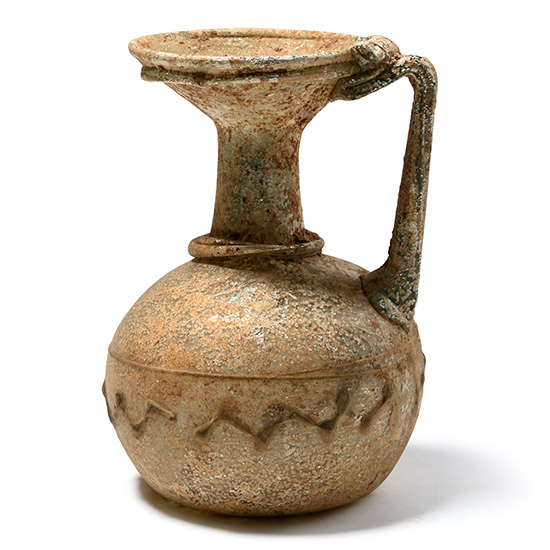
Roman Iridescent Glass Pitcher with Trail
3rd-4th century A.D.Sold for (Inc. bp): £338
Bulbous body with an applied zig-zag trail and a circumferential band above, and an applied collar at the base of the tubular neck and another beneath the flaring mouth, with a strap handle to the rear. 76 grams, 10.7 cm
Acquired in the 1990s from London dealerships and auction houses. From the Lonson collection.
In Ancient Rome, there were two different types of pitchers: the urcei used for water or the oinochoae, used for wine. They were employed to serve liquids at banquets, pour water for handwashing (probably the purpose of this urceus), and to store everyday goods. -
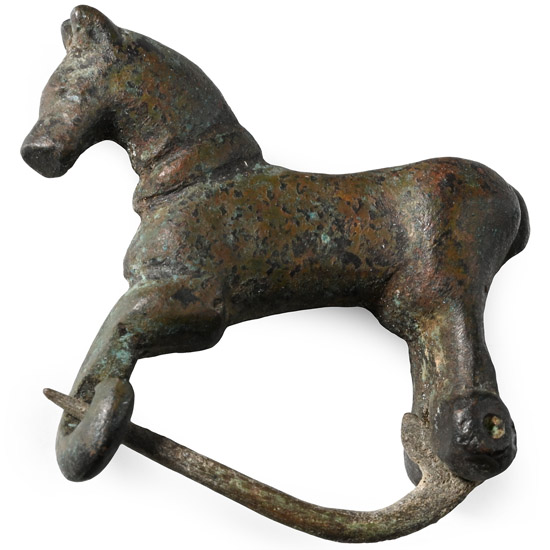
Roman Bronze Horse Brooch
2nd-3rd century A.D.Sold for (Inc. bp): £442
Bow brooch formed as a horse modelled in the round with a halter to the neck; fore-legs forming the catch, rear legs with a transverse bar and hinged pin beneath. 14.9 grams, 28 mm
From the private coin collection of a West London, UK, gentleman, formed since the mid 1980s.
