
Loading, please wait...
LOT 0854
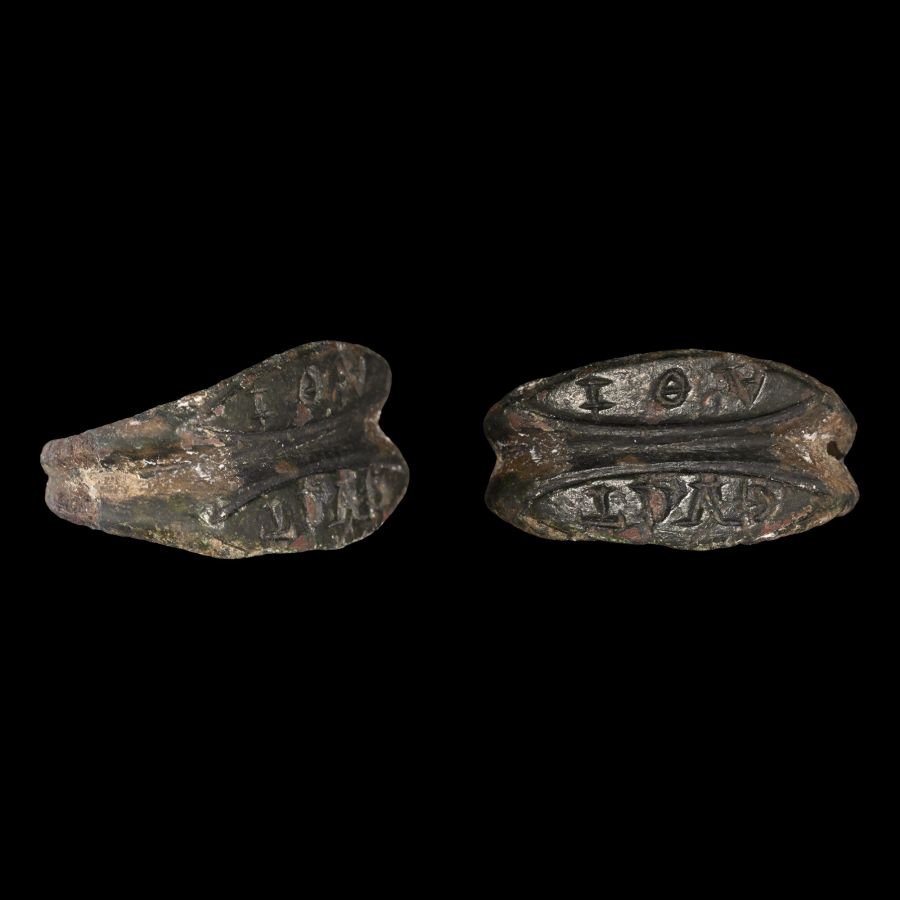
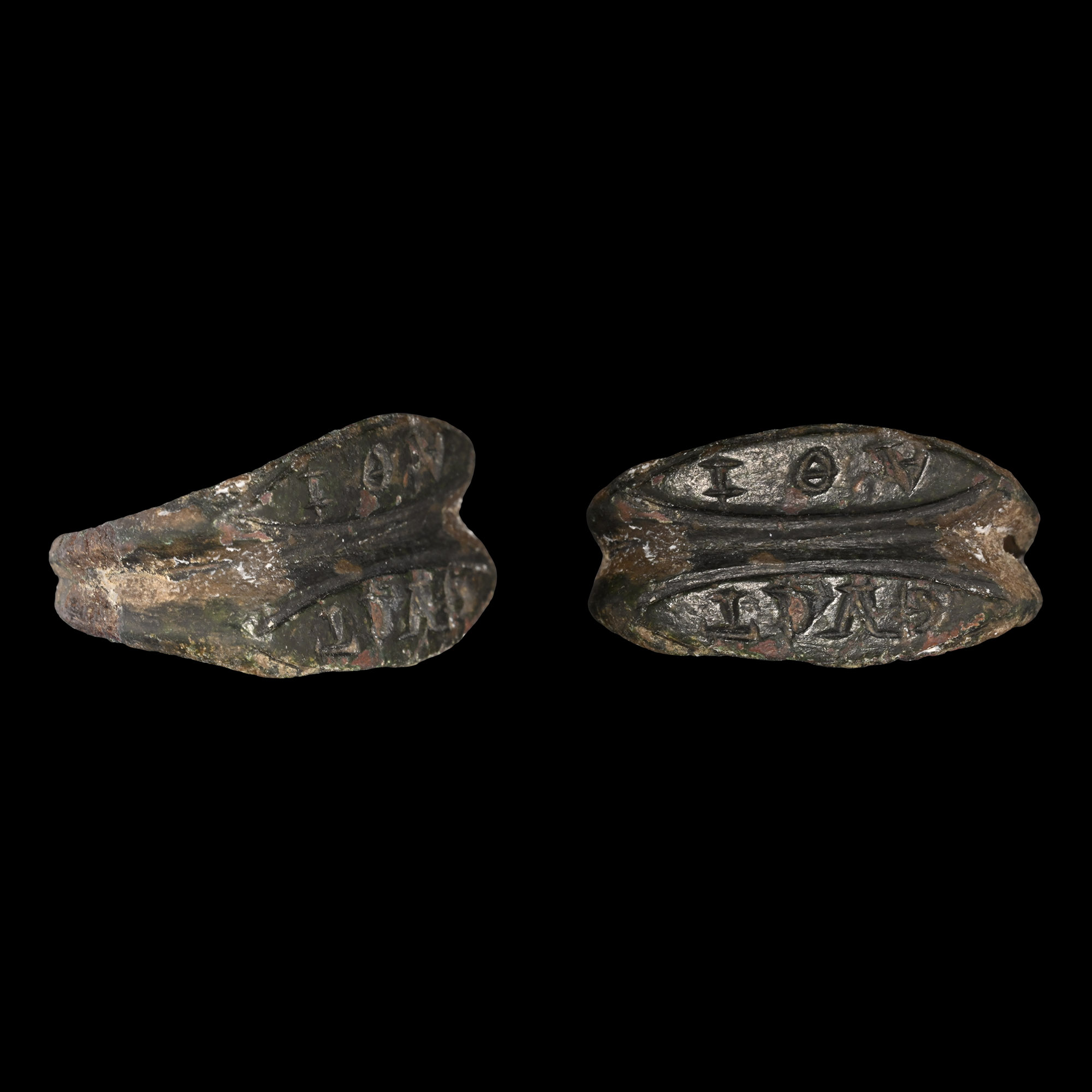
Roman Bronze Double Bezel Ring with Greek Inscription
3RD CENTURY A.D.
3/4 in. (2.28 grams, 20.87 mm overall, 18.32 mm internal diameter (approximate size British I, USA 4 1/4, Europe 7.44, Japan 7)).
Featuring a D-section hoop and two lentoid-shaped bezels, one with 'AΘI' and the other with 'EVCT' for 'Eustatii = of Eustatios'. [No Reserve]
ProvenanceFrom the private collection of a European gentleman (1942-2024), formed since the 1970s.
CONDITIONTimeLine Auctions follows a vetting process to ensure the authenticity and legality of all items, reinforcing our commitment to integrity and responsible trading. Each antiquity, antique, and coin lot undergoes thorough examination by a vetting committee of at least ten external specialists, professional trade association members, scientists, and archaeologists: Our Vetting Process
AUCTIONS:
TimeLine is a leading auction house specialising in antiquities, ancient art, collectables, natural history, coins, medals, and books. Our auctions offer museums, collectors, historians, and enthusiasts the opportunity to acquire unique and historically significant pieces.
-
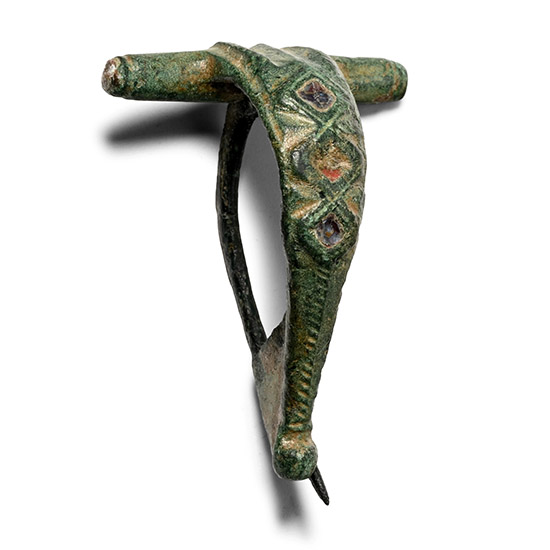
Roman Enamelled Bronze Bow Brooch
Circa 2nd century A.D.Sold for (Inc. bp): £156
Dolphin-type T-shaped bow brooch with tapering crossbar, bow ornamented with segmentation to the obverse and enamel fill; trumpet-shaped lobe finial; catch and hinged pin to reverse. 6.17 grams, 36 mm
Found near North Ripon, Yorkshire, UK. Acquired on the UK art market. Property of a Lancashire, UK, collector. -
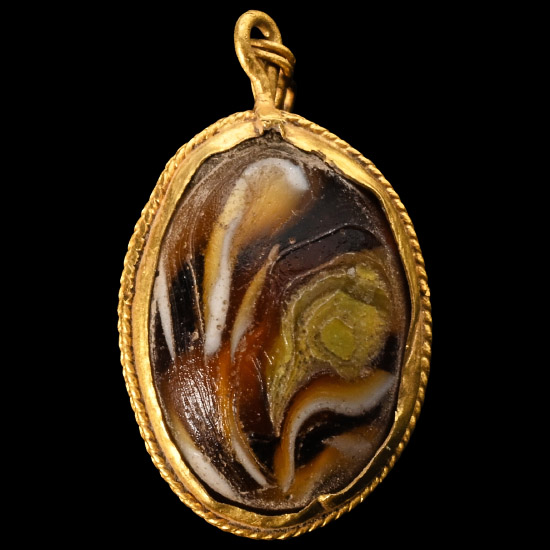
Roman Gold Pendant with Cabochon
1st-2nd century A.D.Sold for (Inc. bp): £247
With suspension loop and link, filigree fillet to the border, and an inset glass cabochon. 1.54 grams, 23 mm
Ex property of a European gentleman living in the UK; formerly in a private collection formed in the 1990s. Private collection, Suffolk, UK. -
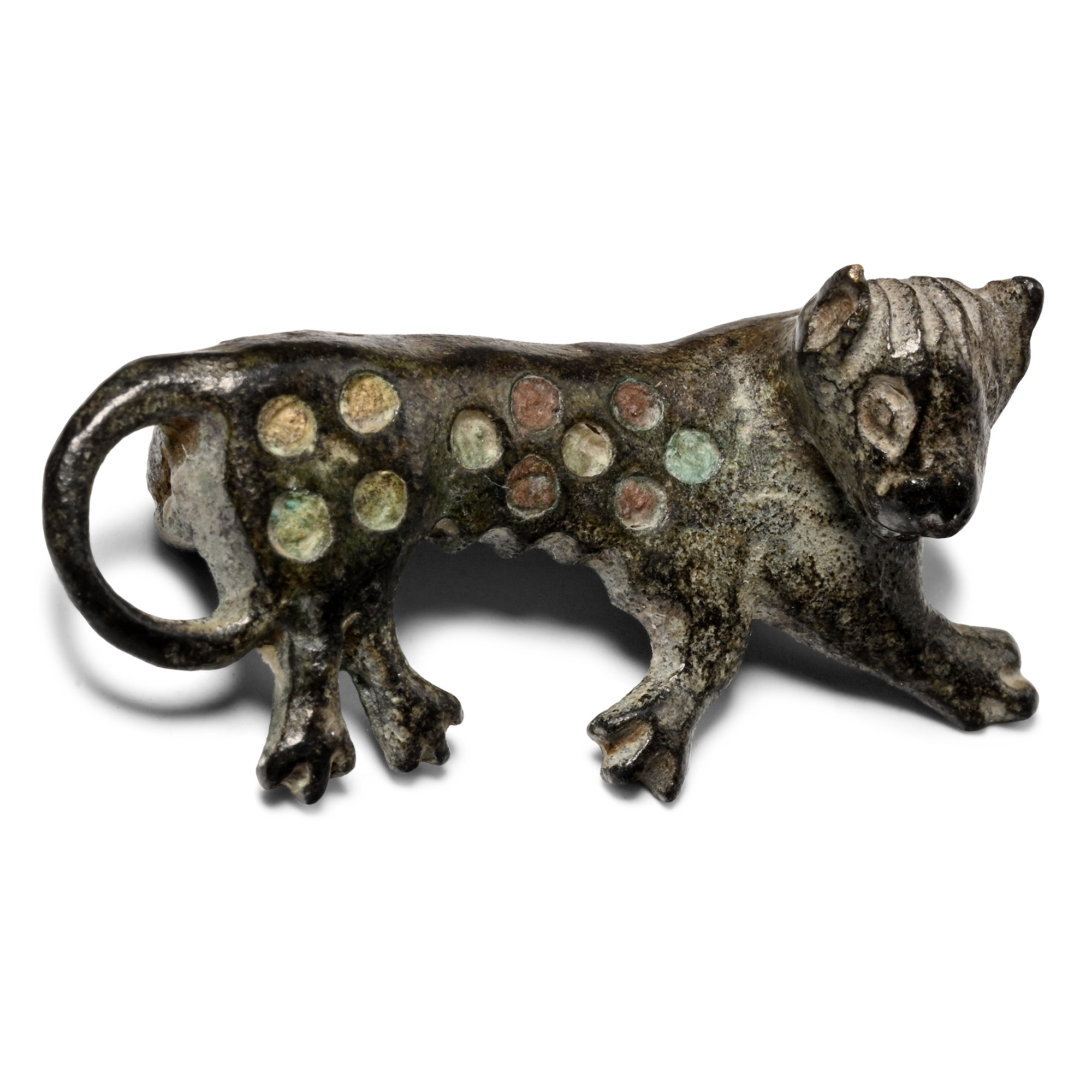
Roman Bronze Panther Plate Brooch
2nd century A.D.Sold for (Inc. bp): £390
Formed as a reclining panther with legs extended and tail recuved to the rump, head raised and modelled in the round; enamelled roundel cells to the flanks; hinged pin and catch to the reverse. 10.36 grams, 36 mm
Acquired on the UK art market. Property of a Lancashire, UK, collector. Accompanied by a certificate of authenticity from Clare Morris, dated 26 February 2012.
