
Loading, please wait...
LOT 0783
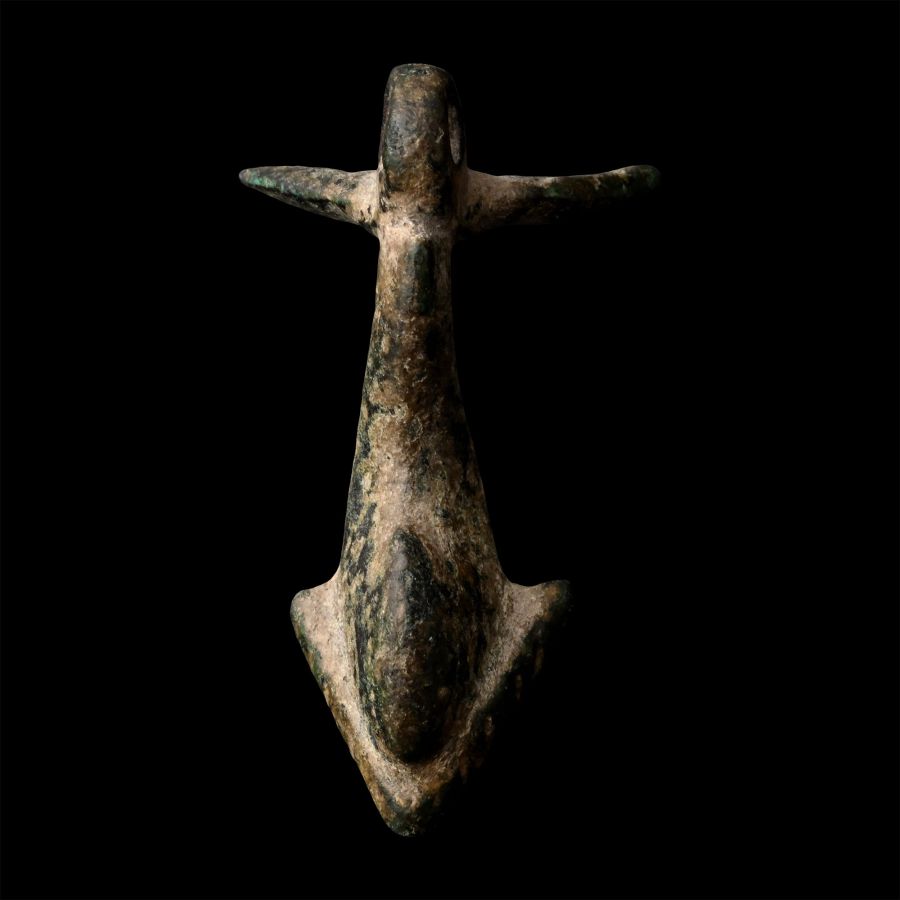
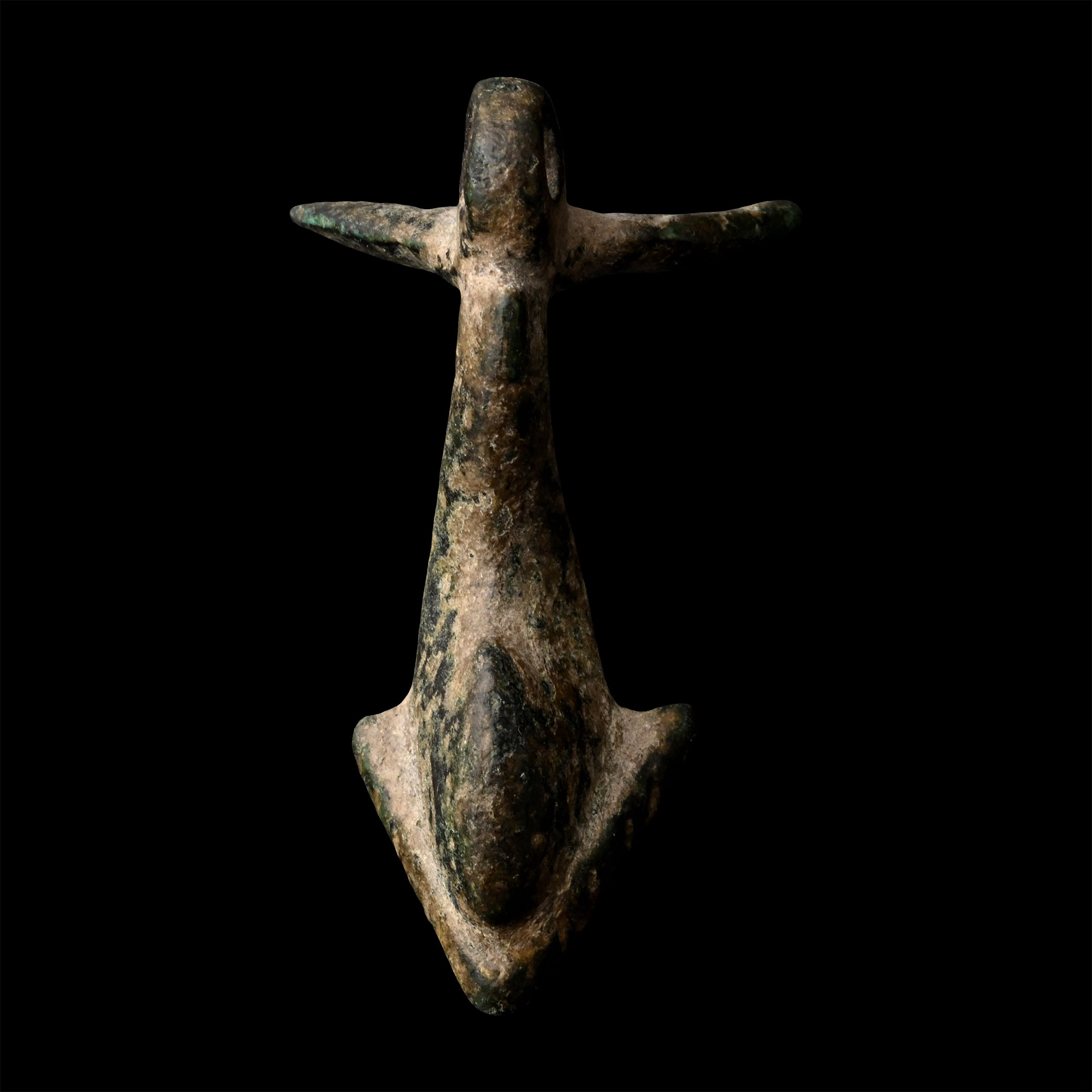
Roman Bronze Dolphin Mount
1ST-4TH CENTURY A.D.
1 3/8 in. (11.2 grams, 37.6 mm).
Stylised figure with curving body and splayed crescentic tail with a loop above. [No Reserve]
ProvenanceFrom the private collection of a European gentleman (1942-2024), formed since the 1970s.
CONDITIONTimeLine Auctions follows a vetting process to ensure the authenticity and legality of all items, reinforcing our commitment to integrity and responsible trading. Each antiquity, antique, and coin lot undergoes thorough examination by a vetting committee of at least ten external specialists, professional trade association members, scientists, and archaeologists: Our Vetting Process
AUCTIONS:
TimeLine is a leading auction house specialising in antiquities, ancient art, collectables, natural history, coins, medals, and books. Our auctions offer museums, collectors, historians, and enthusiasts the opportunity to acquire unique and historically significant pieces.
-
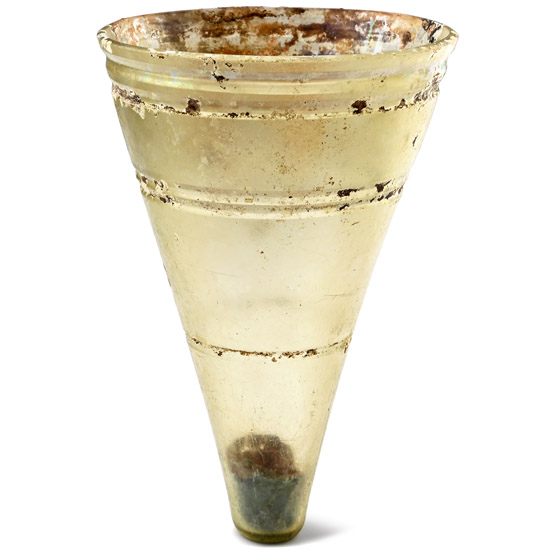
Large Roman Cut-Glass Beaker
4th-5th century A.D.Estimate: £1,800 - 2,400 (+bp*)
Opening Bid: £900
With a thick conical body and a pontil base, five horizontal grooves cut around the outer face of the body; traces of iridescence. 295 grams, 19 cm
Dr Jutaro Kawabe, Nagoya, Japan, his collection formed in the 1960s-1970s. with Hoshigaoka Gallery until the late 1990s. Private collection, London, UK. This lot has been checked against the Interpol Database of stolen works of art and is accompanied by search certificate number no.13277-254062.
Conical vessels of this form could be used as either a lamp or a beaker; notably during the late imperial period in the eastern provinces of the Roman Empire and in the early Migration period. Deep cuts on this piece suggest it was used with suspension chains or ropes, making it highly likely that this example was used as a lamp. -
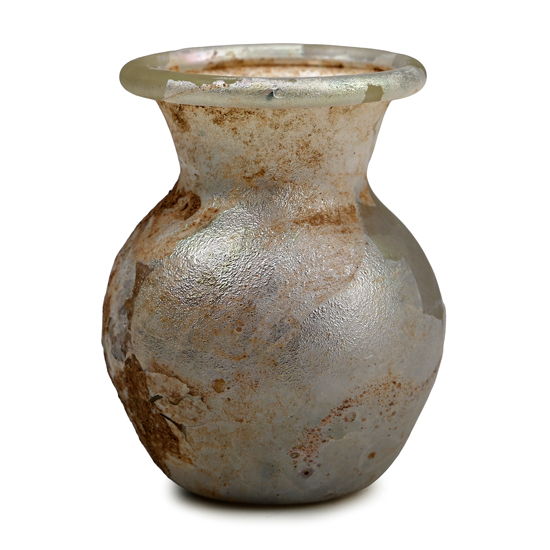
Roman Iridescent Glass Jar
1st-4th century A.D.Sold for (Inc. bp): £130
Of squat profile with dimpled base, broad mouth with rolled and everted rim. 25.5 grams, 64 mm
Ex London, UK, art market 1990s. -
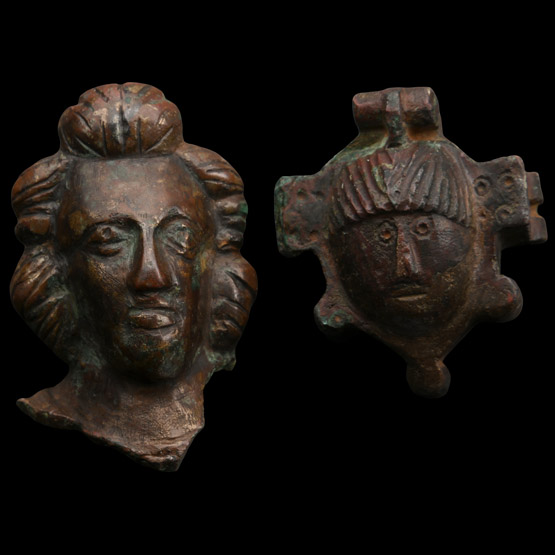
Bronze Artefact Group
Roman, 1st-3rd century A.D. or laterSold for (Inc. bp): £98
Comprising: hollow-formed head from a female statue; frontal plate from a lock with facing mask. 106 grams total, 39-49 mm
Acquired on the UK art market.
