
Loading, please wait...
LOT 0721
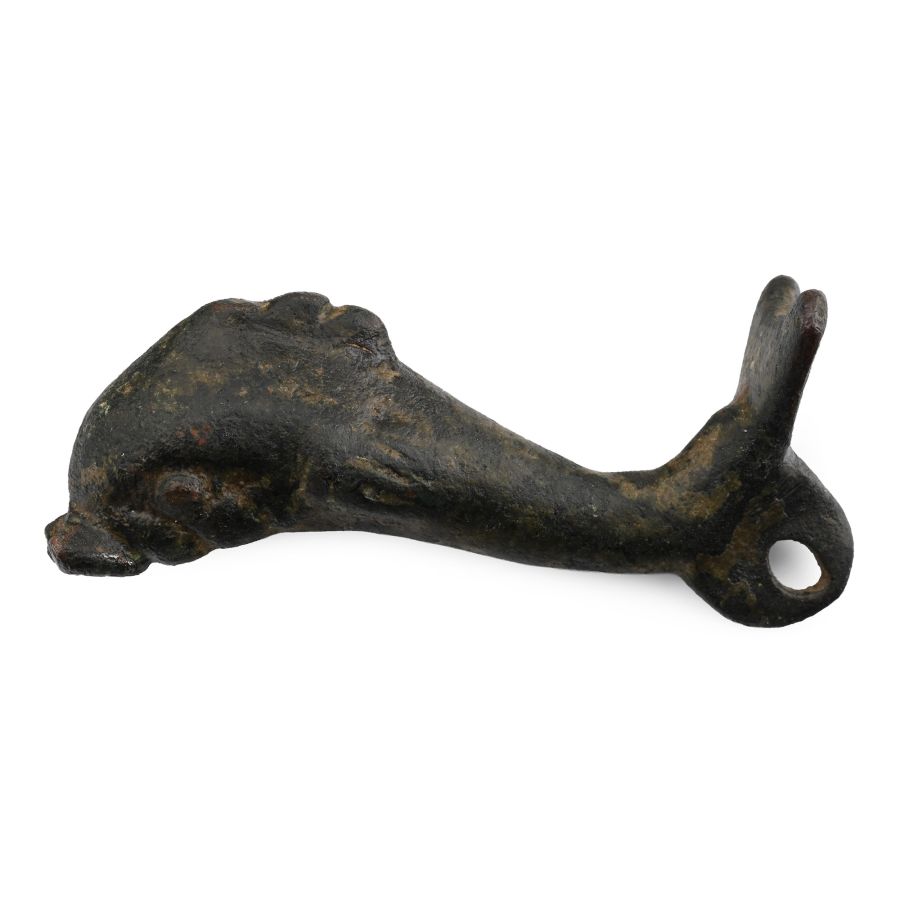
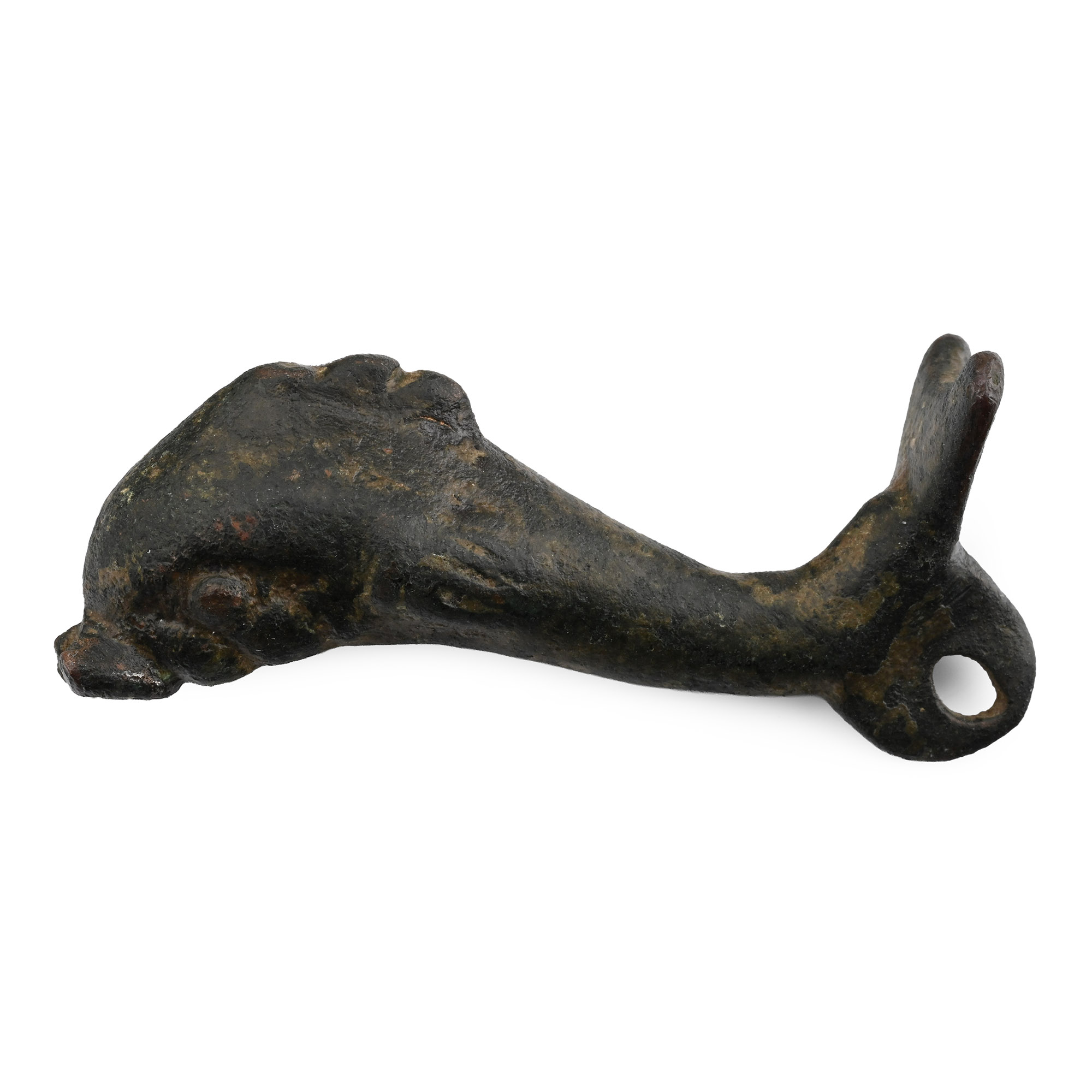
Roman Bronze Dolphin Mount
CIRCA 3RD CENTURY A.D.
2 1/2 in. (60.6 grams, 65 mm).
Modelled in the round with gently curved profile, pierced flange beneath the tail; loop at mouth broken.
ProvenanceEx German art market, 2000s.
Acquired from an EU collector living in London.
From the collection of a Surrey, UK, gentleman.
Cf. Rolland, H., Bronzes Antiques de Haute Provence, Paris, 1965, items 386-387, for similar.
CONDITIONTimeLine Auctions follows a vetting process to ensure the authenticity and legality of all items, reinforcing our commitment to integrity and responsible trading. Each antiquity, antique, and coin lot undergoes thorough examination by a vetting committee of at least ten external specialists, professional trade association members, scientists, and archaeologists: Our Vetting Process
AUCTIONS:
TimeLine is a leading auction house specialising in antiquities, ancient art, collectables, natural history, coins, medals, and books. Our auctions offer museums, collectors, historians, and enthusiasts the opportunity to acquire unique and historically significant pieces.
-
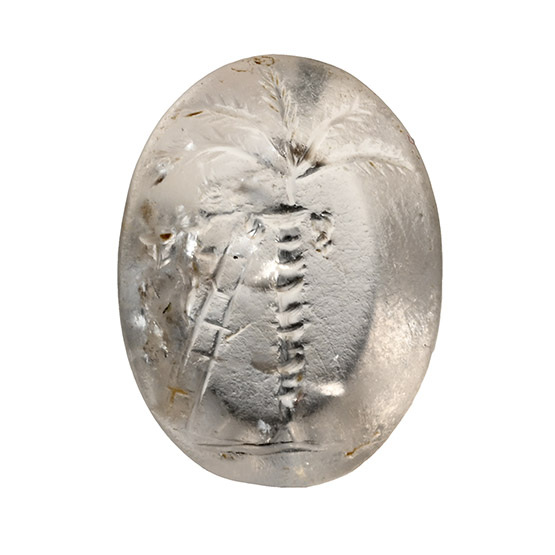
Roman Rock Crystal Gemstone of a Date Picker
1st-2nd century A.D.Sold for (Inc. bp): £715
Incuse image of a palm tree with splayed fronds, ladder placed against the trunk, and a man with a basket ascending to pick the fruit; supplied with a museum-quality impression. 0.71 grams, 12 mm
Private English collection, formed between the late 1970s and early 1990s. Private collection, London, UK. -
.jpg)
Roman Agate Gemstone with Minerva Holding Nike in Gold Ring
2nd century A.D.Sold for (Inc. bp): £1,300
Intaglio image of Minerva standing on a baseline holding spear and shield, supporting a victoriola in her extended hand; set into a later gold ring; supplied with a museum-quality impression. 7.59 grams, 27.22 mm overall, 18.18 mm internal diameter (approximate size British P, USA 7 1/2, Europe 16.23, Japan 15)
Private collection, Europe. Acquired on the English art market.
The specimen of agate used by the engraver was undoubtedly used for its apotropaic ‘eye’ like qualities, which were used as amulets for protection against the evil eye. -
.jpg)
Roman Silver Ring with Horse Gemstone
Circa 2nd-3rd century A.D.Sold for (Inc. bp): £416
Hoop with rounded shoulders set with jasper intaglio of a horse advancing on a baseline; supplied with a museum-quality impression. 8.55 grams, 23.94 mm overall, 15.43 mm internal diameter (approximate size British E 1/2, USA 2 1/2, Europe 3, Japan 3)
UK private collection since 1956. Formed in the 1950s by Mr and Mrs S. Broukal, thence by descent. Private collection, England.
