
Loading, please wait...
LOT 0713
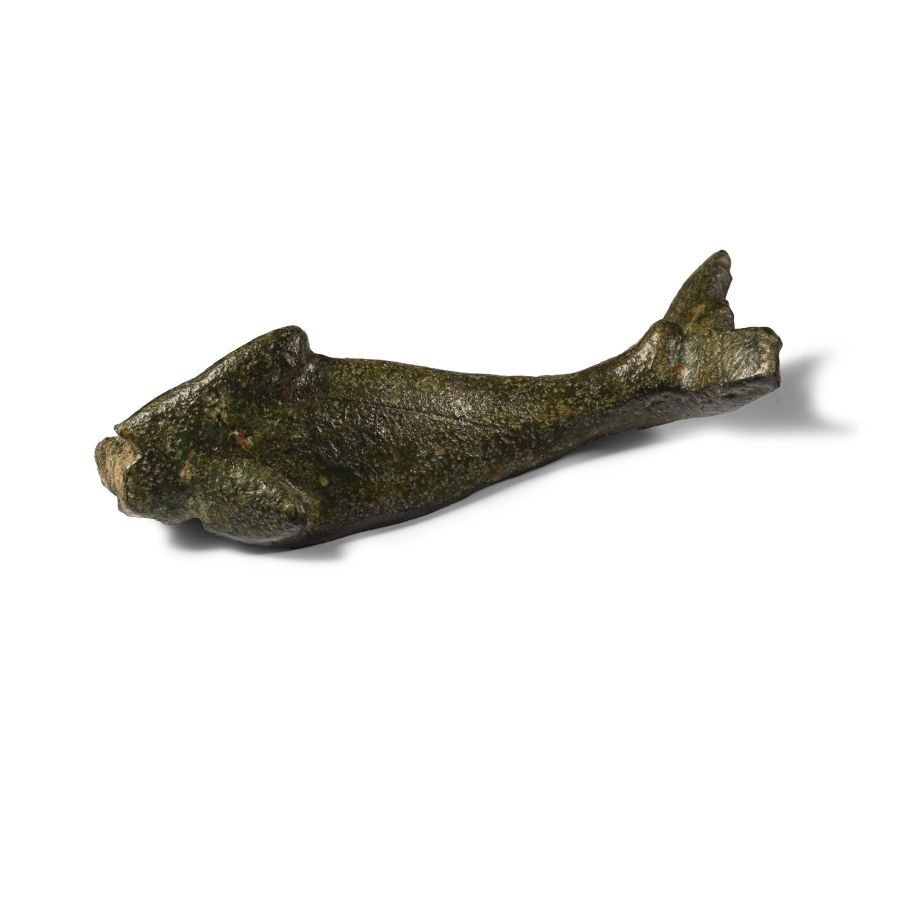
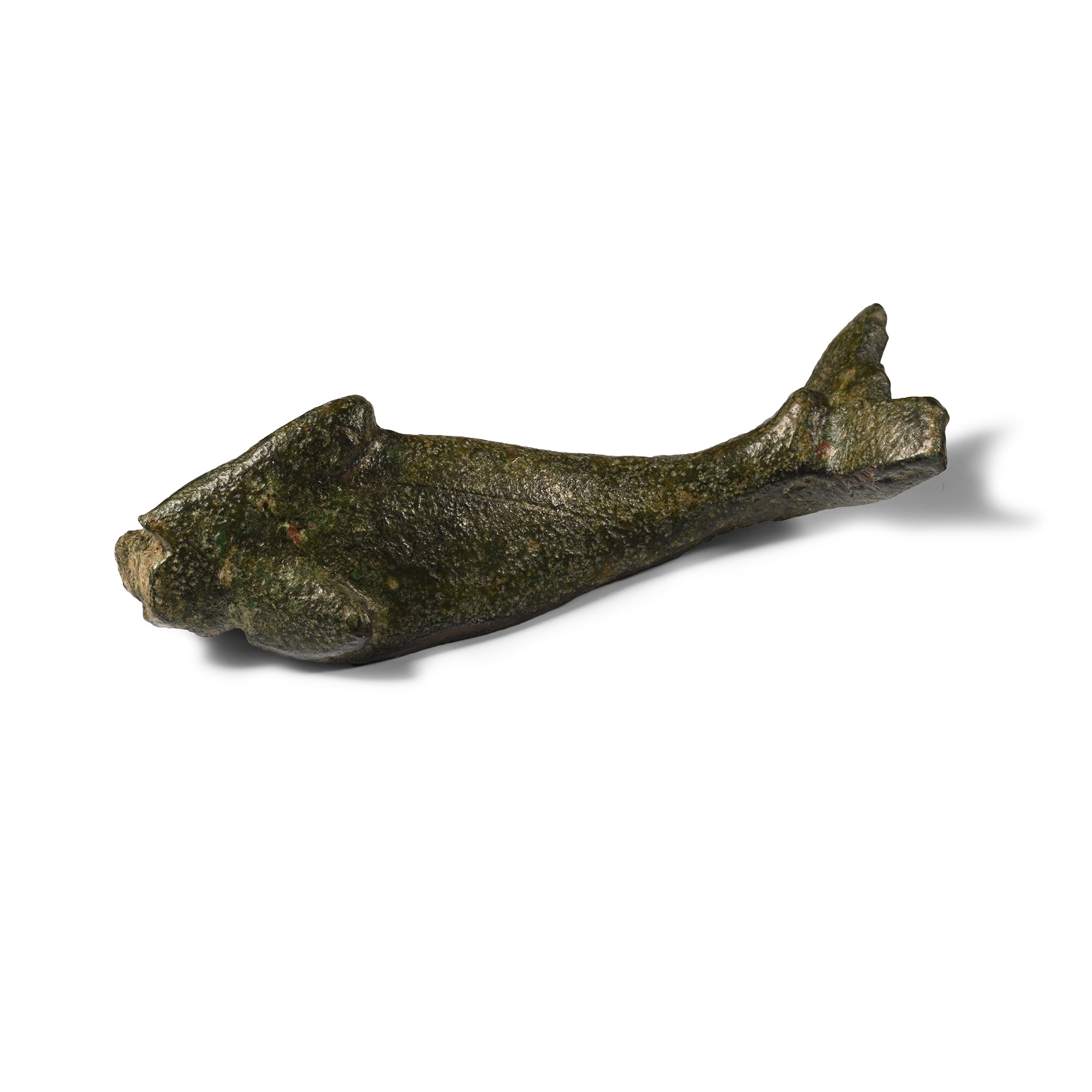
Roman Bronze Dolphin Mount
1ST-2ND CENTURY A.D.
2 5/8 in. (49 grams, 67 mm).
Substantial gently curving body with wide tail and showing all three fins, head absent.
ProvenanceEx German art market, 2000s.
Acquired from an EU collector living in London.
From the collection of Surrey, UK, gentleman.
This lot is accompanied by an illustrated lot declaration signed by the Head of the Antiquities Department, Dr Raffaele D’Amato.
TimeLine Auctions follows a vetting process to ensure the authenticity and legality of all items, reinforcing our commitment to integrity and responsible trading. Each antiquity, antique, and coin lot undergoes thorough examination by a vetting committee of at least ten external specialists, professional trade association members, scientists, and archaeologists: Our Vetting Process
AUCTIONS:
TimeLine is a leading auction house specialising in antiquities, ancient art, collectables, natural history, coins, medals, and books. Our auctions offer museums, collectors, historians, and enthusiasts the opportunity to acquire unique and historically significant pieces.
LOT 0713
Roman Bronze Dolphin Mount
Estimate £100 - 140€120 - 160 (for guidance only)$140 - 190 (for guidance only)
-
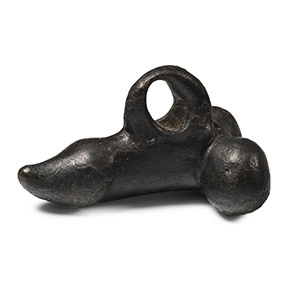
Roman Bronze Phallic Pendant
1st-2nd century A.D.Sold for (Inc. bp): £546
Formed as a stylised phallus with rounded testes and large suspension loop above. 43.4 grams, 44 mm
Ex German art market, 2000s. Acquired from an EU collector living in London. From the collection of Surrey, UK, gentleman. This lot is accompanied by an illustrated lot declaration signed by the Head of the Antiquities Department, Dr Raffaele D’Amato. -
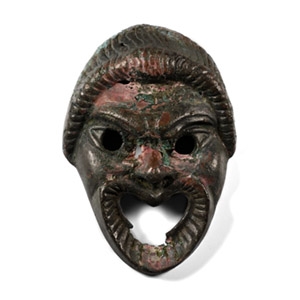
Roman Bronze Actor's Mask Mount
1st-2nd century A.D.Sold for (Inc. bp): £624
Depicting tragic mask with pierced eyes and open mouth, furrowed brow and neatly dressed hair; hollow reverse. 84.5 grams, 83 mm
Ex German art market, 2000s. Acquired from an EU collector living in London. From the collection of Surrey, UK, gentleman. This lot is accompanied by an illustrated lot declaration signed by the Head of the Antiquities Department, Dr Raffaele D’Amato. -
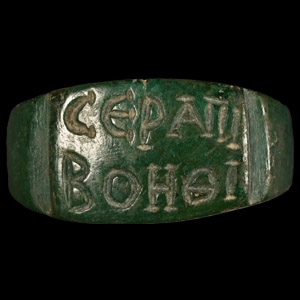
Roman Bronze 'Help Me Serapis' Ring
2nd-3rd century A.D.Sold for (Inc. bp): £1,040
With rectangular plaque, incuse Greek inscription 'CEPAΔωΠI/BOHΘI' (Help me Serapis). 3.74 grams, 20.40 mm overall, 17.71 mm internal diameter (approximate size British K 1/2, USA 5 1/2, Europe 10.58, Japan 10)
Ex German art market, 2000s. Acquired from an EU collector living in London. From the collection of Surrey, UK, gentleman. This lot is accompanied by an illustrated lot declaration signed by the Head of the Antiquities Department, Dr Raffaele D’Amato.
