
Loading, please wait...
LOT 0820
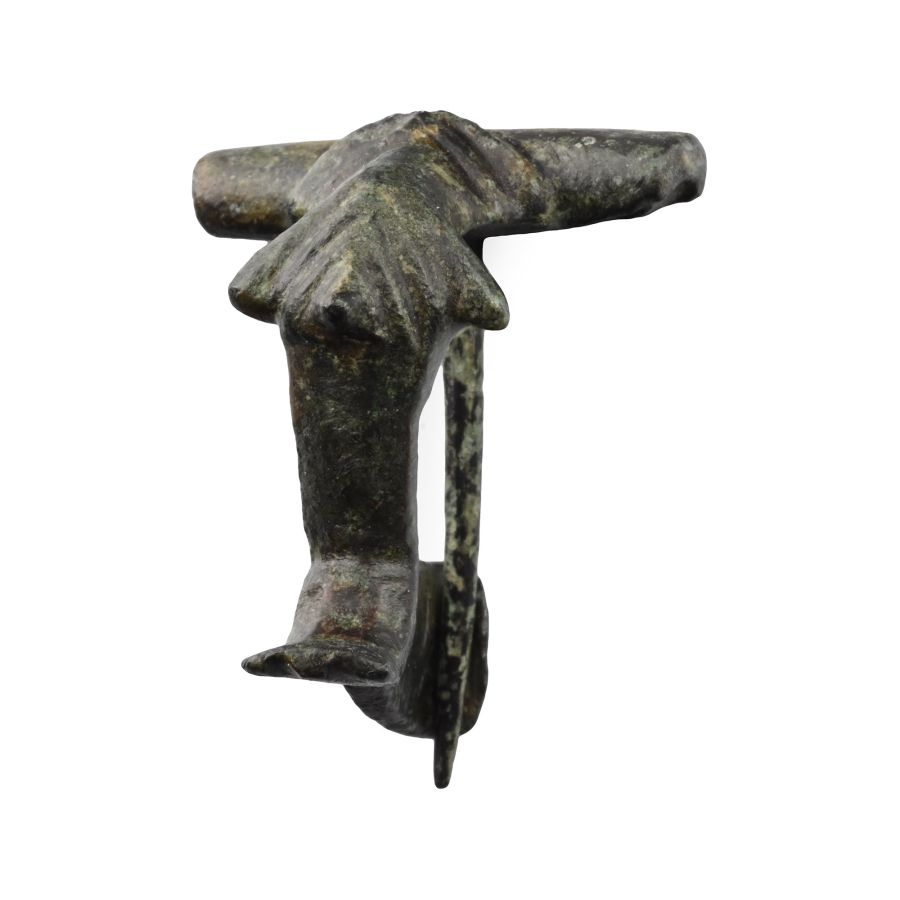
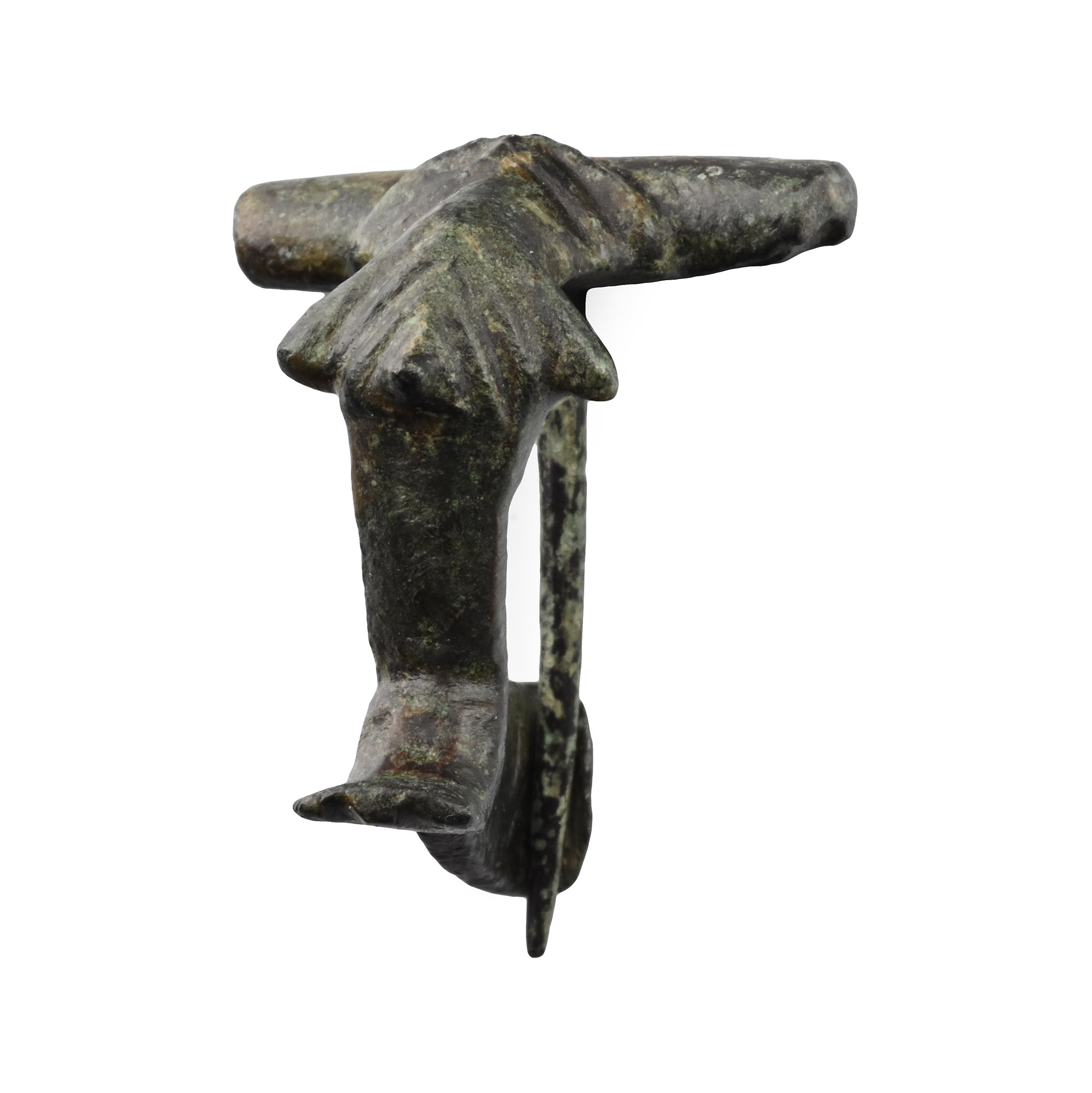
Roman Bronze Dolphin Bow Brooch
1ST-2ND CENTURY A.D.
1 1/4 in. (11.9 grams, 32 mm).
The bow formed as a dolphin holding a sphere in its mouth; detailing to the fins and head; pin lug, pin and catchplate to reverse. [No Reserve]
ProvenanceEx German art market, 2000s.
Acquired from an EU collector living in London.
From the collection of a Surrey, UK, gentleman.
This lot is accompanied by an illustrated lot declaration signed by the Head of the Antiquities Department, Dr Raffaele D'Amato.
TimeLine Auctions follows a vetting process to ensure the authenticity and legality of all items, reinforcing our commitment to integrity and responsible trading. Each antiquity, antique, and coin lot undergoes thorough examination by a vetting committee of at least ten external specialists, professional trade association members, scientists, and archaeologists: Our Vetting Process
AUCTIONS:
TimeLine is a leading auction house specialising in antiquities, ancient art, collectables, natural history, coins, medals, and books. Our auctions offer museums, collectors, historians, and enthusiasts the opportunity to acquire unique and historically significant pieces.
-
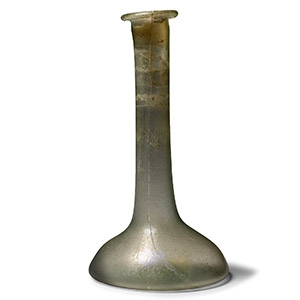
Roman Glass Candlestick Unguentarium
2nd-3rd century A.D.Estimate: £500 - 700 (‡+bp*)
Opening Bid: £150
With low conical body and slightly convex wall, dimple base; tall cylindrical neck flaring to mouth with inward-folded rim; slightly iridescent surface. 37.2 grams, 13.6 cm
Ex P. Martens, The Netherlands, formed between 1974-1984. Accompanied by a copy of an Art Loss Register certificate no.S00075481. This lot is accompanied by an illustrated lot declaration signed by the Head of the Antiquities Department, Dr Raffaele D’Amato. This lot is accompanied by an illustrated lot declaration signed by the Head of the Antiquities Department, Dr Raffaele D'Amato. -
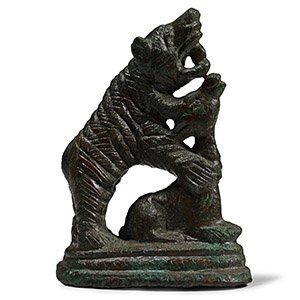
Roman Bronze Statue of a Bear Killing a Deer
1st-2nd century A.D.Estimate: £1,000 - 1,700 (+bp*)
Opening Bid: £500
On a stepped triangular base, bear with head raised, forepaws round the neck of a deer with legs folded beneath the body. 398 grams, 10 cm
Nicolas Koutoulakis (1910-1996). Private collection of Mr K.A. This lot is accompanied by an illustrated lot declaration signed by the Head of the Antiquities Department, Dr Raffaele D'Amato.
Combat between large animals was a popular theme in Roman art. The staging of such fights in the Flavian Amphitheatre in the heart of Rome is evidenced. Furthermore, the 3rd-4th century A.D. mosaic floor unearthed at Lod, Israel, in 1996 shows several scenes with ferocious wild animal - a lion and lioness, an elephant, a giraffe, a rhinoceros, a tiger, and a wild bull - all arranging themselves for a colossal fight to the death. The mosaic was lifted intact and is on display in the Metropolitan Museum of Art, New York. -
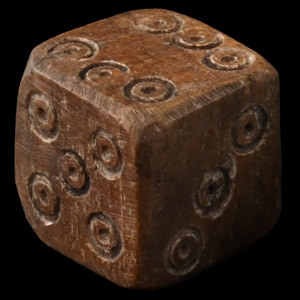
Roman Bone Gaming Dice
1st-4th century A.D.Sold for (Inc. bp): £156
Cuboid with ring-and-dot markings disposed 1:6, 2:5, 3:4. 2.9 grams, 11 mm
Acquired on the UK art market before 2000. Property of an Essex, UK, gentleman. This lot is accompanied by an illustrated lot declaration signed by the Head of the Antiquities Department, Dr Raffaele D'Amato.
