
Loading, please wait...
_900x900.jpg "Roman Bronze Diploma Fragment")
_200x200.jpg "Roman Bronze Diploma Fragment")
.jpg "Roman Bronze Diploma Fragment")
LOT 0125
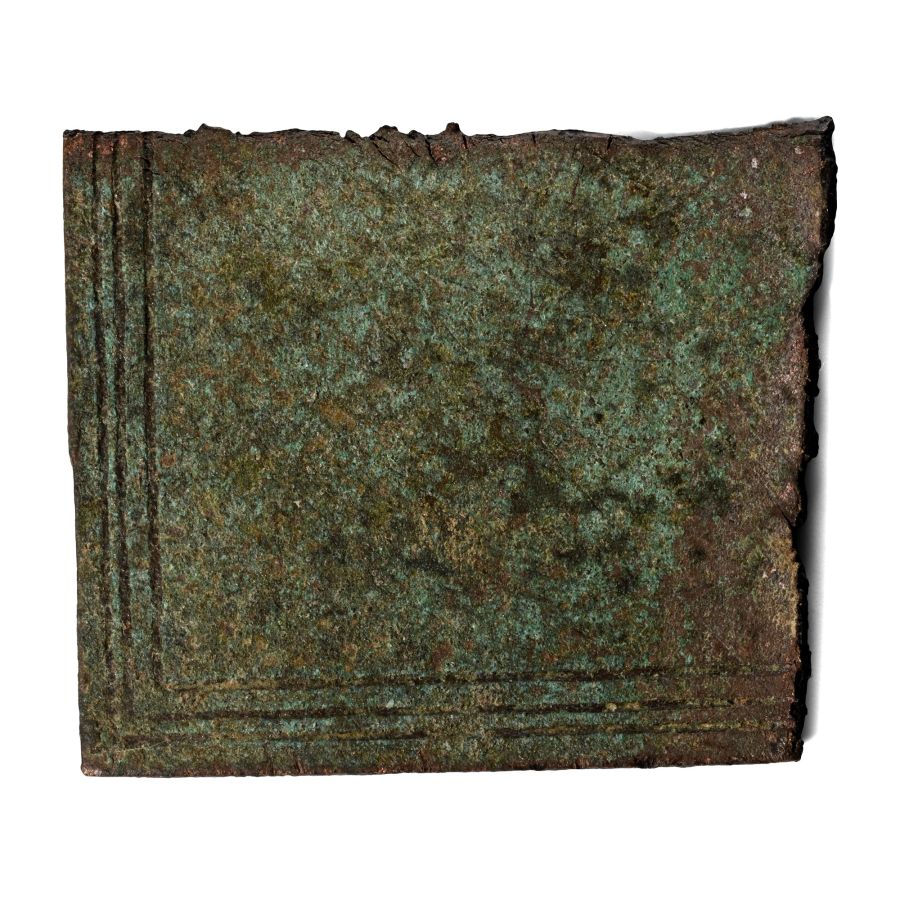
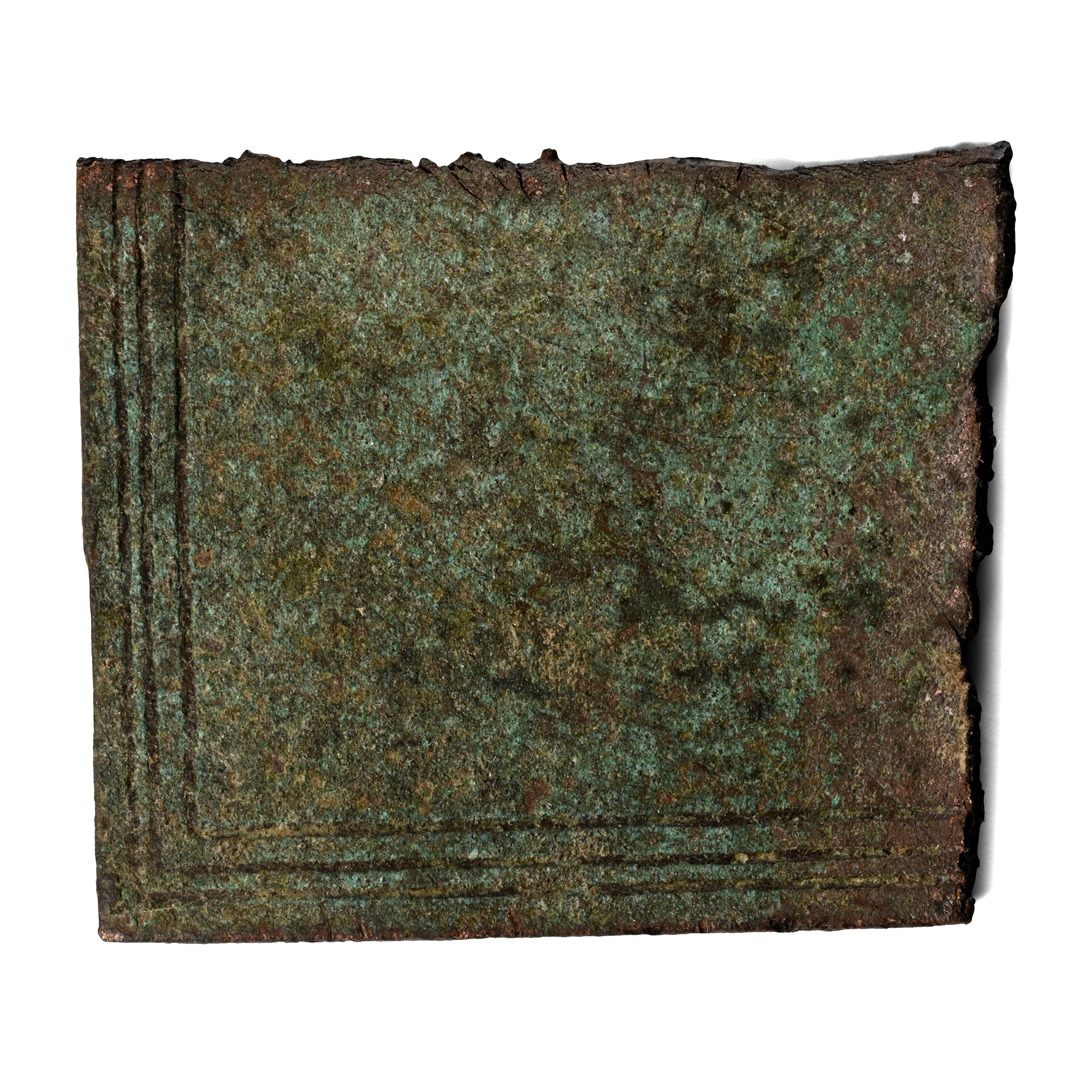
Roman Bronze Diploma Fragment
228 A.D.
2 1/4 in. (28.4 grams, 56 mm).
Rectangular fragment with irregular clipped edges; Side A - trilinear concentric border to the corner; Side B - inscription in serifed capitals '[.]NAS IN MATRI[MONIO / [D]VXERINT PRIO[---] / [.]TOLLANT AC SI [---] / [CIVI]BVS RO[M]ANIS [---] / [ID]VS IANQATICI / [M.] MAECIO PRO[BO COS] / [.]A SEVERIANA'.
ProvenanceEx German art market, 2000s.
Acquired from an EU collector living in London.
From the collection of a Surrey, UK, gentleman.
TimeLine Auctions follows a vetting process to ensure the authenticity and legality of all items, reinforcing our commitment to integrity and responsible trading. Each antiquity, antique, and coin lot undergoes thorough examination by a vetting committee of at least ten external specialists, professional trade association members, scientists, and archaeologists: Our Vetting Process
AUCTIONS:
TimeLine is a leading auction house specialising in antiquities, ancient art, collectables, natural history, coins, medals, and books. Our auctions offer museums, collectors, historians, and enthusiasts the opportunity to acquire unique and historically significant pieces.
-
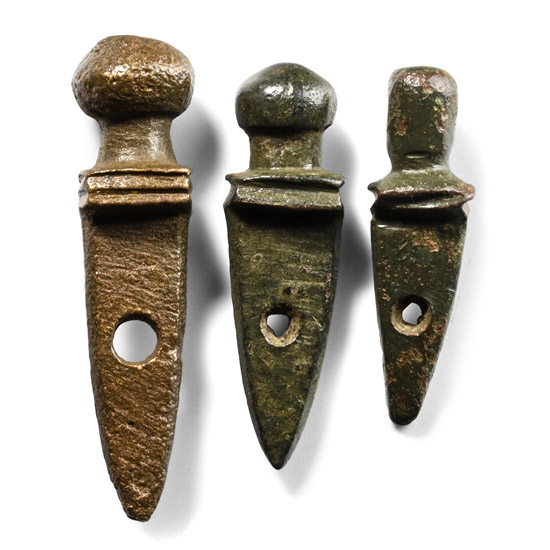
Roman Bronze Gladius Sword Pendant Collection
1st-2nd century A.D.Sold for (Inc. bp): £182
Comprising three gladius pendants, each with a domed pommel and pierced through the blade. 15.58 grams total, 26-35 mm
Ex German art market, 2000s. Acquired from an EU collector living in London. From the collection of a Surrey, UK, gentleman. -
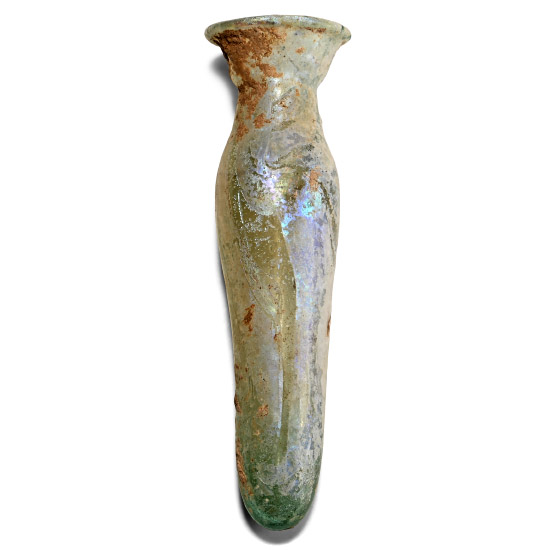
Roman Iridescent Glass Balsamarium
3rd century A.D.Sold for (Inc. bp): £130
Slender tapering body with a rounded base and a trumpet-shaped mouth with a rolled rim. 20.87 grams, 12.7 cm
Acquired in the 1990s from London dealerships and auction houses. From the Lonson collection. -
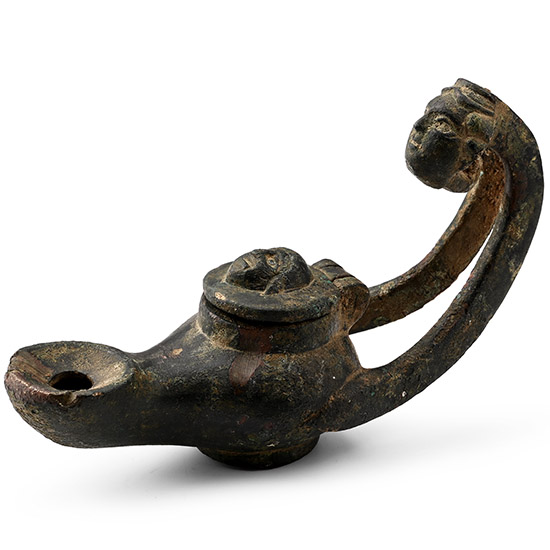
Roman Bronze Oil Lamp with Masks
1st-2nd century A.D.Sold for (Inc. bp): £1,170
With an elongated body, long nozzle with a rounded tip; raised rim to filling hole with hinged lid bearing a mask with sockets to the eyes for silver inserts; handle curved and terminating in a female mask with hair dressed in tiers, eyes recessed to be inlaid with silver; broad nozzle with cup and raised rim; socket to underside for mounting on a stand. 560 grams, 15.5 cm
From the collection of a gentleman, acquired on the London art market in the 1990s.
The lamp is crafted in a very fine style, probably in a classical form from the 1st or 2nd century. It belongs to a type known and widespread in the Mediterranean, with parallels in Paris, Madrid, the museums of Cadiz, Tarragona, and Aquileia.
