
Loading, please wait...
LOT 1048
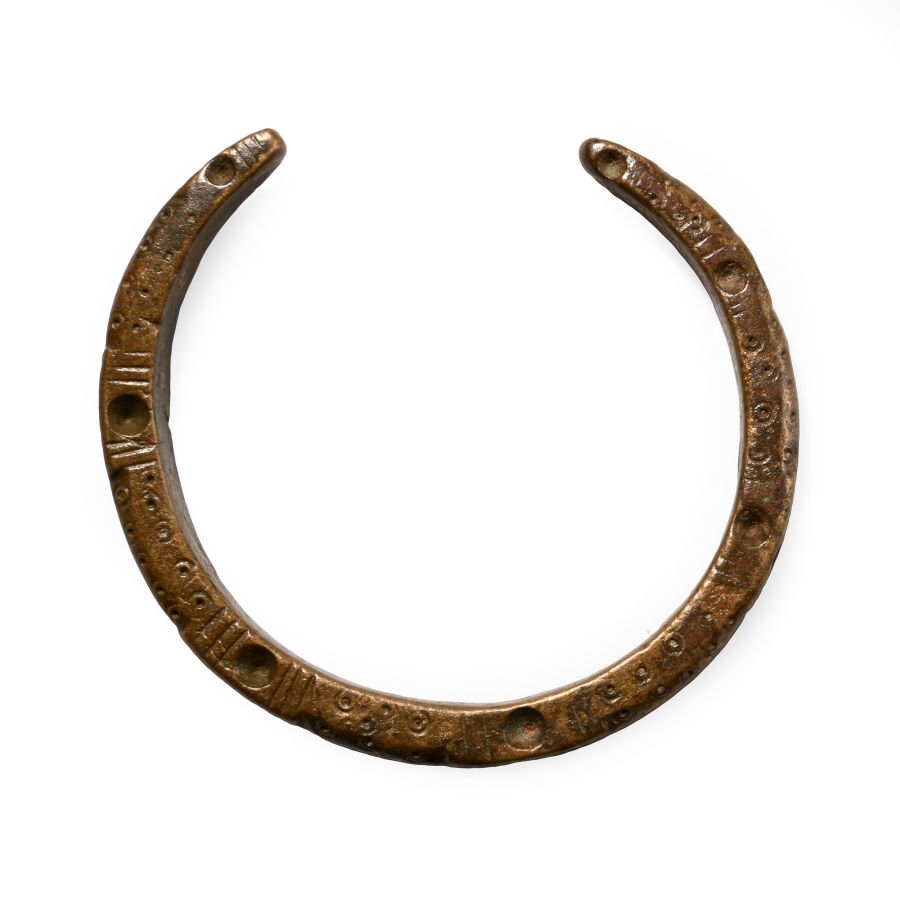
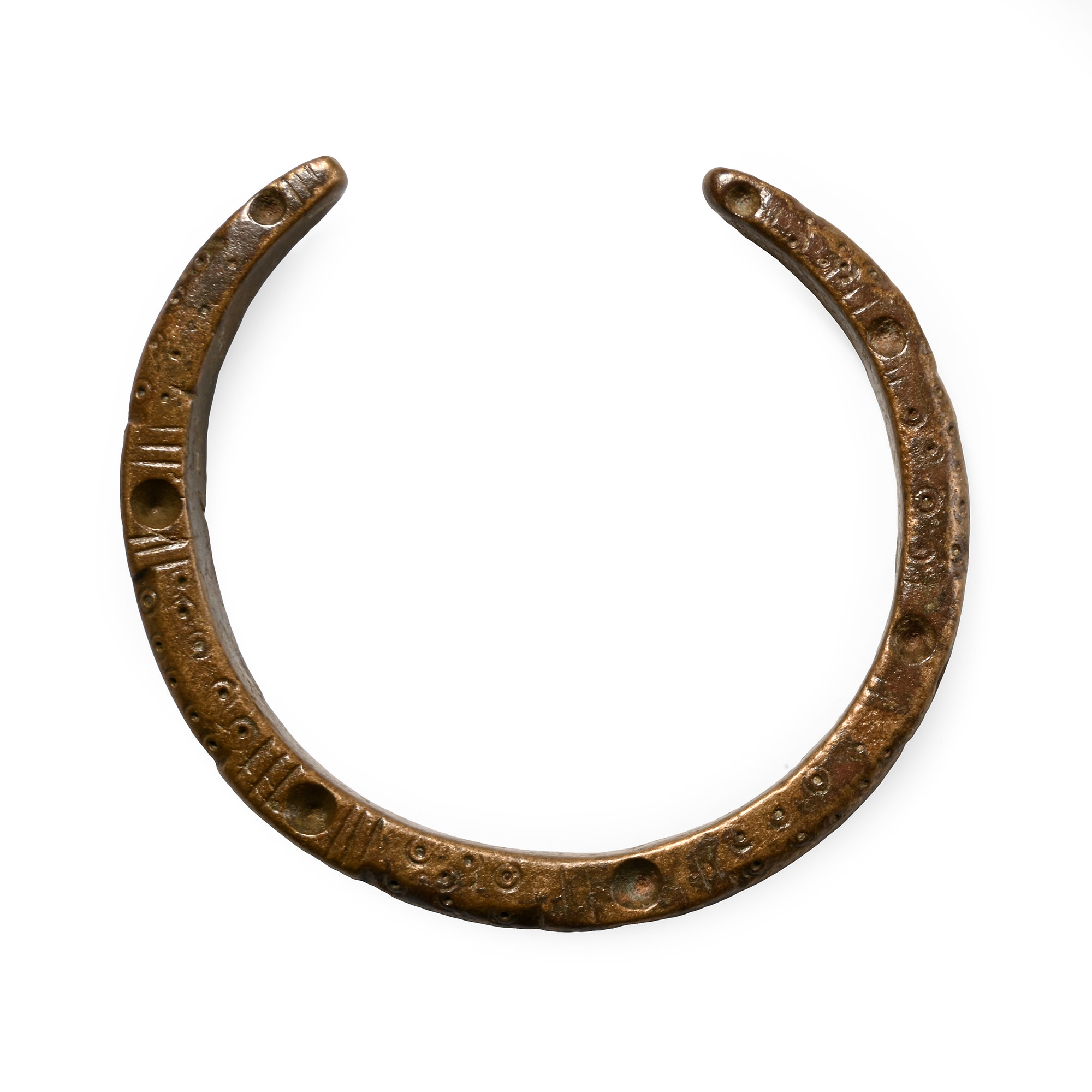
Roman Bronze Decorated Bracelet
2ND-3RD CENTURY A.D.
2 1/2 in. (44.6 grams, 65 mm).
Penannular bracelet with rectangular-section body decorated with ring-and-dot and linear motifs. [No Reserve]
ProvenanceEx German art market, 2000s.
Acquired from an EU collector living in London.
From the collection of a Surrey, UK, gentleman.
TimeLine Auctions follows a vetting process to ensure the authenticity and legality of all items, reinforcing our commitment to integrity and responsible trading. Each antiquity, antique, and coin lot undergoes thorough examination by a vetting committee of at least ten external specialists, professional trade association members, scientists, and archaeologists: Our Vetting Process
AUCTIONS:
TimeLine is a leading auction house specialising in antiquities, ancient art, collectables, natural history, coins, medals, and books. Our auctions offer museums, collectors, historians, and enthusiasts the opportunity to acquire unique and historically significant pieces.
-
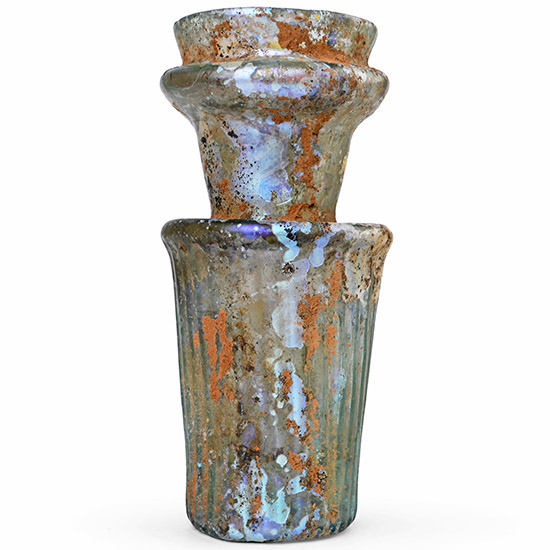
Roman Ribbed Glass Vessel
3rd century A.D.Estimate: £400 - 600 (+bp*)
Opening Bid: £200
The body with fine ribs and a dimpled base, a carinated shoulder and a funicular neck with a raised collar below the rim. 98.3 grams, 13.1 cm
From an important London, UK, collection 1980-2020.
The vessel likely originates from a Syrian or Palestinian workshop, characterised by a neck shape featuring a collar and a yellow glass tint. The vessel's form establishes an upper chronological limit of the mid-3rd century AD, while the relatively high quality of the glass precludes dating it any later than the end of that century. -
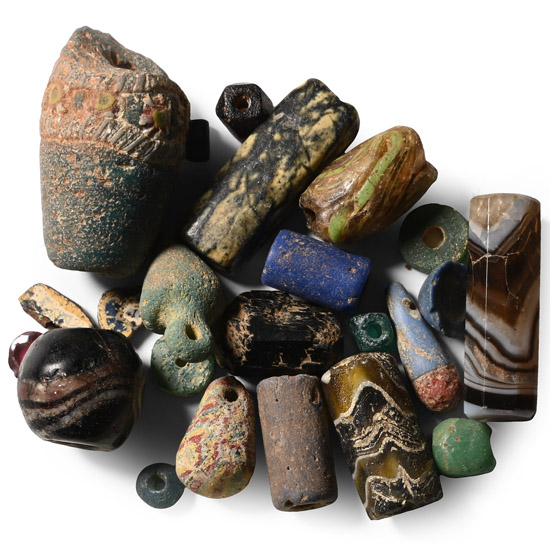
Roman Glass and Stone Bead and Pendant Collection
1st-4th century A.D. and laterSold for (Inc. bp): £208
Mixed group including cylindrical, spherical, teardrop-shaped, conical and other types. 31.2 grams total, 4-26 mm
From the private collection of a European gentleman (1942-2024), formed since the 1970s. -
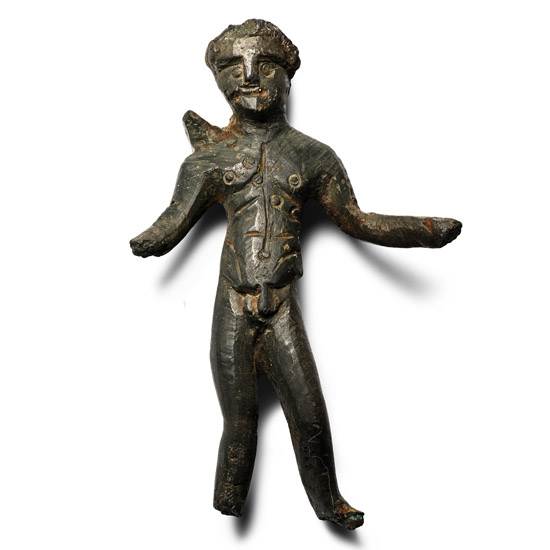
Romano-Celtic Bronze Statuette of the God Apollo
2nd-4th century A.D.Sold for (Inc. bp): £182
Modelled nude with a quiver on his back, the strap for the quiver resting against his muscular chest and indicated by stamped annulets, arms spread on the sides. 35.4 grams, 67 mm
From the private collection of a European gentleman (1942-2024), formed since the 1970s.
