
Loading, please wait...
LOT 0836
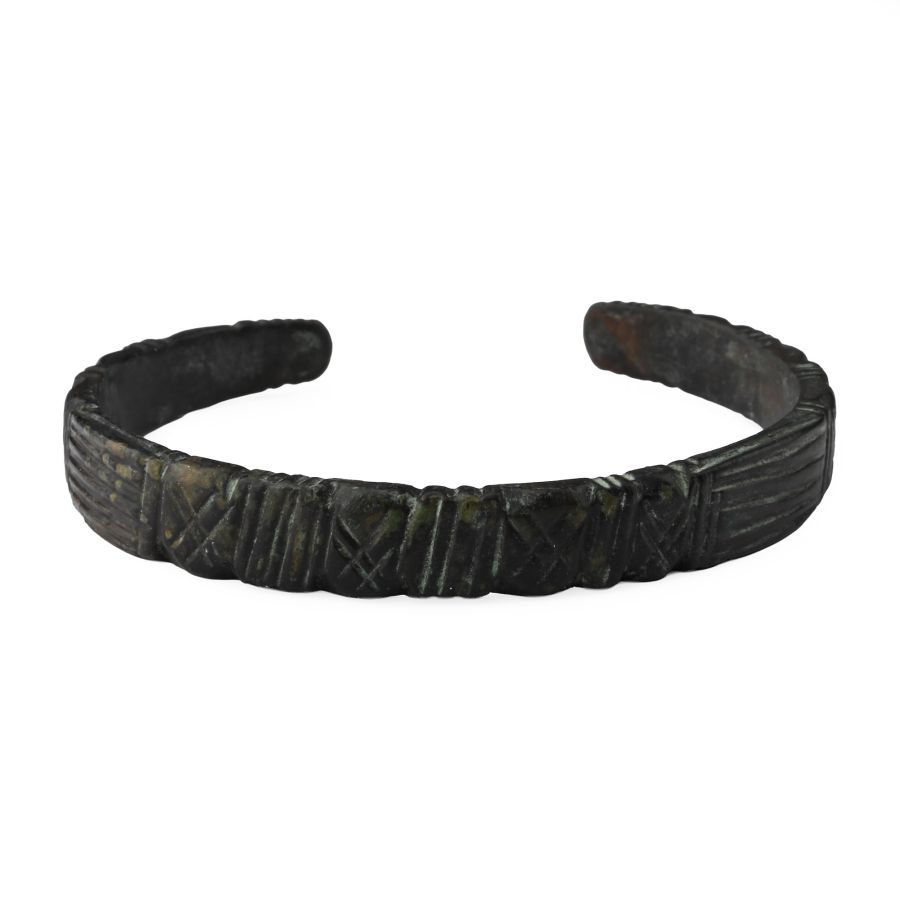
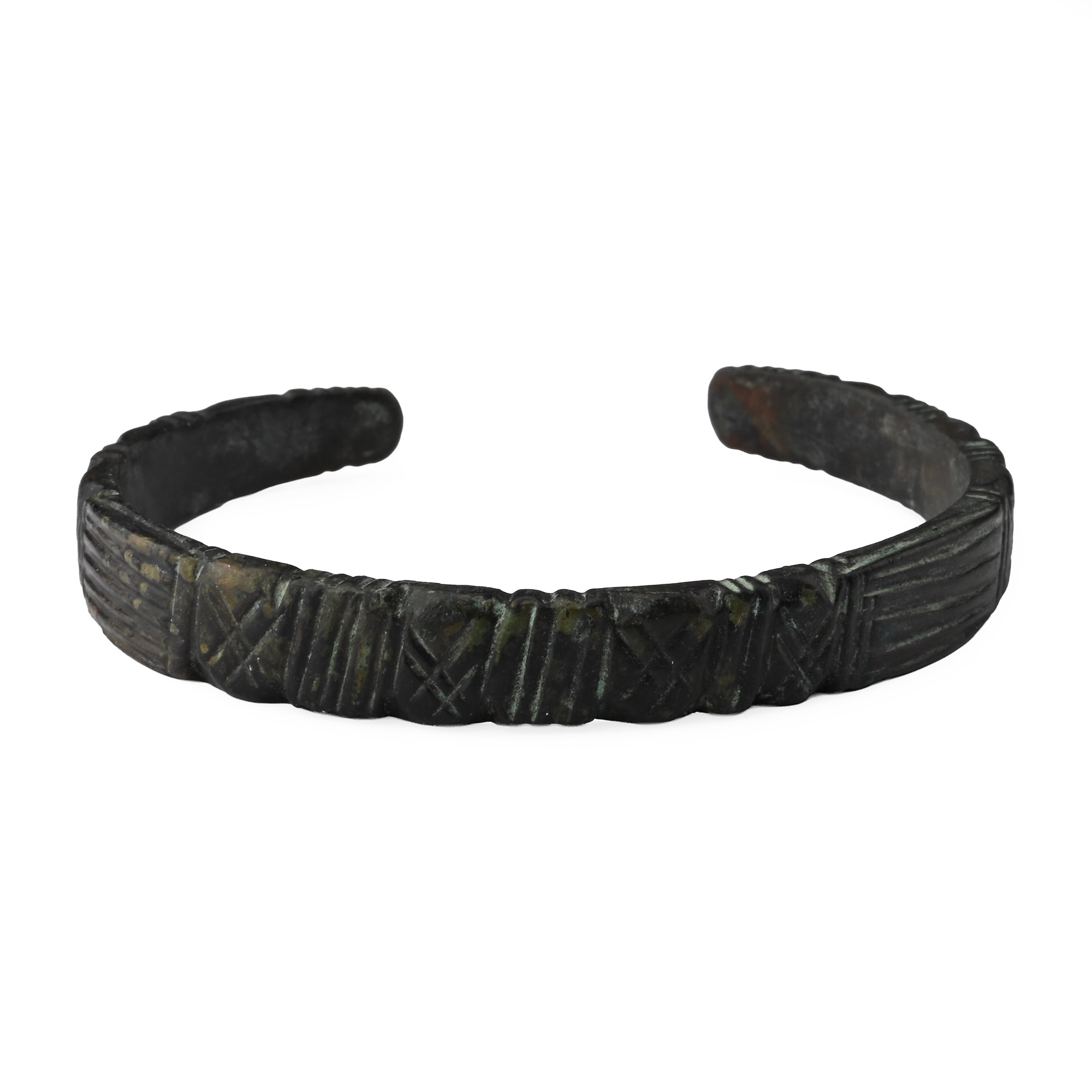
Roman Bronze Decorated Bracelet
1ST-4TH CENTURY A.D.
2 3/8 in. (27 grams, 60 mm).
Penannular body with linear and X-motif decoration. [No Reserve]
ProvenanceEx German art market, 2000s.
Acquired from an EU collector living in London.
From the collection of a Surrey, UK, gentleman.
This lot is accompanied by an illustrated lot declaration signed by the Head of the Antiquities Department, Dr Raffaele D'Amato.
TimeLine Auctions follows a vetting process to ensure the authenticity and legality of all items, reinforcing our commitment to integrity and responsible trading. Each antiquity, antique, and coin lot undergoes thorough examination by a vetting committee of at least ten external specialists, professional trade association members, scientists, and archaeologists: Our Vetting Process
AUCTIONS:
TimeLine is a leading auction house specialising in antiquities, ancient art, collectables, natural history, coins, medals, and books. Our auctions offer museums, collectors, historians, and enthusiasts the opportunity to acquire unique and historically significant pieces.
-
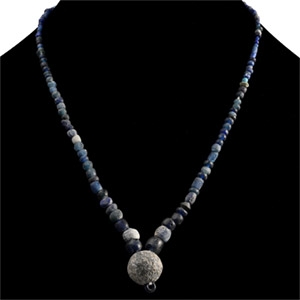
Roman and Other Blue Glass Bead Necklace String
1st-4th century A.D. and laterSold for (Inc. bp): £182
Composed of graduated oblate and other beads, central feature a large spherical bead; restrung. 23.7 grams, 43.5 cm
From the London, UK, art market in the 1990s. This lot is accompanied by an illustrated lot declaration signed by the Head of the Antiquities Department, Dr Raffaele D'Amato.
Such necklaces testify to the popularity of glass ornaments across the Roman Empire. Roman jewellery at first followed trends set by the Etruscans, using gold and glass beads, but with the extension of the Empire and the adoption of different styles from Greece, Egypt and North Africa, jewellery designs became increasingly various and elaborate. Each bead of this beautiful necklace is unique in shape, lustre and speckling, creating a mosaic like impression. Blue glass beads are distinguished by the scholars in opaque mid-blue and deep translucent cobalt blue -
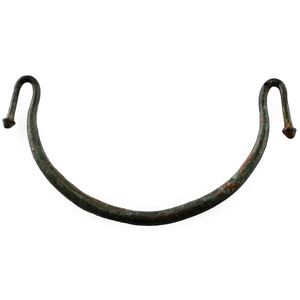
Roman Bronze Military Helmet Carrying Handle
1st-2nd century A.D.Sold for (Inc. bp): £169
With tapering round-section body and looped ends with knop terminals. 14.4 grams, 89 mm
Acquired on the UK art market during the late 20th century. From the private collection of David King (1940-2024), Hoddesdon, Hertfordshire, UK. This lot is accompanied by an illustrated lot declaration signed by the Head of the Antiquities Department, Dr Raffaele D'Amato. -
.jpg)
Roman Iron Sickle-Dagger with Bronze Handle
1st-2nd century A.D.Sold for (Inc. bp): £1,820
Comprising: a curved blade with single cutting edge to the inside of the curve (Latin sica); bronze transverse bolster pierced to accept two mounting rivets for the blade; curved grip with lateral scrolls at the base, undulating inner face, pommel formed as the head of a gryphon with beak and raised lentoid eyes. 210 grams, 32 cm
Ex German art market, 2000s. Acquired from an EU collector living in London. From the collection of a Surrey, UK, gentleman. This lot is accompanied by an illustrated lot declaration signed by the Head of the Antiquities Department, Dr Raffaele D'Amato.
