
Loading, please wait...
LOT 0856
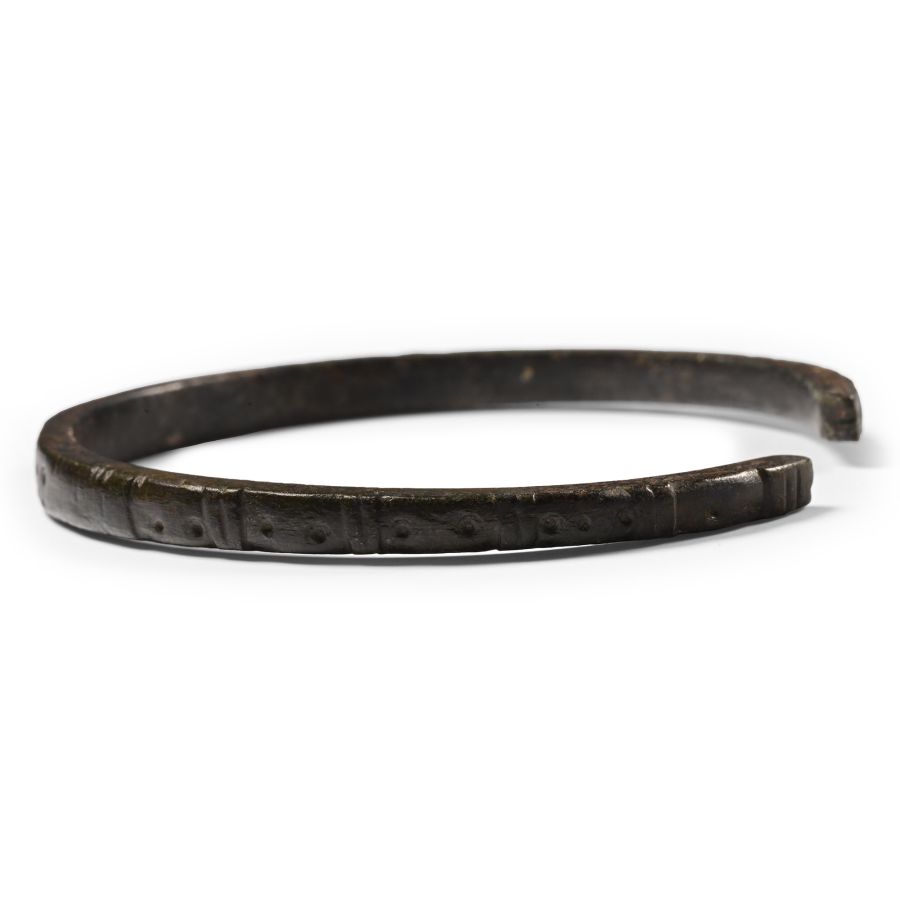
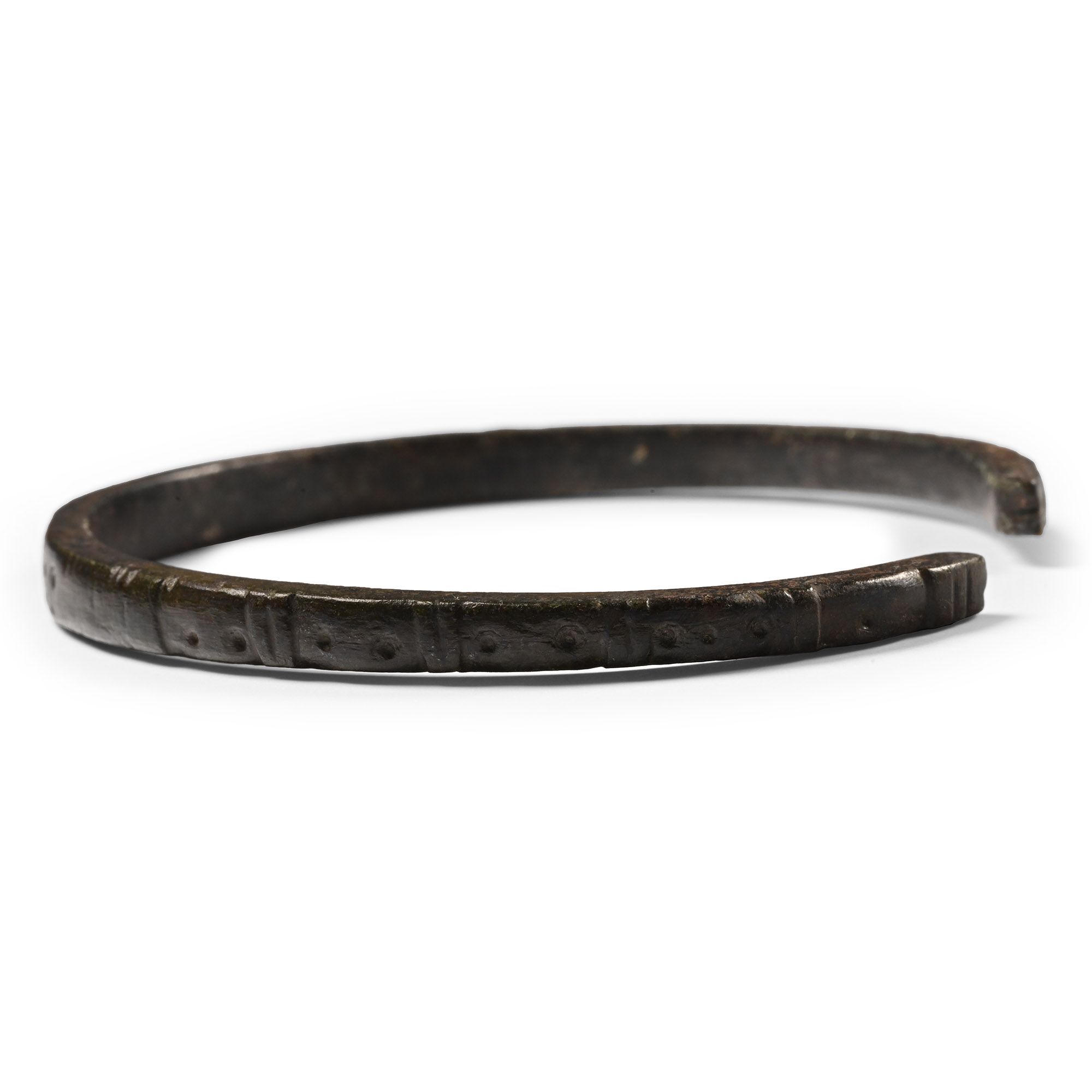
Roman Bronze Decorated Bracelet
1ST-4TH CENTURY A.D.
2 1/4 in. (17 grams, 57.7 mm).
With a rectangular-section body divided into segments with transverse lines, punched pellets in between. [No Reserve]
ProvenanceEx German art market, 2000s.
Acquired from an EU collector living in London.
From the collection of Surrey, UK, gentleman.
This lot is accompanied by an illustrated lot declaration signed by the Head of the Antiquities Department, Dr Raffaele D’Amato.
TimeLine Auctions follows a vetting process to ensure the authenticity and legality of all items, reinforcing our commitment to integrity and responsible trading. Each antiquity, antique, and coin lot undergoes thorough examination by a vetting committee of at least ten external specialists, professional trade association members, scientists, and archaeologists: Our Vetting Process
AUCTIONS:
TimeLine is a leading auction house specialising in antiquities, ancient art, collectables, natural history, coins, medals, and books. Our auctions offer museums, collectors, historians, and enthusiasts the opportunity to acquire unique and historically significant pieces.
-
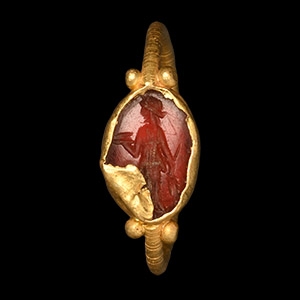
Roman Gold Ring with Diana Gemstone
2nd-3rd century A.D.Sold for (Inc. bp): £520
Slender hoop with pairs of granules flanking the ellipsoid cell with inset carnelian intaglio of Diana standing and holding a patera; stone chipped and gold frame extended to compensate. 3.11 grams, 23.25 mm overall, 19.94 mm internal diameter (approximate size British R, USA 8 1/2, Europe 18 3/4, Japan 18)
Ex German art market, 2000s. Acquired from an EU collector living in London. From the collection of Surrey, UK, gentleman. This lot is accompanied by an illustrated lot declaration signed by the Head of the Antiquities Department, Dr Raffaele D’Amato. -
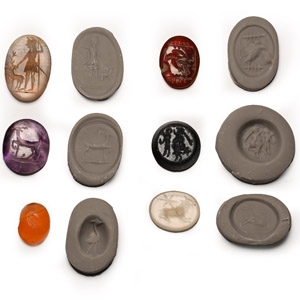
Roman and Other Gemstone Collection
2nd century A.D. and laterSold for (Inc. bp): £845
Comprising mainly lentoid and plano-convex seals in carnelian, amethyst, and other materials with engraved intaglios including a stag, two human figures, huntsman with deer and other topics; each supplied with a museum-quality impression. 4.46 grams total, 10-17 mm
From the collection of a London antiquarian, formed since the 1980s. This lot is accompanied by an illustrated lot declaration signed by the Head of the Antiquities Department, Dr Raffaele D’Amato. -
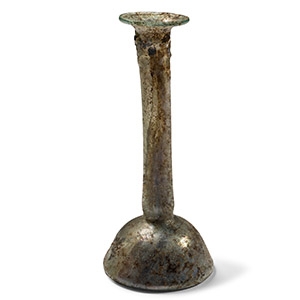
Roman Bell-Shaped Glass Vessel
3rd century A.D.Sold for (Inc. bp): £111
Wide domed body with dimple base, tall narrow piriform neck and splayed rim. 19 grams, 12.9 cm
Ex London art market 1990s. From a London, UK, collection. This lot is accompanied by an illustrated lot declaration signed by the Head of the Antiquities Department, Dr Raffaele D’Amato.
