
Loading, please wait...
LOT 0617
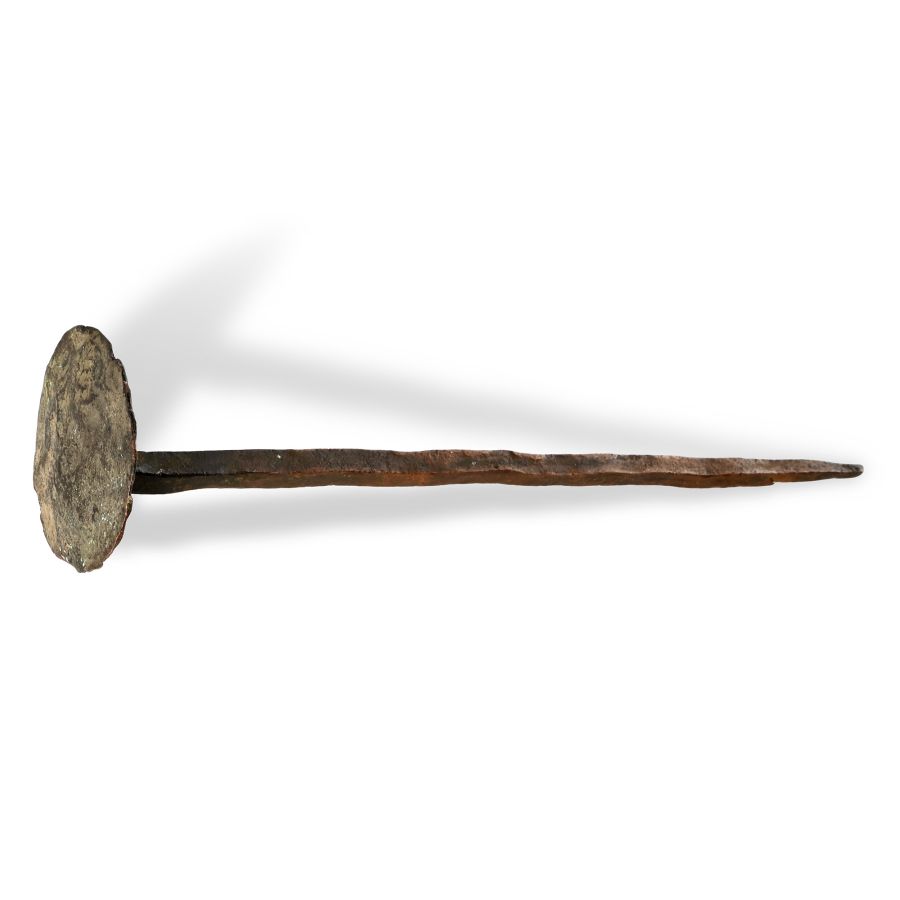
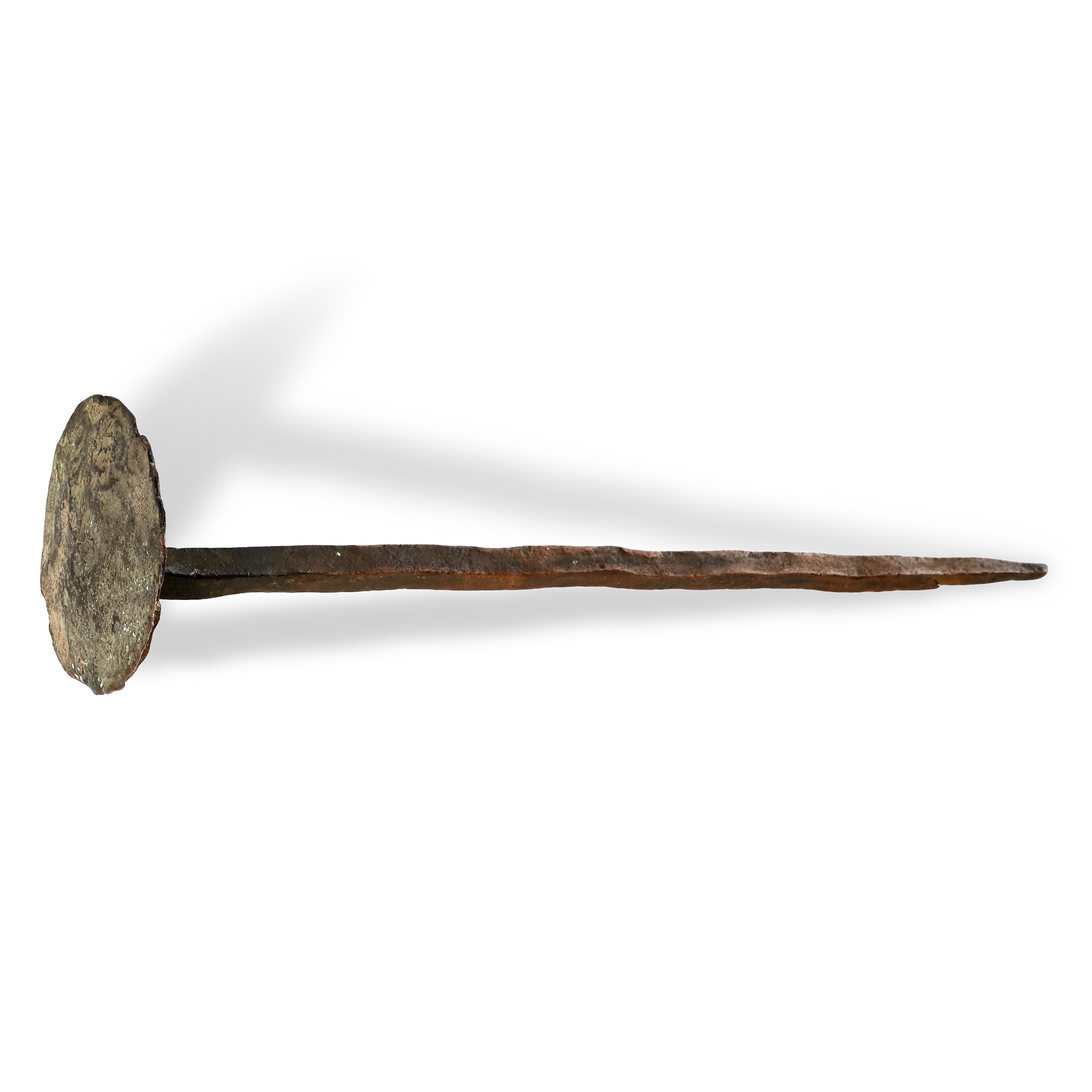
Roman Bronze Crucifixion Nail
CIRCA 1ST CENTURY A.D.
5 1/2 in. (29.5 grams, 14 cm).
Comprising a rectangular-section body and a round, discoid finial. [No Reserve]
ProvenanceAcquired on UK art market.
Property of a Middlesex gentleman.
Cf. for a similar example Rémazeilles, C., Cruz Zuluaga, M., Conforto, E., Oudriss, A., Ortega, L.A., Martínez-Salcedo, A., Cepeda-Ocampo, J. J., ‘Multianalytical Study of Archaeological Iron Nails of the Roman Period (First to Third Century) in Northern Spain’ in Minerals, 2025, 15, pp.1-14, fig.2 (b).
CONDITIONTimeLine Auctions follows a vetting process to ensure the authenticity and legality of all items, reinforcing our commitment to integrity and responsible trading. Each antiquity, antique, and coin lot undergoes thorough examination by a vetting committee of at least ten external specialists, professional trade association members, scientists, and archaeologists: Our Vetting Process
AUCTIONS:
TimeLine is a leading auction house specialising in antiquities, ancient art, collectables, natural history, coins, medals, and books. Our auctions offer museums, collectors, historians, and enthusiasts the opportunity to acquire unique and historically significant pieces.
-
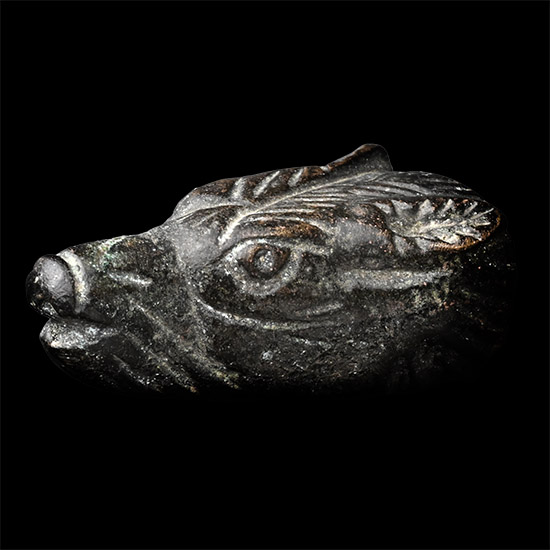
Roman Wolf's Head Finial
1st-4th century A.D.Sold for (Inc. bp): £117
Modelled in the round with a slender snout and large incised eyes, ears pulled back along the neck, and fur detailing throughout. 16.3 grams, 29 mm
Ex German collection, 1990s. -
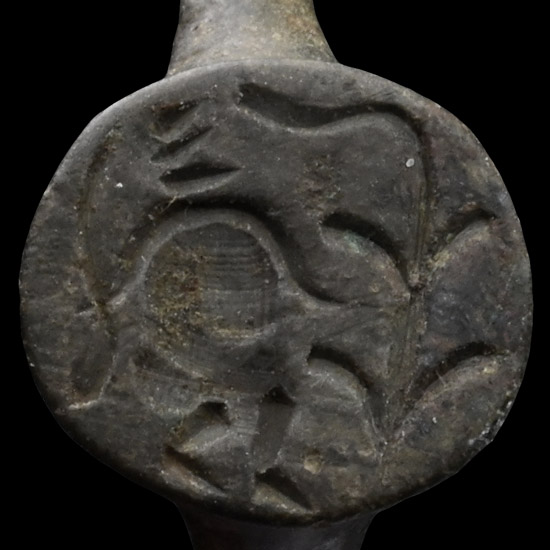
Roman Bronze Ring with Standing Figure and Tree
3rd-4th century A.D.Sold for (Inc. bp): £33
With a slender hoop and a raised circular bezel with a stylised figure beside a tree. 3.12 grams, 22.89 mm overall, 18.65 mm internal diameter (approximate size British Q, USA 8, Europe 17.49, Japan 16)
From a UK collection formed in the 1980s. Property of an Essex, UK, gentleman. -
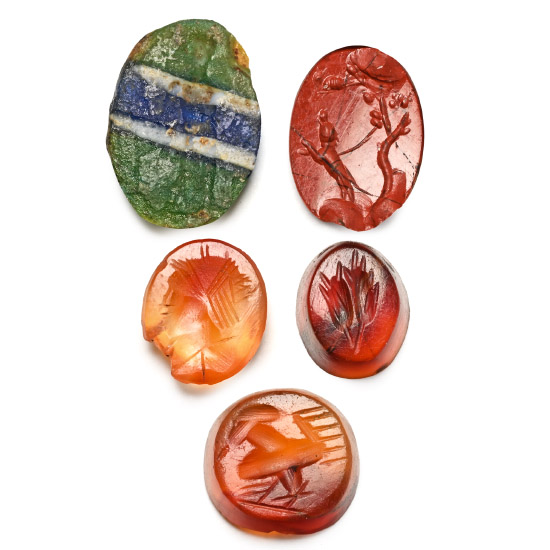
Roman Gemstone Group
2nd-3rd century A.D.Sold for (Inc. bp): £312
Including standing figure, profile portrait bust and other types; each supplied with a museum-quality impression. 1.25 grams total, 7-11 mm
From the private collection of a European gentleman (1942-2024), formed since the 1970s.
