
Loading, please wait...
LOT 0569
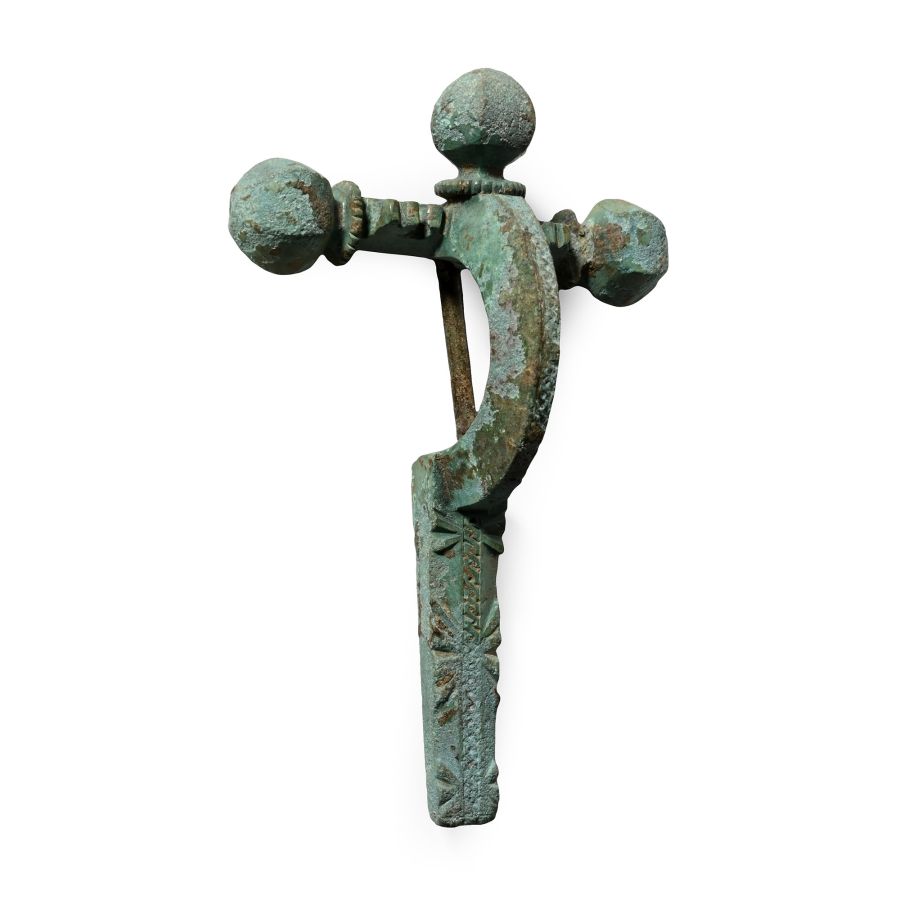
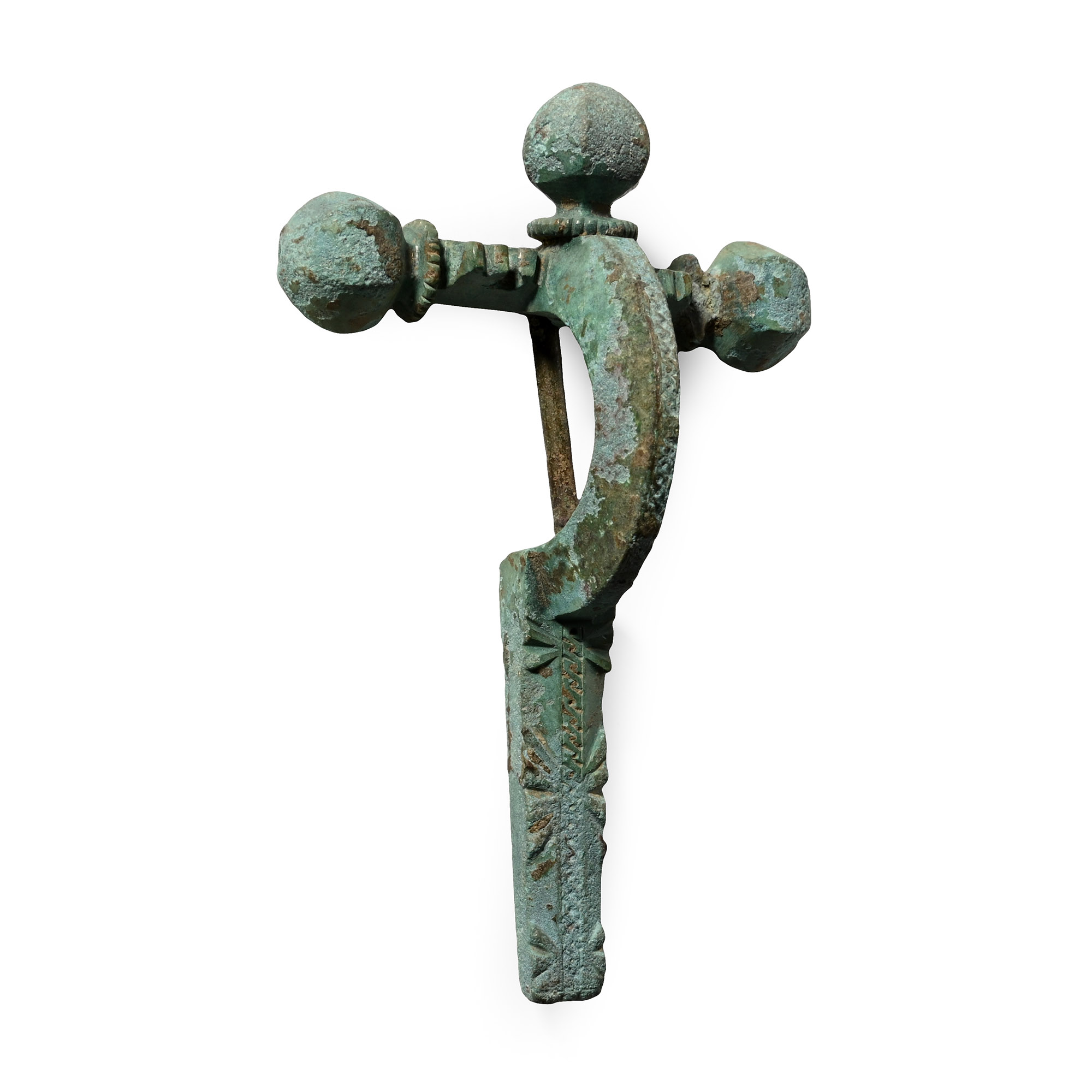
Roman Bronze Crossbow Brooch
4TH CENTURY A.D.
3 1/8 in. (47.9 grams, 79 mm).
With facetted onion-knop finials above notched collars, a vertical band of punched detailing to the bow extending along the foot, chamfered lateral faces to the foot with radiating detailing, and a hinged pin to the reverse. [No Reserve]
ProvenanceEx German art market, 2000s.
Acquired from an EU collector living in London.
From the collection of a Surrey, UK, gentleman.
Cf. Beck, H. et al., Fibel und Fibeltracht, Berlin, 2000, fig.119(7), for type.
CONDITIONTimeLine Auctions follows a vetting process to ensure the authenticity and legality of all items, reinforcing our commitment to integrity and responsible trading. Each antiquity, antique, and coin lot undergoes thorough examination by a vetting committee of at least ten external specialists, professional trade association members, scientists, and archaeologists: Our Vetting Process
AUCTIONS:
TimeLine is a leading auction house specialising in antiquities, ancient art, collectables, natural history, coins, medals, and books. Our auctions offer museums, collectors, historians, and enthusiasts the opportunity to acquire unique and historically significant pieces.
-
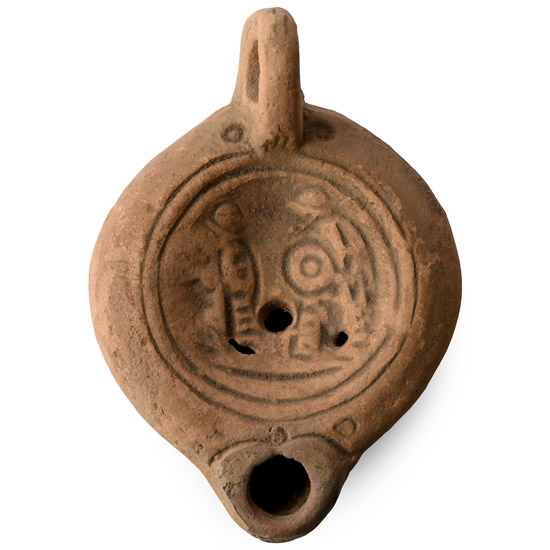
Roman Terracotta Oil Lamp with Gladiators
Circa 2nd century A.D.Sold for (Inc. bp): £143
The discus with two opposing gladiators, one holding a round shield, loop handle to the rear. 47 grams, 98 mm
From the collection of a Cambridge, UK, gentleman, by direct descent from his father, who acquired the items in London in circa 1960. -
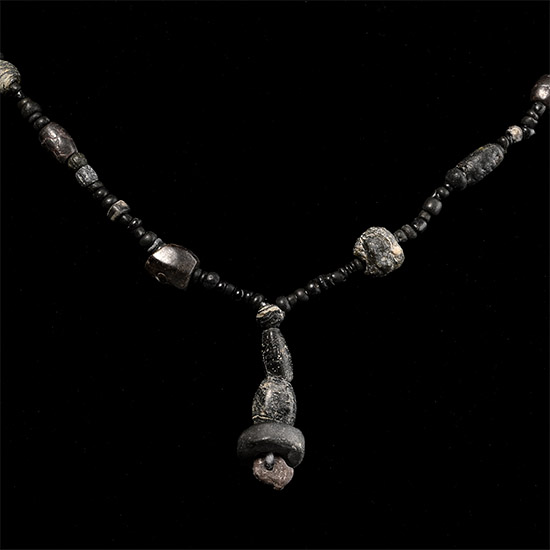
Roman Black Glass and Other Bead Necklace String
1st-4th century A.D. and laterSold for (Inc. bp): £39
Composed of small beads interspersed with larger oblate and other beads, the central feature composed of larger beads; restrung. 9.8 grams, 33 cm
Acquired in the 1990s. Ex London, UK, collection. -
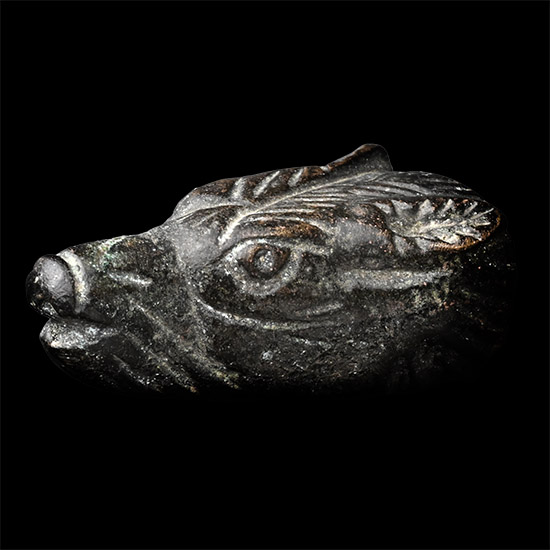
Roman Wolf's Head Finial
1st-4th century A.D.Sold for (Inc. bp): £117
Modelled in the round with a slender snout and large incised eyes, ears pulled back along the neck, and fur detailing throughout. 16.3 grams, 29 mm
Ex German collection, 1990s.
