
Loading, please wait...
LOT 0929
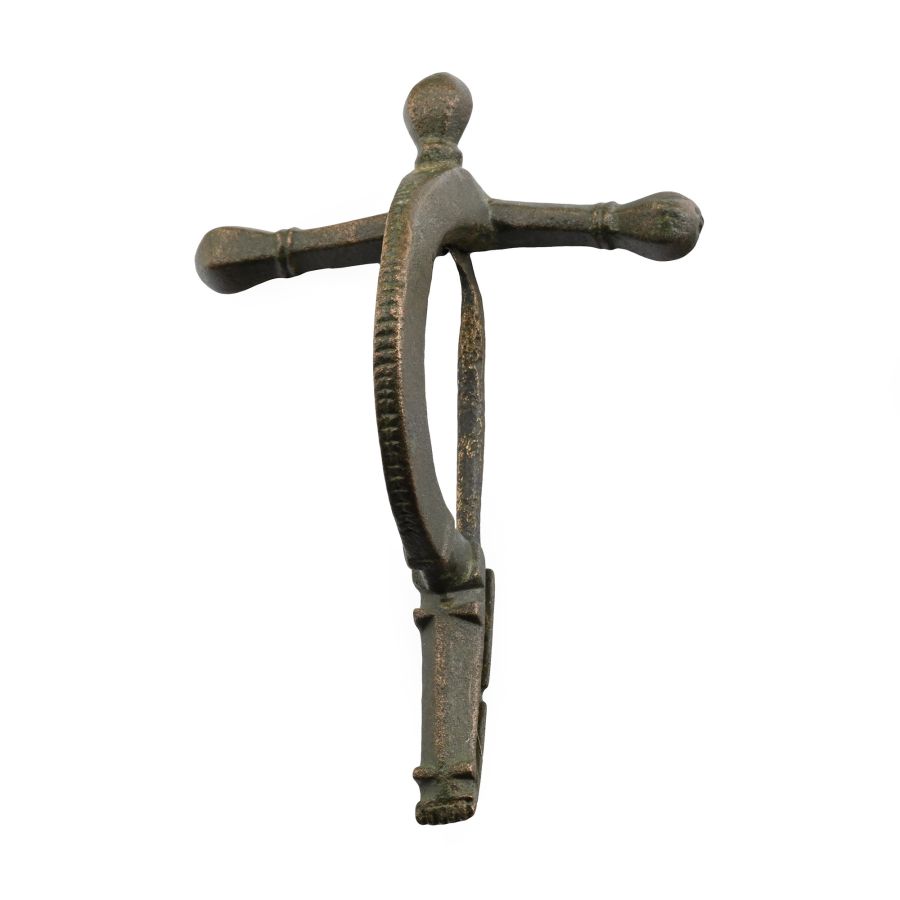
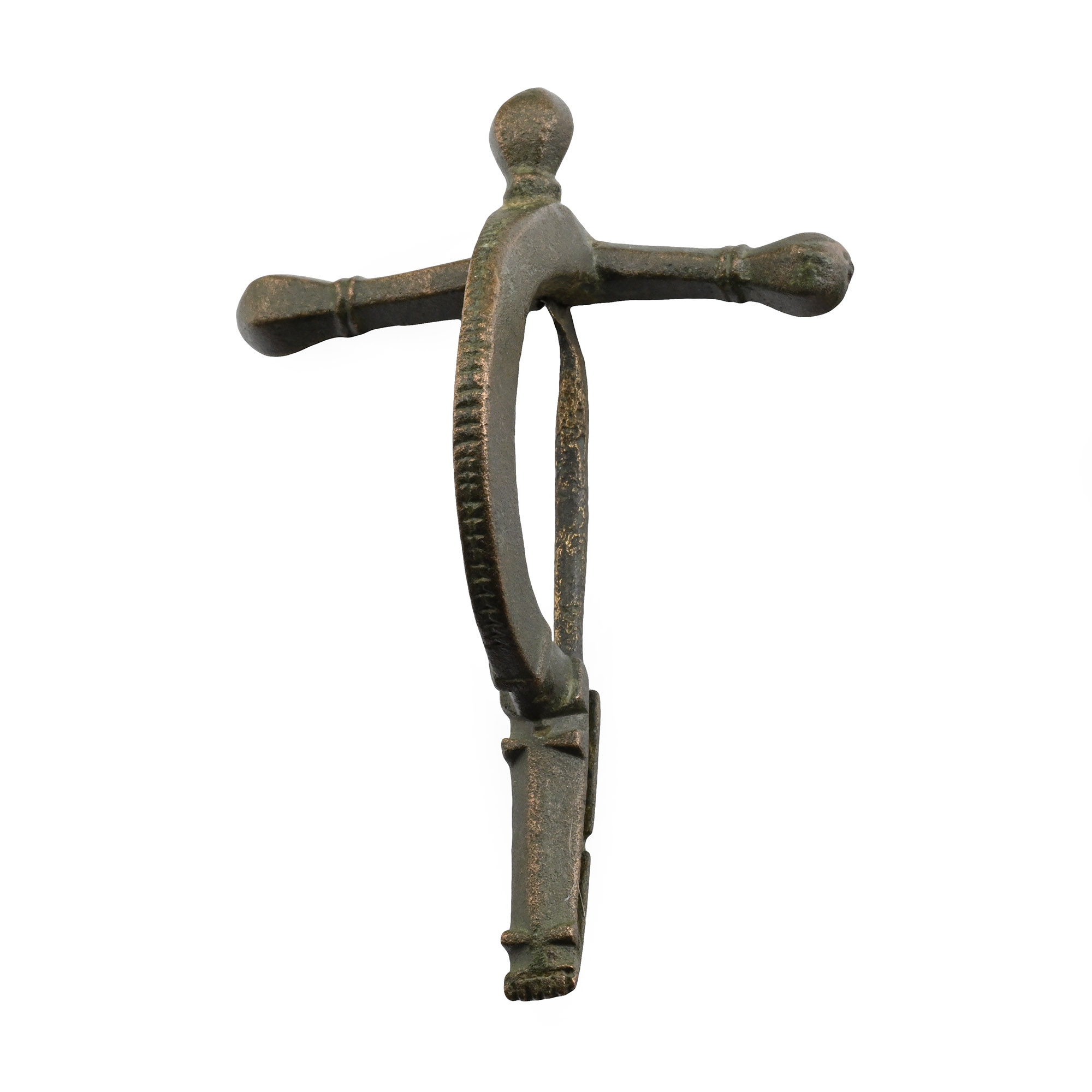
Roman Bronze Crossbow Brooch
4TH CENTURY A.D.
2 5/8 in. (23.7 grams, 68 mm).
Early type with lemon-shaped knop above the square-section crossbar, facetted bow with impressed triangles to the outer edge and faceted knop finials, D-section footplate with lateral chamfered edges and catchplate to reverse, hinged pin behind the crossbar. [No Reserve]
ProvenanceEx German art market, 2000s.
Acquired from an EU collector living in London.
From the collection of a Surrey, UK, gentleman.
Cf. Hattatt, R., Brooches of Antiquity, Oxford, 1987, item 1260.
CONDITIONTimeLine Auctions follows a vetting process to ensure the authenticity and legality of all items, reinforcing our commitment to integrity and responsible trading. Each antiquity, antique, and coin lot undergoes thorough examination by a vetting committee of at least ten external specialists, professional trade association members, scientists, and archaeologists: Our Vetting Process
AUCTIONS:
TimeLine is a leading auction house specialising in antiquities, ancient art, collectables, natural history, coins, medals, and books. Our auctions offer museums, collectors, historians, and enthusiasts the opportunity to acquire unique and historically significant pieces.
-

Roman Aquamarine Gemstone of a Philosopher
Late 1st century B.C.Sold for (Inc. bp): £7,800
Plano-convex in section, incuse facing bust of an elderly man wearing a tunic and toga; supplied with a museum-quality impression. 0.90 grams, 14 mm
Private English collection, formed between the late 1970s and early 1990s. Private collection, London, UK. -
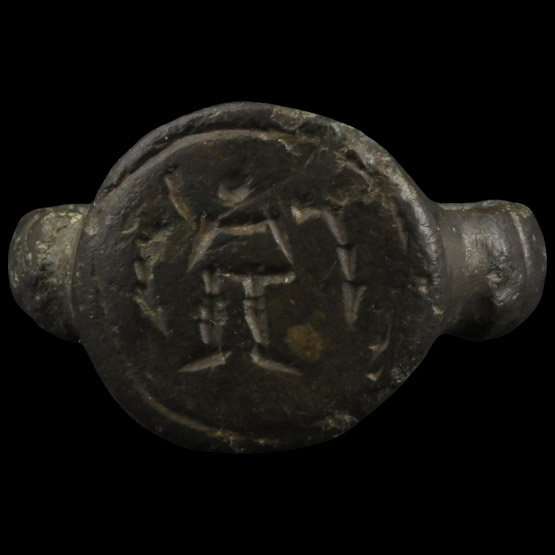
Late Roman Bronze Ring with Warrior
280-400 A.D.Sold for (Inc. bp): £72
Comprising a D-section hoop with notched shoulders, a raised circular bezel with a stylised warrior. 5.19 grams, 20.44 mm overall, 15.11 mm internal diameter (approximate size British G 1/2, USA 3 1/2, Europe 5.55, Japan 5)
Acquired on the UK and EU art market before 2000. From the private collection of a Surrey, UK, gentleman.
The small copper alloy Roman finger ring seems to be of Guiraud Type 4f (similar to Henig Type II) and dates from the 3rd to early 5th century A.D. The size of the ring suggests it may have been worn on the end of the finger, but most probably used by a child. -
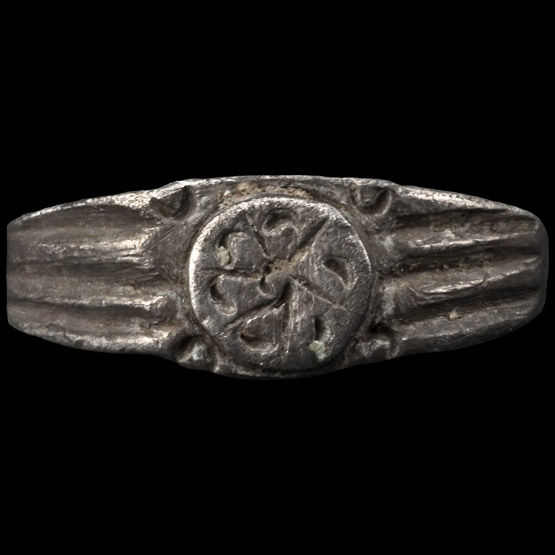
Roman Silver Ring with Sun-Wheel
Circa 2nd-3rd century A.D.Sold for (Inc. bp): £104
With flat-section hoop, broad corrugated shoulders, plaque with raised disc bezel, sun-wheel motif. 4.36 grams, 21.90 mm overall, 19.89 mm internal diameter (approximate size British R, USA 8 1/2, Europe 18 3/4, Japan 18)
Ex German art market, 2000s. Acquired from an EU collector living in London. From the collection of a Surrey, UK, gentleman.
