
Loading, please wait...
LOT 0697
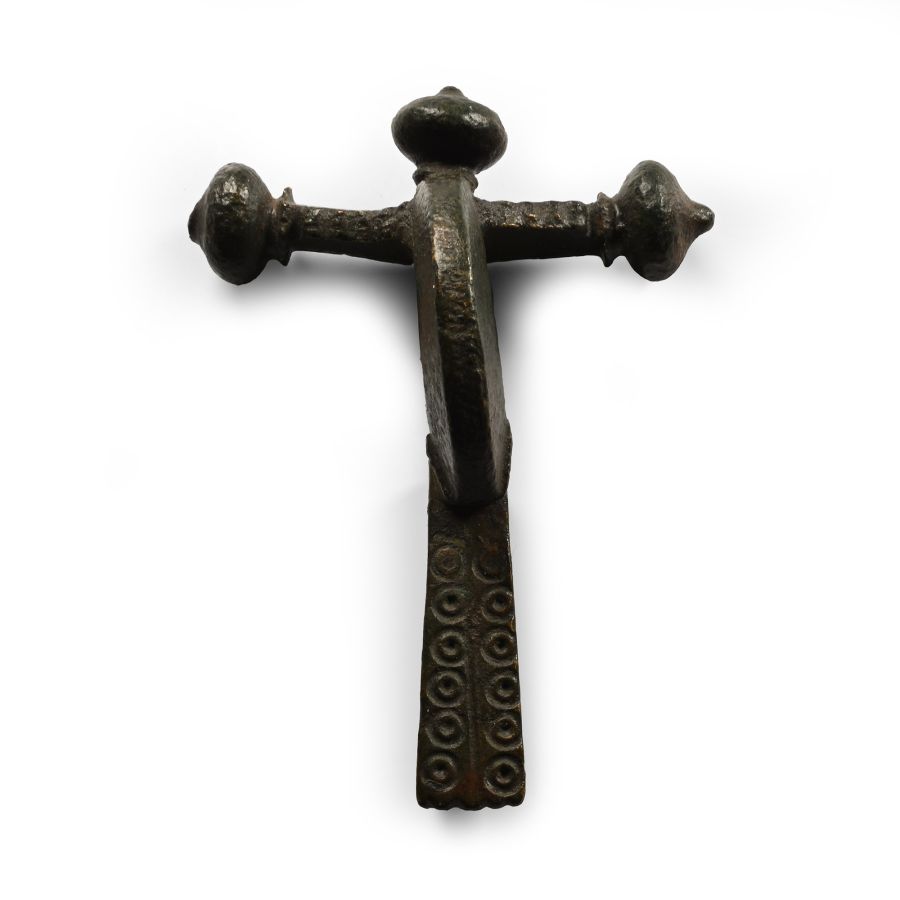
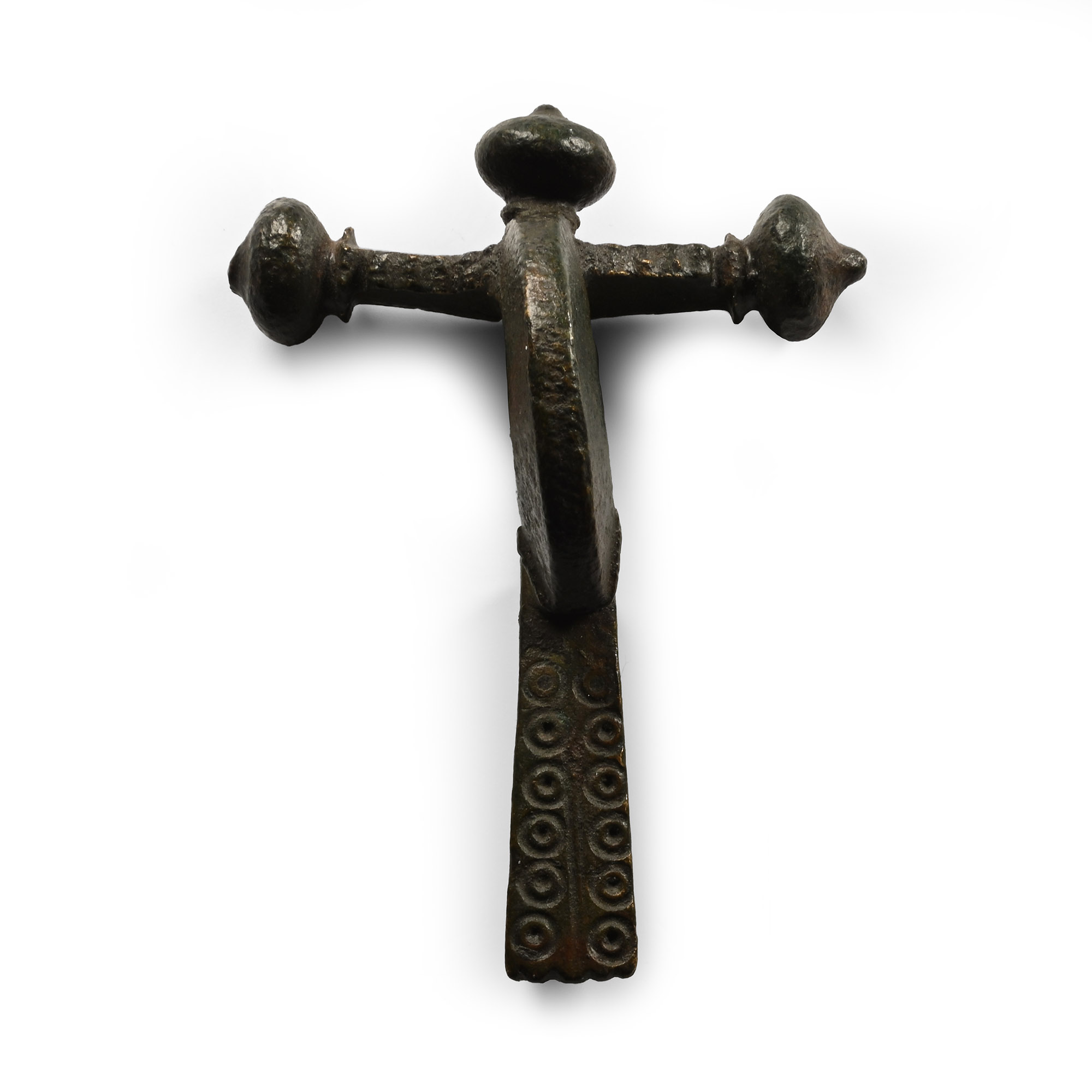
Roman Bronze Crossbow Brooch
4TH CENTURY A.D.
3 3/8 in. (90 grams, 86 mm).
With onion knop finials, deep bow, stepped junction with foot, trapezoidal foot with ring-and-dot motifs and integral catch; hinged pin to reverse.
ProvenanceEx German collection, 1990s.
This lot is accompanied by an illustrated lot declaration signed by the Head of the Antiquities Department, Dr Raffaele D’Amato.
Cf. Mackreth, D.F., Brooches in Late Iron Age and Roman Britain, Oxford, 2011, vol.2, pl.140, item 12576.
CONDITIONTimeLine Auctions follows a vetting process to ensure the authenticity and legality of all items, reinforcing our commitment to integrity and responsible trading. Each antiquity, antique, and coin lot undergoes thorough examination by a vetting committee of at least ten external specialists, professional trade association members, scientists, and archaeologists: Our Vetting Process
AUCTIONS:
TimeLine is a leading auction house specialising in antiquities, ancient art, collectables, natural history, coins, medals, and books. Our auctions offer museums, collectors, historians, and enthusiasts the opportunity to acquire unique and historically significant pieces.
LOT 0697
Roman Bronze Crossbow Brooch
Estimate £100 - 140€120 - 160 (for guidance only)$140 - 190 (for guidance only)
-
Roman Bronze Phallic Knife Guard
1st-4th century A.D.Sold for (Inc. bp): £39
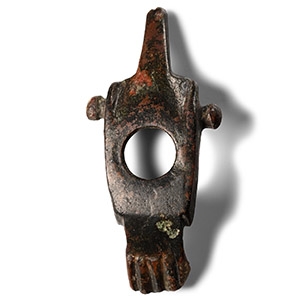
Formed with a stylised erect phallus to one side, fist held in the fica gesture to the other, rectangular plate with raised sides and circular piercing to the bottom face. 10.7 grams, 50 mm
Acquired on the London art market in the late 1980s-1990s. From the family collection of an East London, UK, gentleman. This lot is accompanied by an illustrated lot declaration signed by the Head of the Antiquities Department, Dr Raffaele D’Amato. -
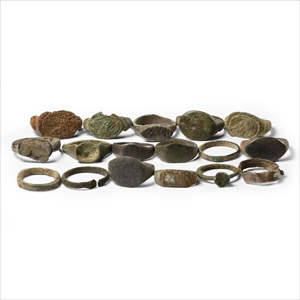
Roman and Other Bronze and Silver Ring Collection
1st-4th century A.D. and laterSold for (Inc. bp): £520
Including trumpet-bezel, carinated shoulder and other types. 59 grams total, 19-25 mm
Ex Nigel Mills, London, UK, circa 2000. This lot is accompanied by an illustrated lot declaration signed by the Head of the Antiquities Department, Dr Raffaele D’Amato. -
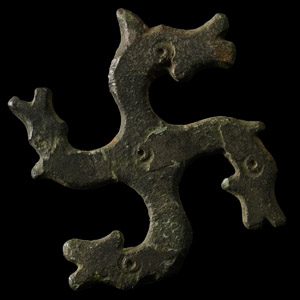
Roman Bronze Plate Brooch
2nd century A.D.Sold for (Inc. bp): £195
With horse-head decoration to each arm, each head with punched ring-and-dot eye, and a similar motif to the centre; sheet-silver surface partly absent; catchplate and hinged pin to reverse. 10.8 grams, 40 mm
Ex important German collection, 1990s. This lot is accompanied by an illustrated lot declaration signed by the Head of the Antiquities Department, Dr Raffaele D’Amato.
