
Loading, please wait...
LOT 0946
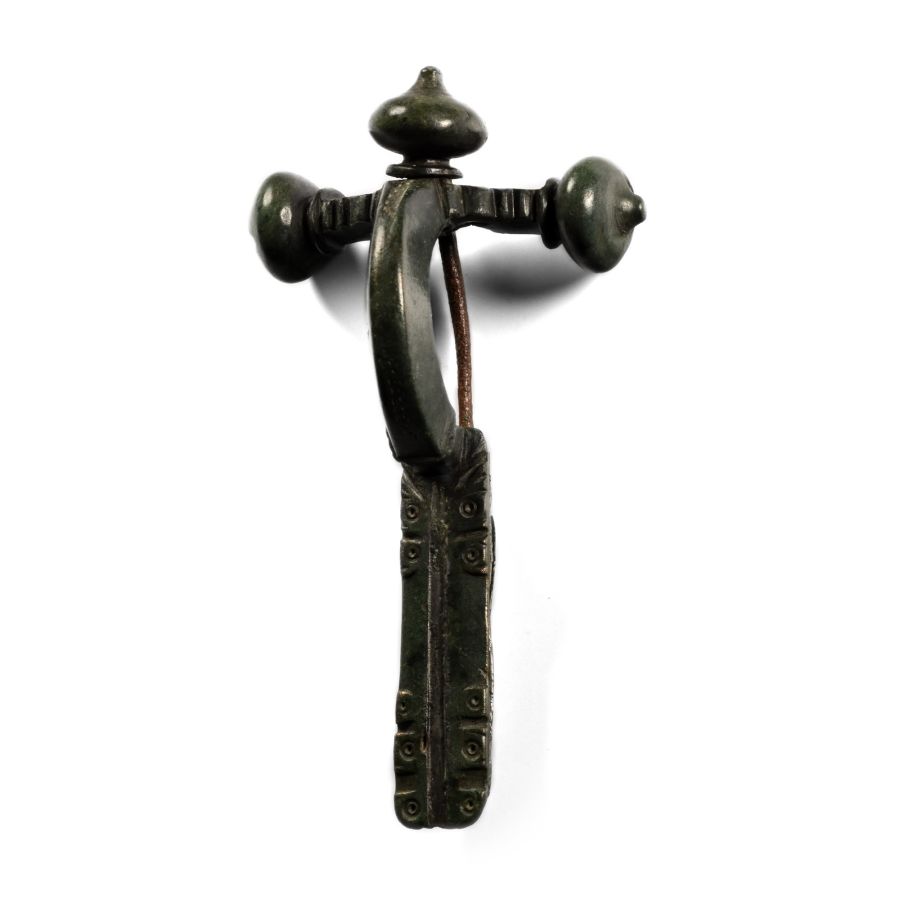
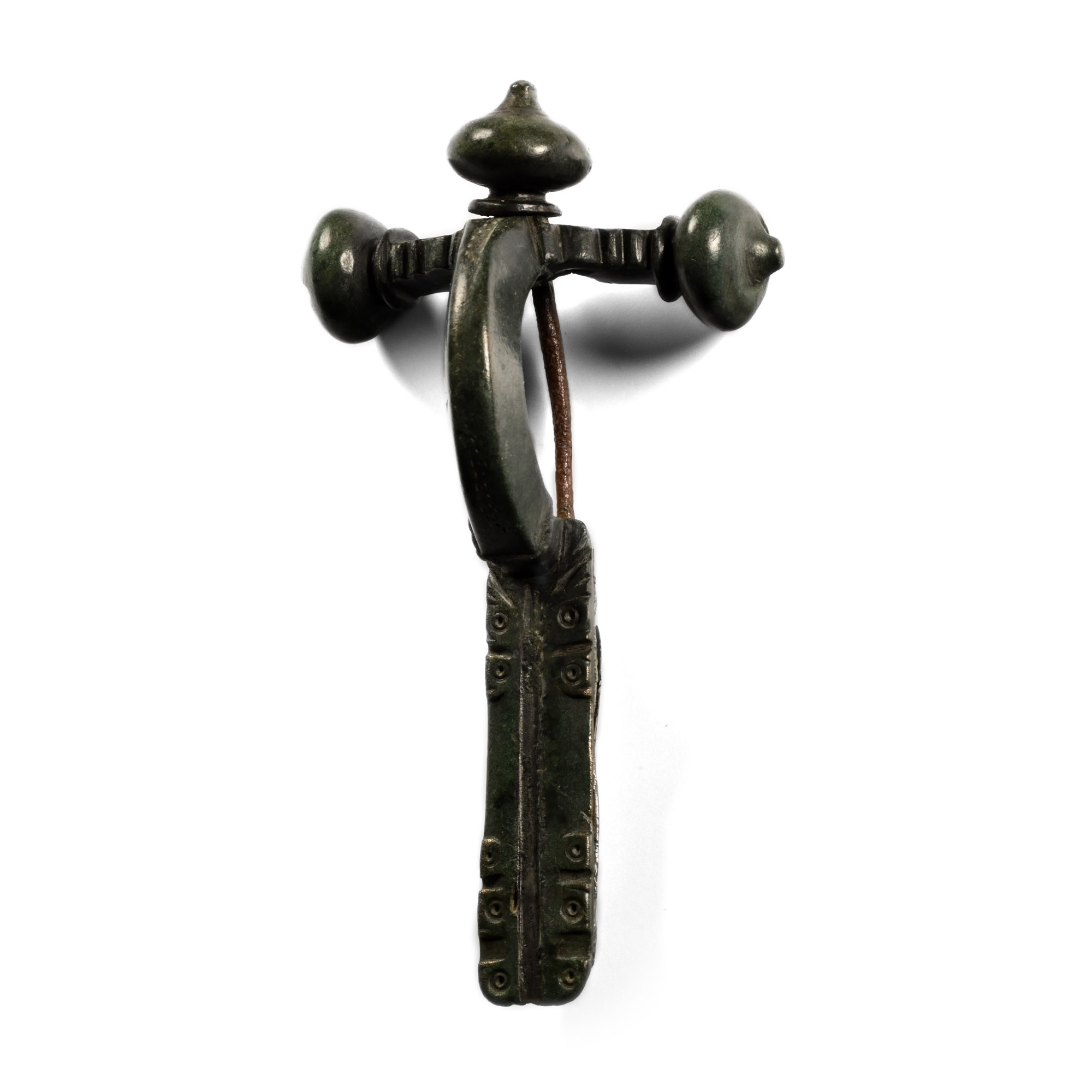
Roman Bronze Crossbow Brooch
4TH CENTURY A.D.
3 1/2 in. (58.6 grams, 88 mm).
Onion knop finials, the left finial with incised X-motif, deep bow, stepped junction with foot, trapezoidal foot with ring-and-dot motifs and integral catch; hinged pin to reverse.
ProvenanceEx German art market, 2000s.
Acquired from an EU collector living in London.
From the collection of Surrey, UK, gentleman.
This lot is accompanied by an illustrated lot declaration signed by the Head of the Antiquities Department, Dr Raffaele D’Amato.
Cf. Mackreth, D.F., Brooches in Late Iron Age and Roman Britain, Oxford, 2011, vol.2, pl.140, item 12576.
CONDITIONTimeLine Auctions follows a vetting process to ensure the authenticity and legality of all items, reinforcing our commitment to integrity and responsible trading. Each antiquity, antique, and coin lot undergoes thorough examination by a vetting committee of at least ten external specialists, professional trade association members, scientists, and archaeologists: Our Vetting Process
AUCTIONS:
TimeLine is a leading auction house specialising in antiquities, ancient art, collectables, natural history, coins, medals, and books. Our auctions offer museums, collectors, historians, and enthusiasts the opportunity to acquire unique and historically significant pieces.
-
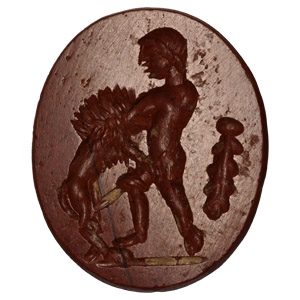
Roman Red Jasper Gemstone with Hercules and Nemean Lion
2nd-3rd century A.D.Sold for (Inc. bp): £364
Ellipsoid in plan with engraved intaglio scene of Hercules advancing on a baseline to grapple with the Nemean lion, club placed to his rear; reverse with legend 'KKK/ЧЧЧ'; supplied with a museum-quality impression. 1.26 grams, 18 mm
From the Fadel family collection, London, UK, 1970s. This lot is accompanied by an illustrated lot declaration signed by the Head of the Antiquities Department, Dr Raffaele D’Amato. -
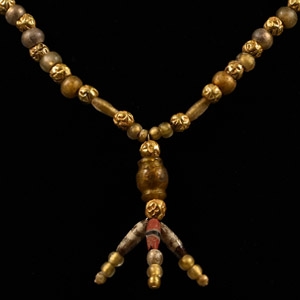
Roman Gold-in-Glass Bead Necklace
4th-5th century A.D.Sold for (Inc. bp): £390
Restrung group of hollow gold-in-glass oblate beads with glass oblate beads, fusiform and other types. 23.5 grams, 51 cm
Acquired on the UK art market 1979-1983. This lot is accompanied by an illustrated lot declaration signed by the Head of the Antiquities Department, Dr Raffaele D’Amato. -
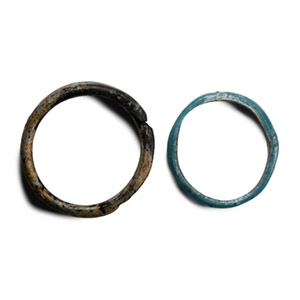
Roman Blue Glass Bangle Pair
Circa 4th century A.D.Sold for (Inc. bp): £72
One flat-section with light blue ribbed outer face; the other flattened at the juncture with some iridescence remaining. 20.4 grams total, 50-58 mm
From an old English collection. Acquired from Helios Gallery in 2011. Ian Wilkinson collection, Nottinghamshire, UK, formed since 1985. This lot is accompanied by an illustrated lot declaration signed by the Head of the Antiquities Department, Dr Raffaele D’Amato.
The mass production of glass in ancient Rome prompted the development of glass jewellery of unique qualities. The ancient Romans considered jewellery to be an essential accessory, being a public display of the wealth of high social classes. Recent excavations have provided better information on the use of glass for necklaces and bracelets, and in some cases it has been possible to understand the exact arrangement of the jewellery.
