
Loading, please wait...
LOT 0745
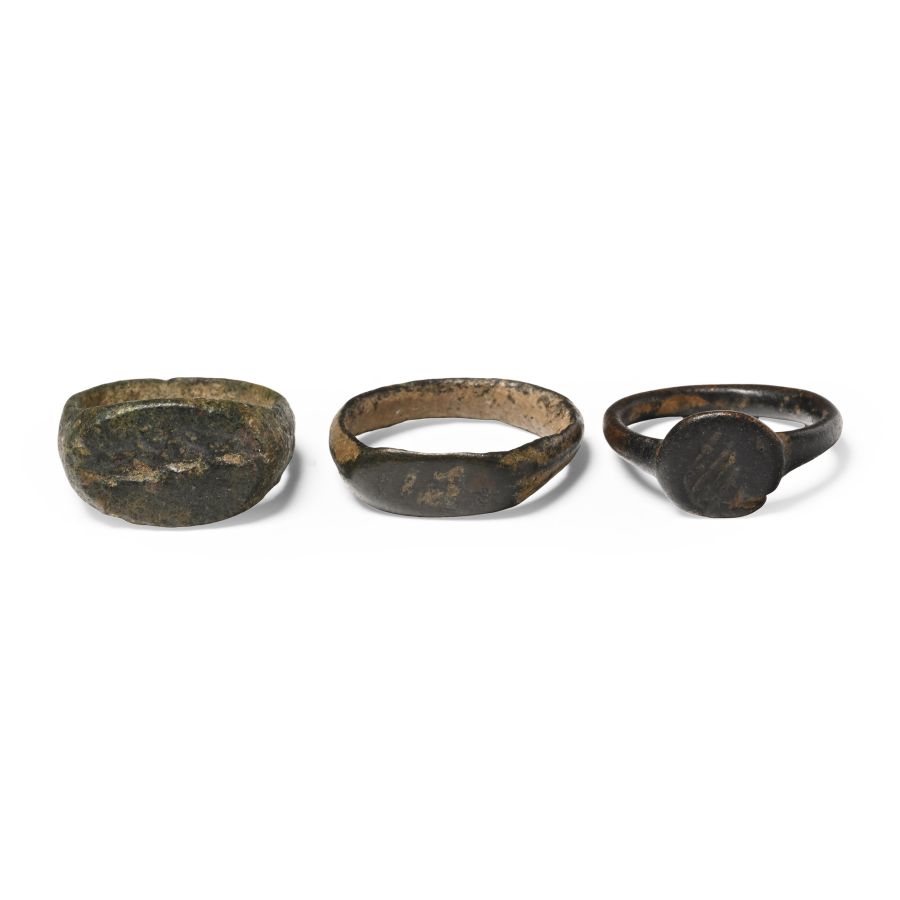
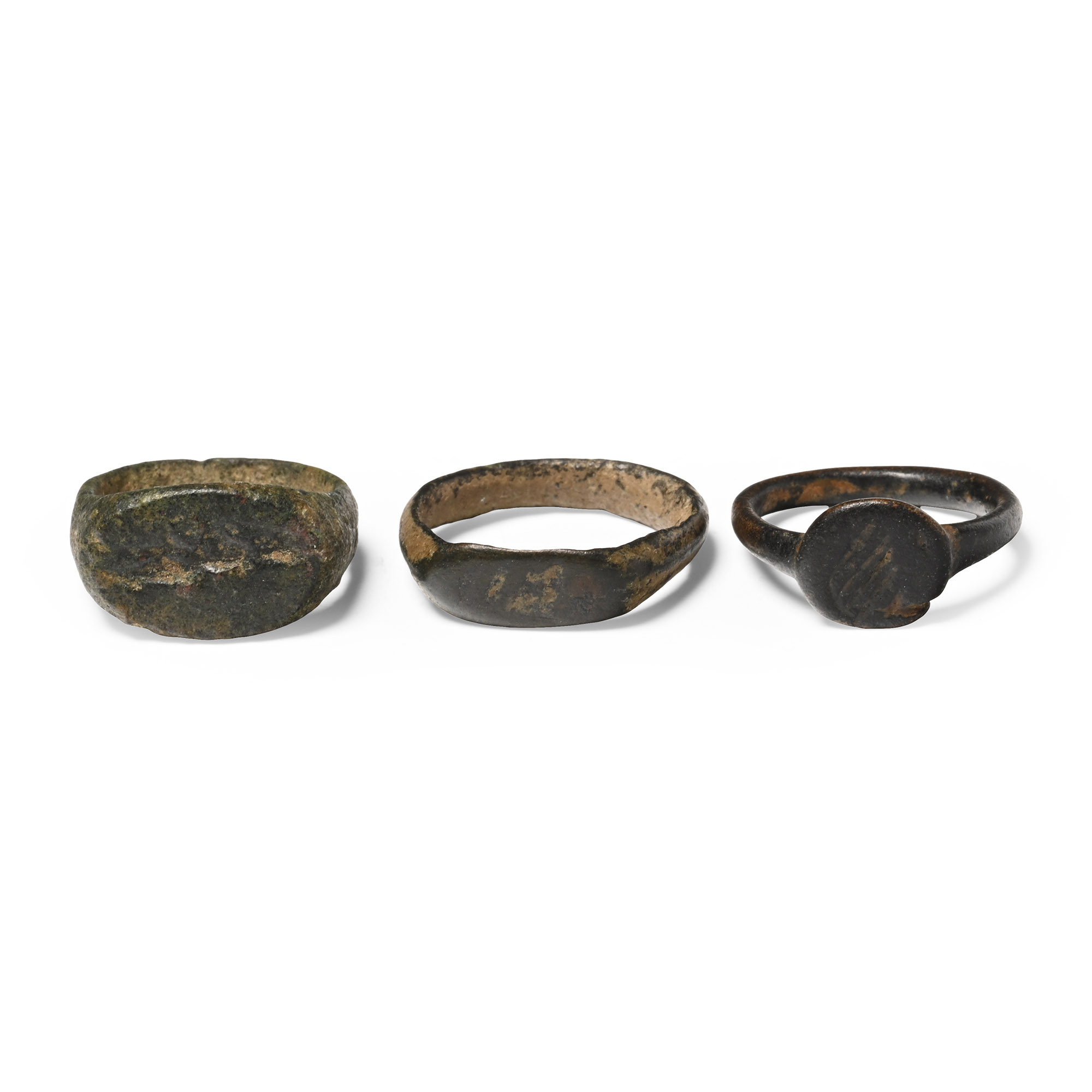
Roman Bronze Child's Ring Collection
CIRCA 4TH CENTURY A.D.
5/8 in. (6.27 grams total, 15-16 mm).
Comprising three rings with decorative bezels. [3, No Reserve]
ProvenanceAcquired Town Hall Antiques, Market Place, Woburn, Bedfordshire, UK, on 9th March 1999.
Property of a West Northamptonshire, UK, gentleman.
Accompanied by the original Town Hall Antiques invoice.
TimeLine Auctions follows a vetting process to ensure the authenticity and legality of all items, reinforcing our commitment to integrity and responsible trading. Each antiquity, antique, and coin lot undergoes thorough examination by a vetting committee of at least ten external specialists, professional trade association members, scientists, and archaeologists: Our Vetting Process
AUCTIONS:
TimeLine is a leading auction house specialising in antiquities, ancient art, collectables, natural history, coins, medals, and books. Our auctions offer museums, collectors, historians, and enthusiasts the opportunity to acquire unique and historically significant pieces.
-
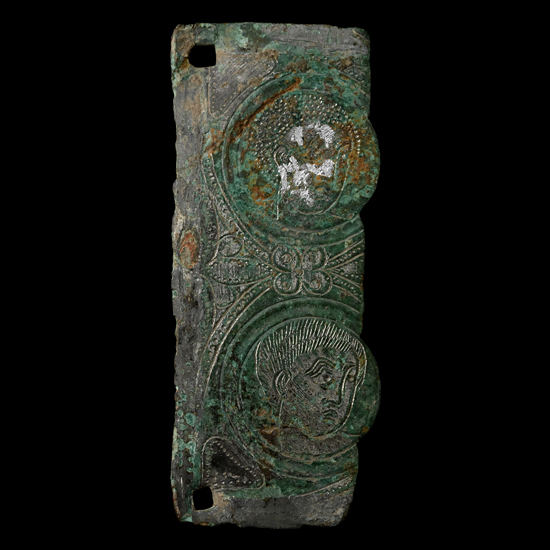
Roman Tinned Bronze Plaque Fragment with Two Busts
Circa 4th century A.D.Sold for (Inc. bp): £156
Tinned plaque fragment with attachment points in the corners; roundel with male bust in three-quarter view with pointillé hairstyle, similar below with hatched hair; scrolls and tendril forming a frame. 7.52 grams, 62.30 mm
From the private collection of a European gentleman (1942-2024), formed since the 1970s. -
.jpg)
Roman Marble Head of a Veiled Goddess
1st century A.D.Sold for (Inc. bp): £4,680
With a palla drawn up over her hair, stepped at the rear to indicate a chignon; soft, youthful facial features with fleshy cheeks and a rounded jawline; mounted on a custom-made stand. 1.47 kg total, 18.5 cm including stand
with Gorny & Mosch, Munich, 21 June 2005, no.344. Private collection, Europe. Accompanied by copies of the relevant Gorny & Mosch catalogue pages. This lot has been checked against the Interpol Database of stolen works of art and is accompanied by search certificate number no.13198-250132.
The head comes from a statue that most likely represented a matronly deity, Demeter or Hestia/Vesta, the goddess protector of the home hearth. The latter seems the most likely, as she was usually depicted (as in the Hestia Iustiniani, a prototype often replicated in the Roman era) with a covered head (velato capite), a symbol of modesty and marital virtue for the Roman matron. -
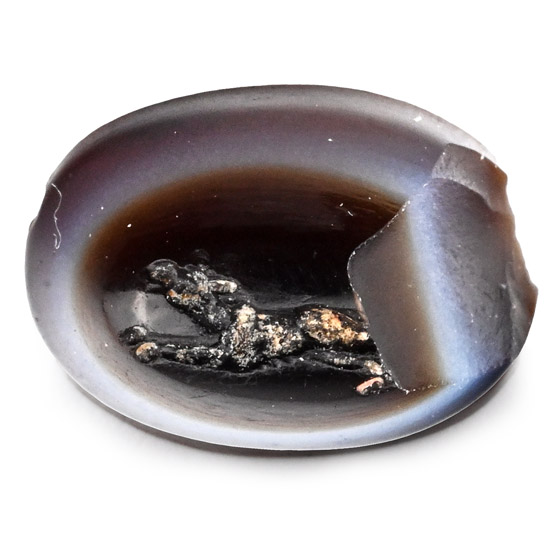
Roman Eye Agate Intaglio with Running Dog
Circa 1st century A.D.Sold for (Inc. bp): £33
An oval banded intaglio showing a running dog facing left. 0.46 grams, 10 mm
From a late Warwickshire numismatic collector, his collection formed from the early 1980s.
