
Loading, please wait...
LOT 0132
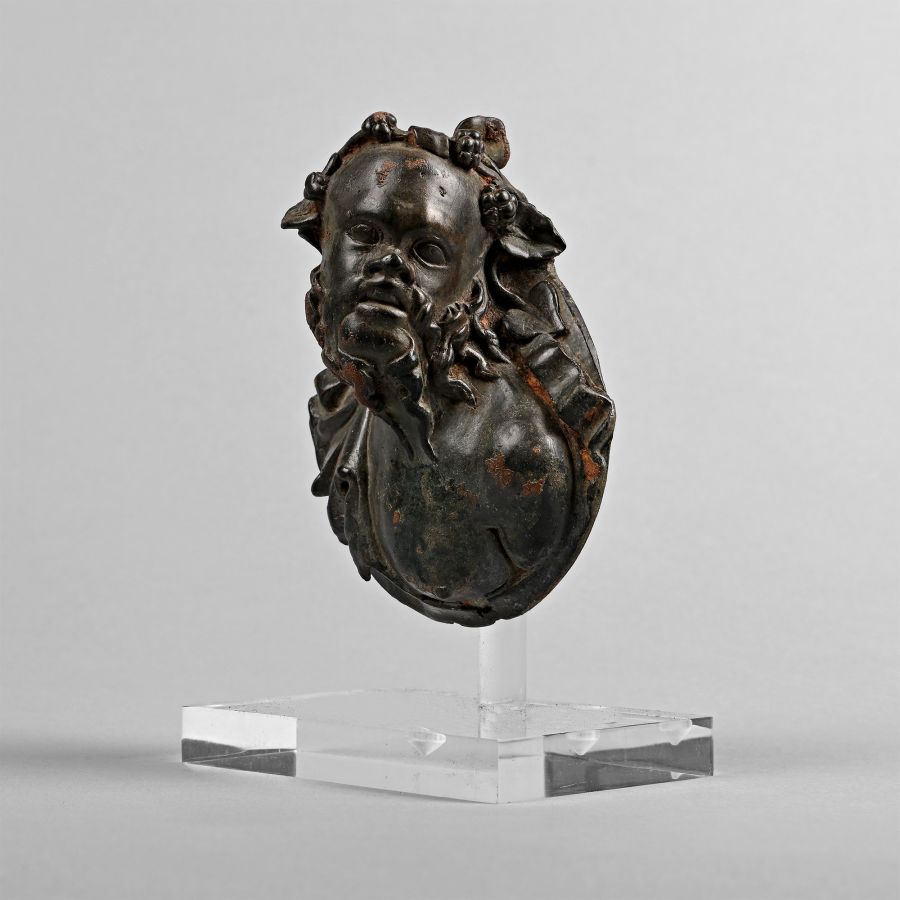
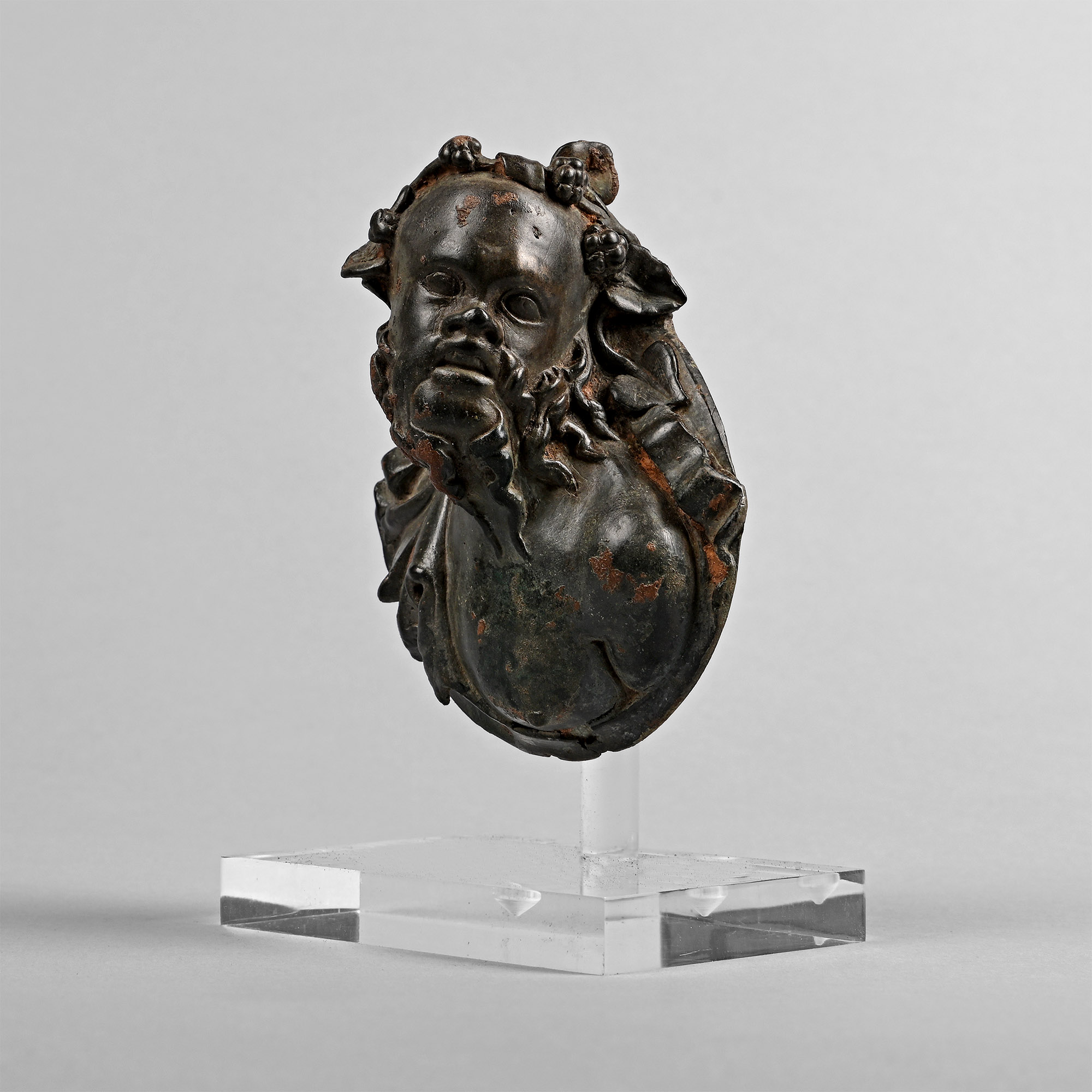
Roman Bronze Chariot Mount with Bust of Silenus
1ST-2ND CENTURY A.D.
5 1/4 in. (435 grams total, 13.5 cm including stand).
Ovoid in profile with hollow reverse, modelled in high-relief with pallium tied at his right shoulder and garland draped across his shoulders and wreath of ivy around his brow; mounted on a custom-made stand.
ProvenancePrivate Swiss collection, before 1976.
with Bonhams Antiquities, London, 3rd October 2000, no.202.
Private European collection.
Accompanied by a copy of an Art Loss Register certificate, no.S00038120.
Accompanied by copies of the relevant Bonhams catalogue pages.
Accompanied by an academic report by Dr Raffaele D'Amato.
This lot has been checked against the Interpol Database of stolen works of art and is accompanied by search certificate number no.13216-249243.
See Boucher, S., Inventaire des Collections Publiques Françaises - 17 Vienne: Bronzes Antiques, Paris, 1971, cat.42, for a similar possible chariot appliqué of a bacchant; for another chariot appliqué with a Silenus chariot element from Sala, cf. Boube-Picot, Les Bronzes Antiques du Maroc, III, les Chars et l’Attelage, Rabat, 1980, no.602 pl.122; for very similar appliqués for carts cf. Veselin I.I., Funeral complexes with carts in the Roman province of Thrace (mid 1st – 3rd c.), Sofia, 2018, pl.18 (no.5.9.1.1); 20 nos.5.9.8.6-5.9.8.9 (Silenus); Ratković, D., 'Wagon and Harness Bronzes from the Roman Collection of the National Museum in Belgrade' in Thiasos, Festschrift fur Erwin Pochmarski zum 65. Geburtstag, Wien, 2008, pp.793-815, fig.3, for an appliqué in a similar style.
FootnotesThis type of mount was probably used as bridle holders and placed near the driver’s seat, on the wagon platform or as a central decoration on the back of the wagon.
CONDITIONTimeLine Auctions follows a vetting process to ensure the authenticity and legality of all items, reinforcing our commitment to integrity and responsible trading. Each antiquity, antique, and coin lot undergoes thorough examination by a vetting committee of at least ten external specialists, professional trade association members, scientists, and archaeologists: Our Vetting Process
AUCTIONS:
TimeLine is a leading auction house specialising in antiquities, ancient art, collectables, natural history, coins, medals, and books. Our auctions offer museums, collectors, historians, and enthusiasts the opportunity to acquire unique and historically significant pieces.
LOT 0132
Roman Bronze Chariot Mount with Bust of Silenus
Estimate £15,000 - 20,000€17,400 - 23,200 (for guidance only)$20,250 - 27,000 (for guidance only)
-
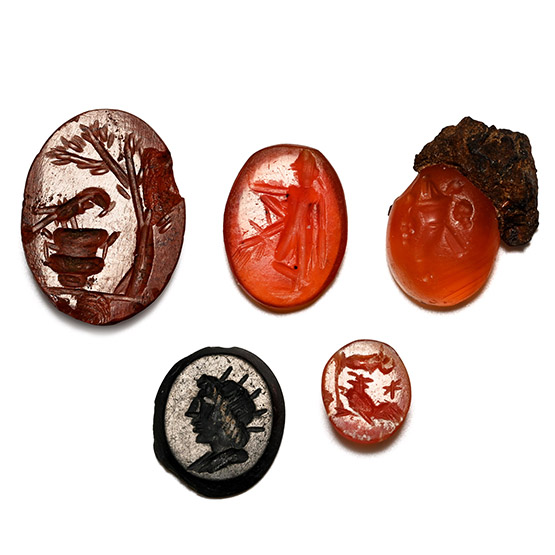
Roman Gemstone Collection
1st-2nd century A.D.Estimate: £350 - 450 (+bp*)
Opening Bid: £189
Mixed group including a standing female, a perching bird and others; each supplied with a museum-quality impression. 2.66 grams total, 7-16 mm
From the collection of a gentleman, acquired on the London art market in the 1990s.
Two of the gemstones in this collection show cockerels. The motif of fighting or individual cockerels was very popular in the classical world, and individual cockerels (the animal often associated with gods, such as Mercury or Sol/Helios) were also often depicted in a standing position. Another gemstone appears to represent a nude figure of Dionysus/Bacchus draped in a long cloak, and another shows Helios with a radiate crown. -
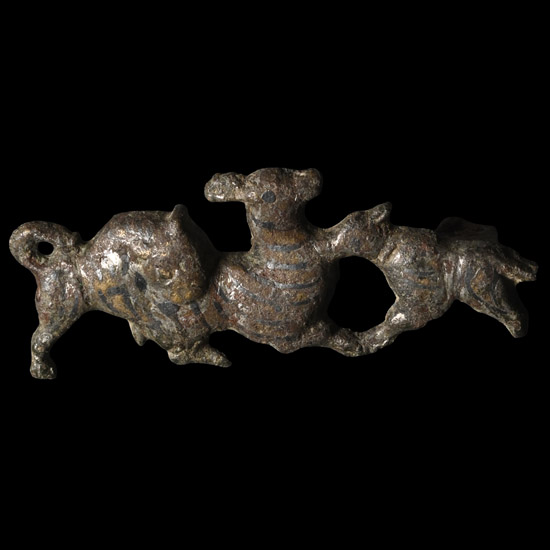
Roman Tinned Bronze Lion Pair Attacking a Deer Plate Brooch
2nd-3rd century A.D.Sold for (Inc. bp): £111
Showing two lions attacking a large deer, one biting the back and the other attacking its jugular, pin and catchplate on the reverse. 3.74 grams, 35 mm
From the private collection of a European gentleman (1942-2024), formed since the 1970s. -
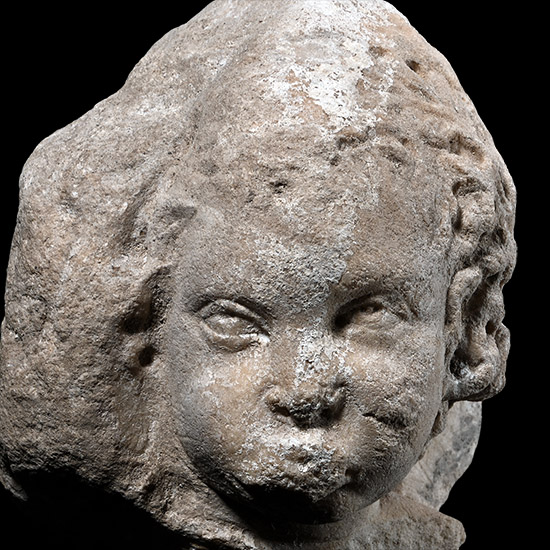
Roman Marble Head of a Putto
2nd-3rd century A.D.Sold for (Inc. bp): £1,040
Statue fragment with juvenile head of a putto carved in high-relief with full head of curly hair. 3.95 kg, 17.9 cm
From the private Netherlands collection of Mr Edward P. Van Dijk (1942-2024); his collection formed since the 1970s.
