
Loading, please wait...
LOT 0942
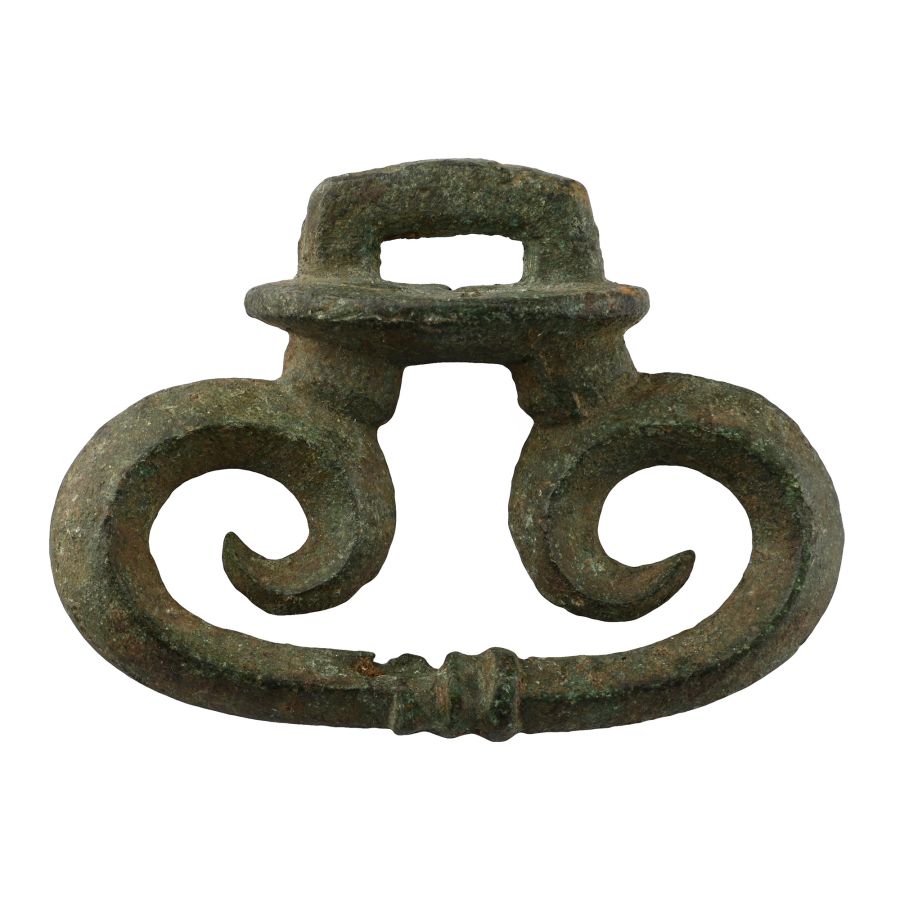
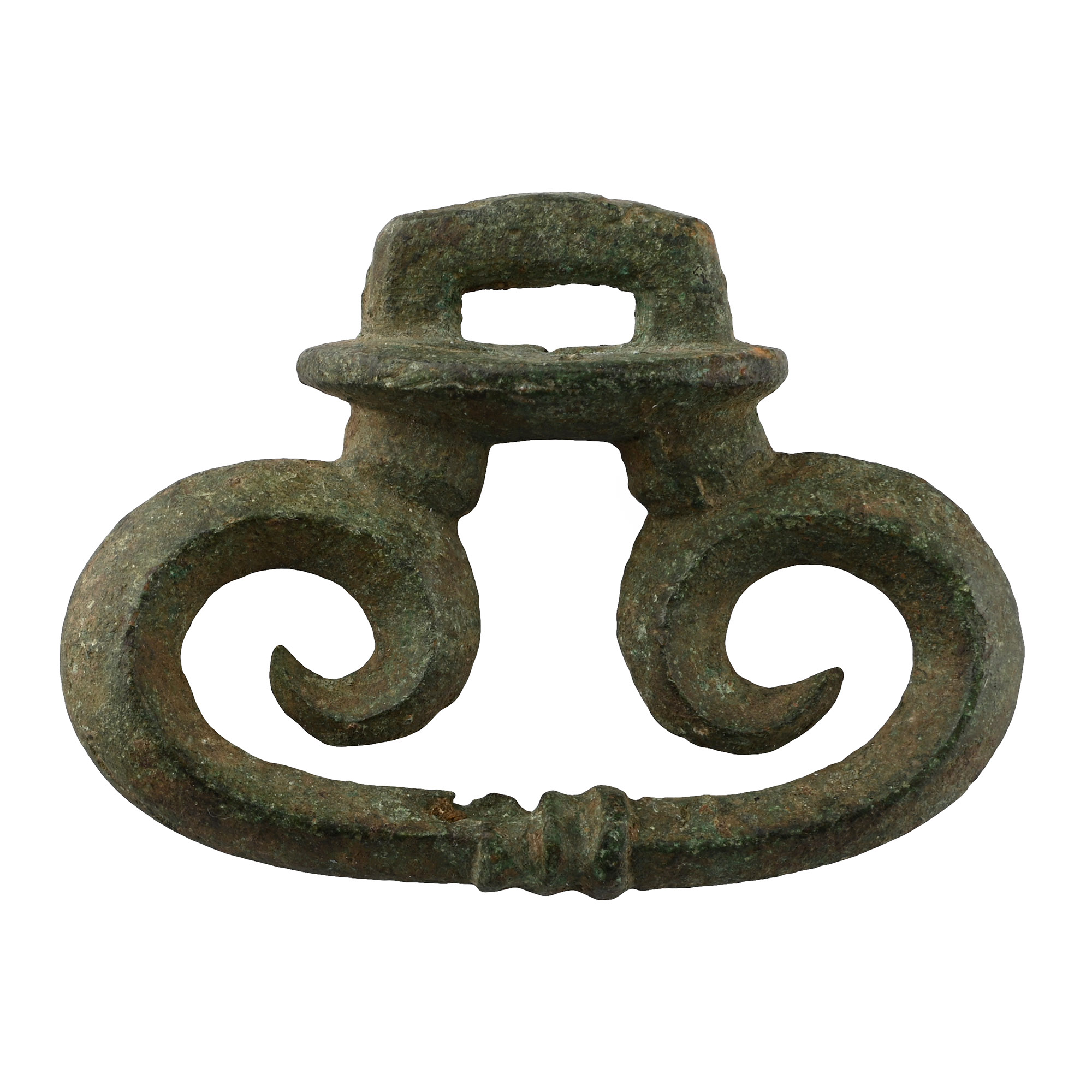
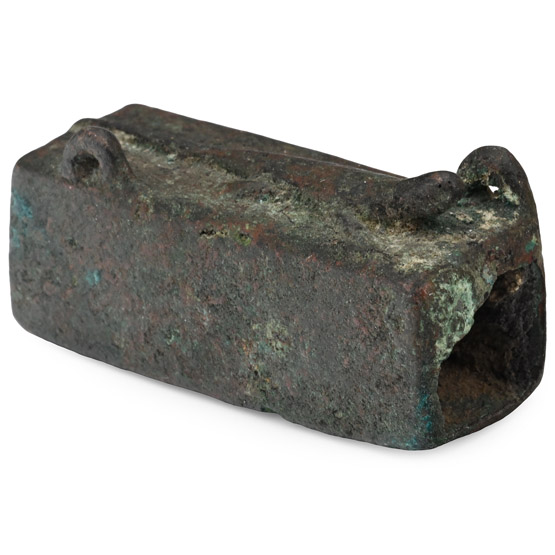
Roman Bronze Chariot Fitting
1ST-2ND CENTURY A.D.
3 in. (124 grams, 75 mm).
Rectangular bail, topped with two ball-shaped elements and a buckle with volutes. [No Reserve]
ProvenanceFrom the private collection of a Hampshire, UK, gentleman.
LiteratureCf. Boube-Piccot, C., Les bronzes antiques de Maroc, III, Les chars et l’attelage, Rabat, 1980, nos.413 (Banasa), for a similar element.
FootnotesThis is likely a chariot element. It may be a buckle for attaching the girth of the draft horse, or a mount for passing the yoke straps.
CONDITIONTimeLine Auctions follows a vetting process to ensure the authenticity and legality of all items, reinforcing our commitment to integrity and responsible trading. Each antiquity, antique, and coin lot undergoes thorough examination by a vetting committee of at least ten external specialists, professional trade association members, scientists, and archaeologists: Our Vetting Process
AUCTIONS:
TimeLine is a leading auction house specialising in antiquities, ancient art, collectables, natural history, coins, medals, and books. Our auctions offer museums, collectors, historians, and enthusiasts the opportunity to acquire unique and historically significant pieces.
-
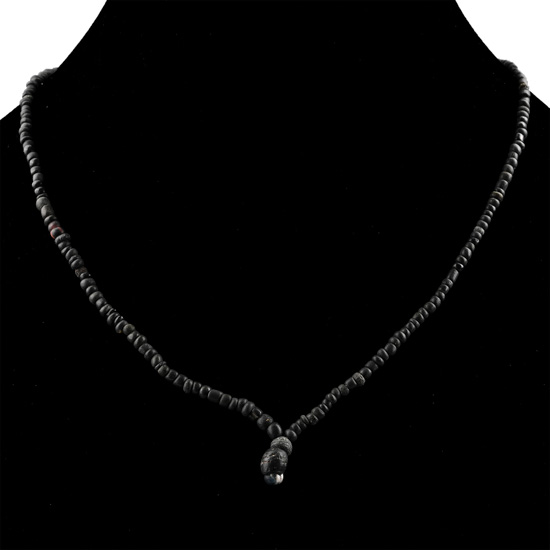
Roman and Other Black Glass Bead Necklace String
1st-4th century A.D. and laterSold for (Inc. bp): £39
Composed mainly of oblate beads with larger beads as a central feature; restrung. 7.58 grams, 46 cm
From London, UK, gallery collection, 1990s. -
Roman Bronze Padlock Barrel with Lizard
43-410 A.D.Sold for (Inc. bp): £221
Hollow square in cross-section, with thin walls; terminals with copper-alloy plate soldered onto them; moulded lizard decoration to the upper face consisting of a low oval body tapering to a thin tail; head raised and short legs spread out from the body; small indentation either side of the head representing the eyes, linear engraved texture the body for scales; two perforated lugs at opposed corners. 29 grams, 48 mm
Found Gloucestershire, UK. From the collection of a late Gloucestershire, UK, collector. Accompanied by a copy of the British Museum's Portable Antiquities Scheme (PAS) report no.GLO-791057. -
.jpg)
Roman Carnelian Gemstone with Eros, the Greek God of Love Holding a Theatrical Mask
1st century A.D.Estimate: £4,000 - 5,000 (+bp*)
Opening Bid: £2,000
Plano-convex in section with intaglio scene: a small winged character stands beneath a large theatrical mask, supporting it on his shoulders; supplied with a museum-quality impression. 1.8 grams, 17 mm
Acquired on the UK art market. Private collection, England. This lot has been checked against the Interpol Database of stolen works of art and is accompanied by search certificate number no.13118-249633.
The young Eros appears with his face inside the wide-open mouth of the mask, looking out as a spectator. The mask is held in his small hands and is characterised by a thick beard, large orbital cavities, and short hair with ribbons. He is depicted in three-quarters seen from behind, engraved and polished with great skill. The stone has a convex surface with traces of ancient burning at the bottom and slight wear marks.
