
Loading, please wait...
_900x900.jpg "Roman Bronze Chariot Fitting")
_200x200.jpg "Roman Bronze Chariot Fitting")
.jpg "Roman Bronze Chariot Fitting")
LOT 0859
Roman Bronze Chariot Fitting
1ST-4TH CENTURY A.D.
2 1/2 in. (75 grams, 63 mm).
Bell-shaped cap fitting with acorn finial, thumb-shaped spur.
ProvenanceAcquired in the late 1980s.
Private collection, 2001.
This lot is accompanied by an illustrated lot declaration signed by the Head of the Antiquities Department, Dr Raffaele D'Amato.
TimeLine Auctions follows a vetting process to ensure the authenticity and legality of all items, reinforcing our commitment to integrity and responsible trading. Each antiquity, antique, and coin lot undergoes thorough examination by a vetting committee of at least ten external specialists, professional trade association members, scientists, and archaeologists: Our Vetting Process
AUCTIONS:
TimeLine is a leading auction house specialising in antiquities, ancient art, collectables, natural history, coins, medals, and books. Our auctions offer museums, collectors, historians, and enthusiasts the opportunity to acquire unique and historically significant pieces.
-
.jpg)
Roman Bronze Trumpet Whorl Brooch
Circa 2nd century A.D.Sold for (Inc. bp): £104
S-shaped La Tène scroll with trumpet and bulb detailing, catch and pin to the reverse. 8.89 grams, 33 mm
From the collection of a Suffolk, UK, gentleman, established from the early 2000s. This lot is accompanied by an illustrated lot declaration signed by the Head of the Antiquities Department, Dr Raffaele D'Amato. -
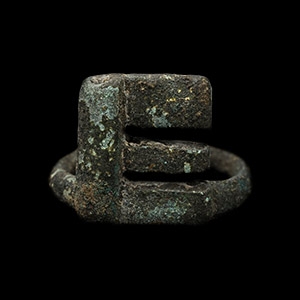
Roman Bronze Key Ring
1st-4th century A.D.Sold for (Inc. bp): £65
Comprising a narrow hoop, rectangular bezel with flange cut with teeth, tubular frame to rear. 5.68 grams, 23.55 mm
Acquired on the European art market in the 1990s. From the collection of G.M.R.H., London, UK. This lot is accompanied by an illustrated lot declaration signed by the Head of the Antiquities Department, Dr Raffaele D'Amato. -
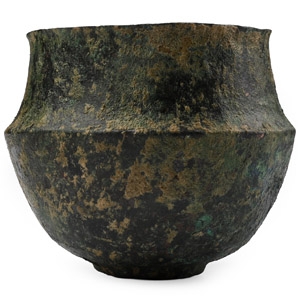
Roman Bronze Medical Blood-Letting Vessel
1st-4th century A.D.Sold for (Inc. bp): £1,300
Made from thin sheet bronze with small disc base, carination to the sidewall, scooped neck. 78 grams, 86 mm
Ex German art market, 2000s. Acquired from an EU collector living in London. From the collection of a Surrey, UK, gentleman. This lot is accompanied by an illustrated lot declaration signed by the Head of the Antiquities Department, Dr Raffaele D'Amato.
A 'bleeding-cup' which was used by physicians for drawing blood from their patients.
