
Loading, please wait...
LOT 0928
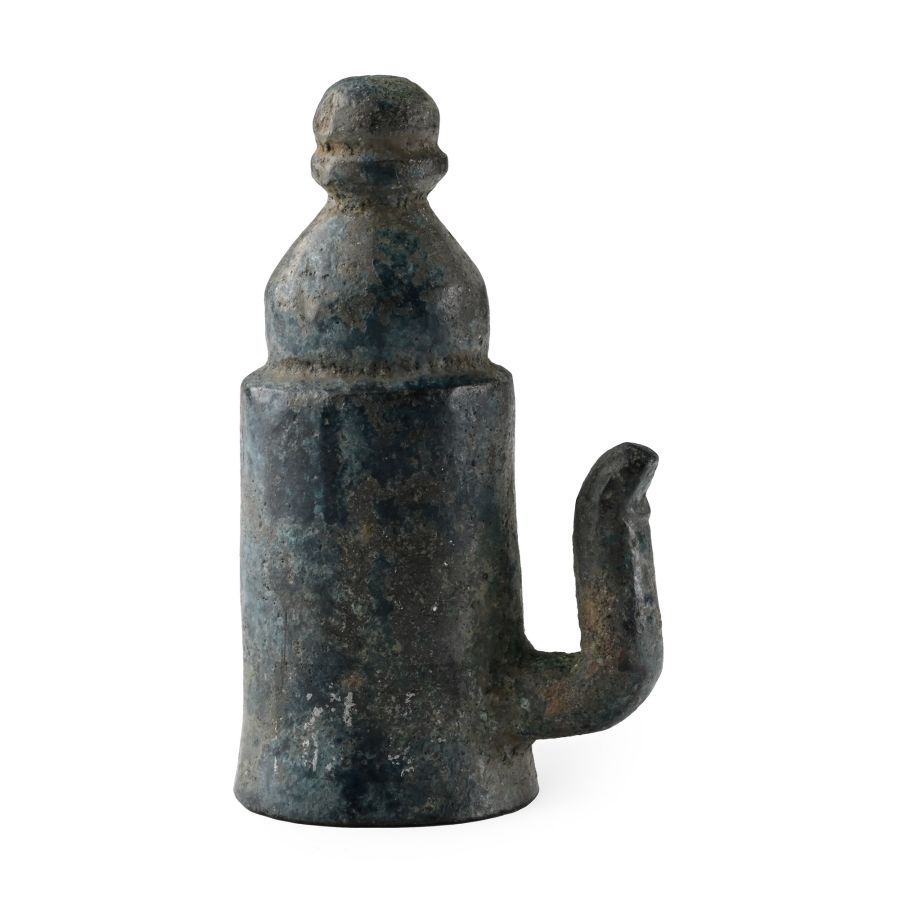
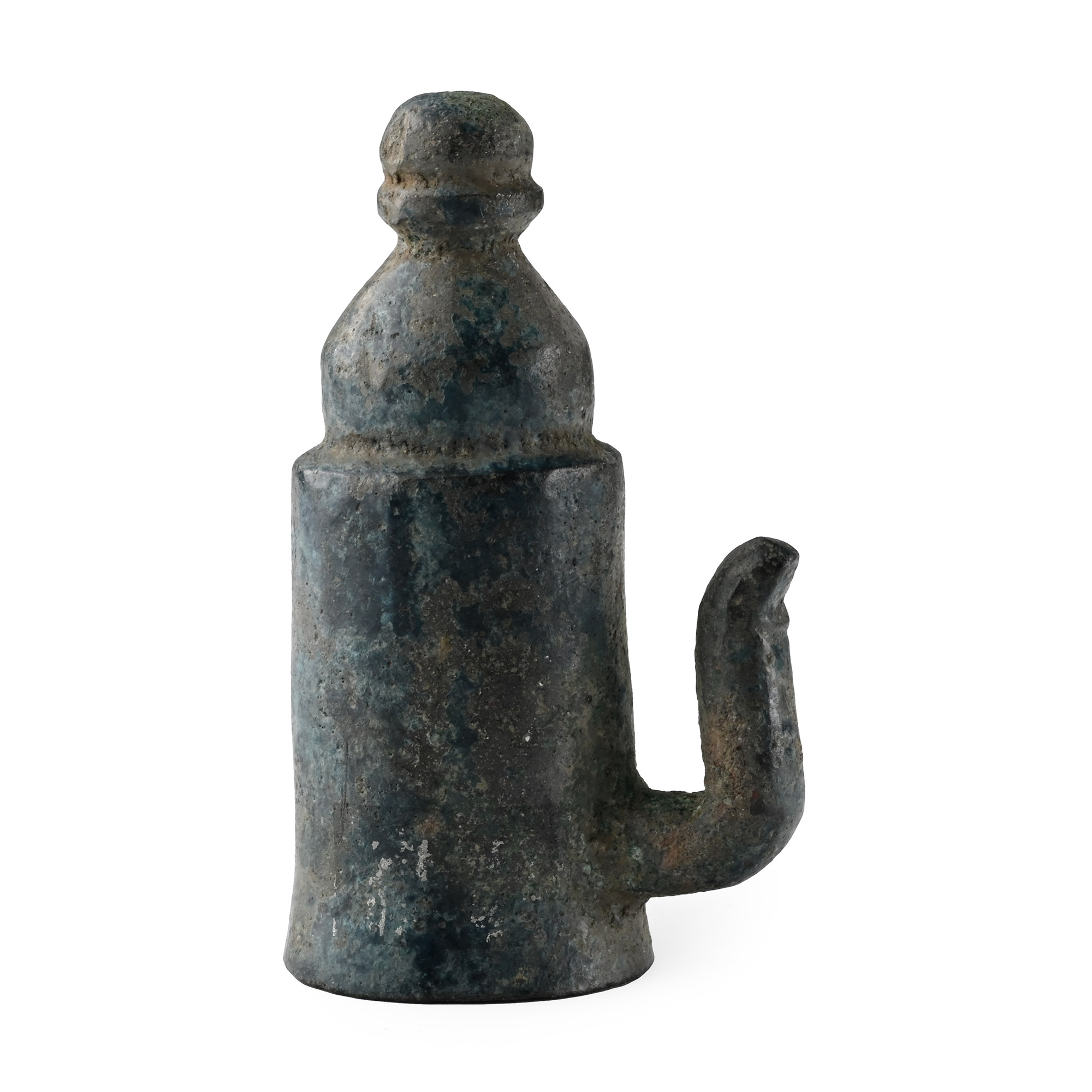
Roman Bronze Chariot Fitting with Thumb
1ST-4TH CENTURY A.D.
2 3/8 in. (64 grams, 62 mm).
Bell-shaped cap fitting with acorn finial, thumb-shaped spur.
ProvenanceAcquired in the late 1980s.
Private collection, 2001.
This lot is accompanied by an illustrated lot declaration signed by the Head of the Antiquities Department, Dr Raffaele D'Amato.
TimeLine Auctions follows a vetting process to ensure the authenticity and legality of all items, reinforcing our commitment to integrity and responsible trading. Each antiquity, antique, and coin lot undergoes thorough examination by a vetting committee of at least ten external specialists, professional trade association members, scientists, and archaeologists: Our Vetting Process
AUCTIONS:
TimeLine is a leading auction house specialising in antiquities, ancient art, collectables, natural history, coins, medals, and books. Our auctions offer museums, collectors, historians, and enthusiasts the opportunity to acquire unique and historically significant pieces.
-
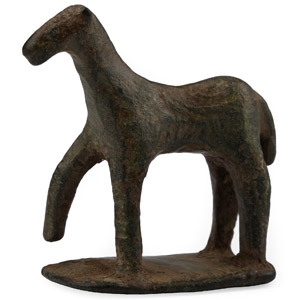
Roman Bronze Horse Statuette
1st-4th century A.D.Sold for (Inc. bp): £130
Standing on a rectangular base with its right front leg raised, small ears and slit mouth. 36.1 grams, 1 5/8 in.40 mm
Ex German art market, 2000s. Acquired from an EU collector living in London. From the collection of a Surrey, UK, gentleman. This lot is accompanied by an illustrated lot declaration signed by the Head of the Antiquities Department, Dr Raffaele D'Amato. -
.jpg)
Roman Gold Ring with Gryllus Gemstone
1st-4th century A.D.Sold for (Inc. bp): £2,600
Hollow-formed ring with inset jasper cloison, intaglio janiform human heads in profile with bird's head above and legs below; supplied with a museum-quality impression. 6.68 grams, 30.11 mm overall, 20.51 mm internal diameter (approximate size British P, USA 7 1/2, Europe 16.23, Japan 15)
Acquired in 1993. Private collection, thence by descent. Private collection, since the late 1990s. This lot has been checked against the Interpol Database of stolen works of art and is accompanied by a search certificate number no.12864-241728. This lot has been cleared against the Art Loss Register database, and is accompanied by an illustrated lot declaration signed by the Head of the Antiquities Department, Dr Raffaele D'Amato. -
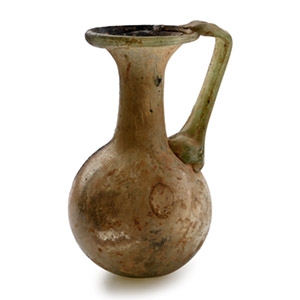
Roman Blown Glass Jug
2nd-4th century A.D.Estimate: £400 - 600 (‡+bp*)
Opening Bid: £200
Bulbous body and rounded underside, long neck, trumpet-shaped mouth with applied rim, applied strap handle with ribbing. 40 grams, 96 mm
Acquired in the 1992. Private collection, Switzerland, thence by descent. Private collection, since the late 1990s. This lot is accompanied by an illustrated lot declaration signed by the Head of the Antiquities Department, Dr Raffaele D'Amato.
