
Loading, please wait...
LOT 0777
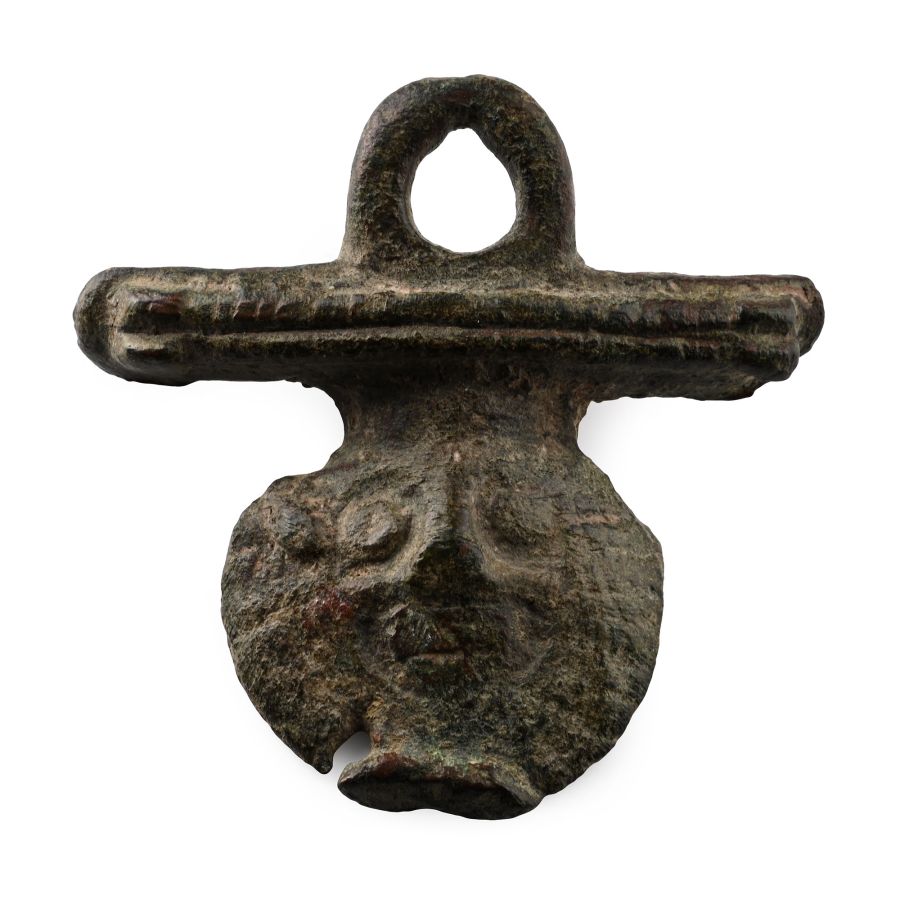
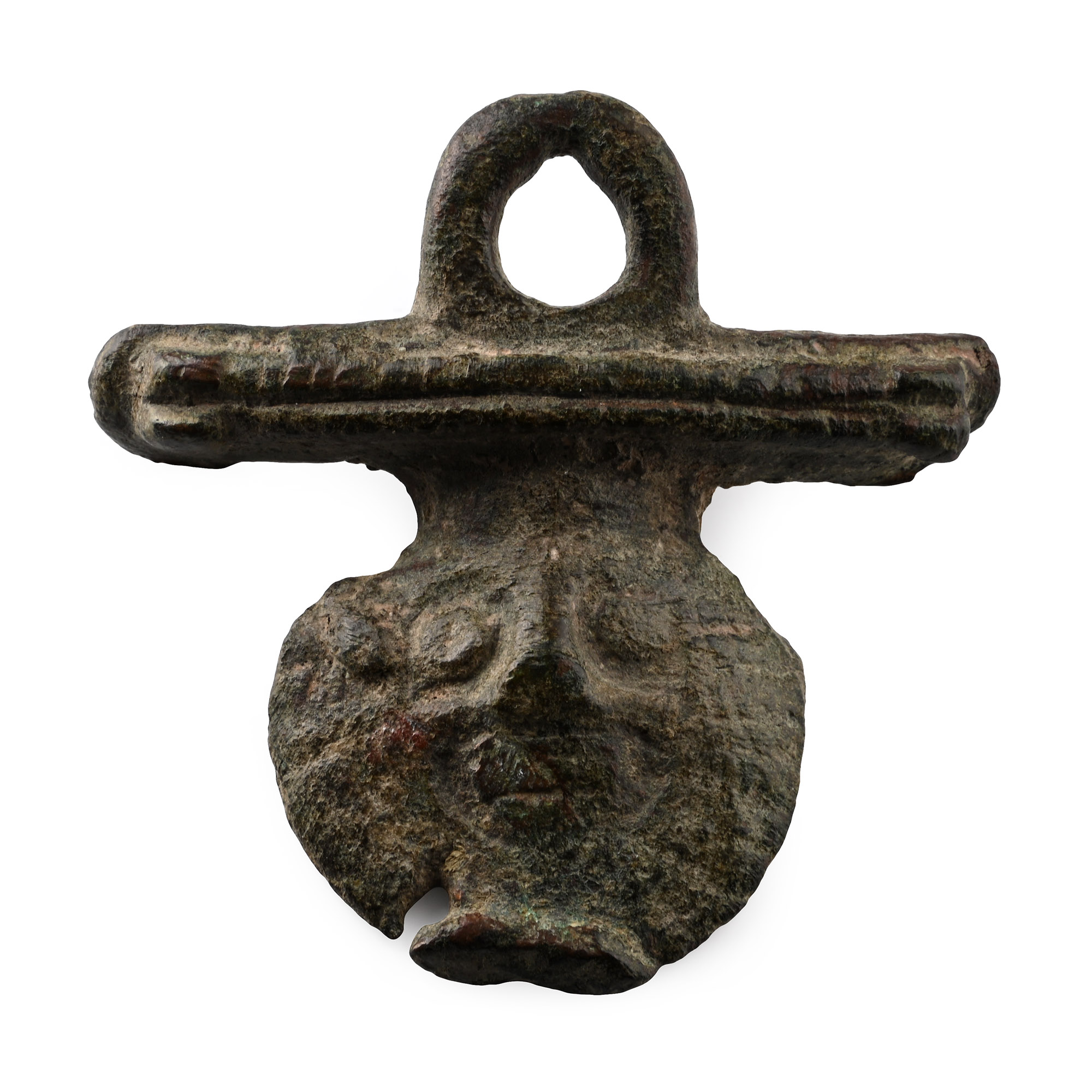
Roman Bronze Cauldron Mount
1ST-4TH CENTURY A.D.
3 in. (117 grams, 77 mm).
Comprising a discoid plaque with low-relief mask, radiating lines to the rim, transverse gusseted bar with ledge to rear, suspension loop. [No Reserve]
ProvenanceAcquired on the UK art market during the late 20th century.
From the private collection of David King (1940-2024), Hoddesdon, Hertfordshire, UK.
This lot is accompanied by an illustrated lot declaration signed by the Head of the Antiquities Department, Dr Raffaele D'Amato.
TimeLine Auctions follows a vetting process to ensure the authenticity and legality of all items, reinforcing our commitment to integrity and responsible trading. Each antiquity, antique, and coin lot undergoes thorough examination by a vetting committee of at least ten external specialists, professional trade association members, scientists, and archaeologists: Our Vetting Process
AUCTIONS:
TimeLine is a leading auction house specialising in antiquities, ancient art, collectables, natural history, coins, medals, and books. Our auctions offer museums, collectors, historians, and enthusiasts the opportunity to acquire unique and historically significant pieces.
-
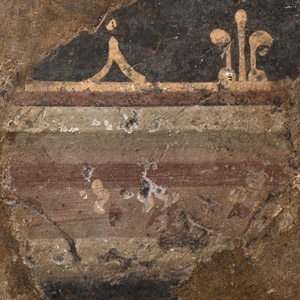
Roman Fresco Wall Plaster Fragment
1st century A.D.Sold for (Inc. bp): £1,040
Fragment of wall plaster with black upper band and graduated bands below, yellow foliage motifs; set into a square block of plaster; with old early 20th century label to verso. 374 grams, 86 x 92 cm
From an early 20th century French collection. From an old London, UK, collection since circa 1985. This lot is accompanied by an illustrated lot declaration signed by the Head of the Antiquities Department, Dr Raffaele D'Amato. -
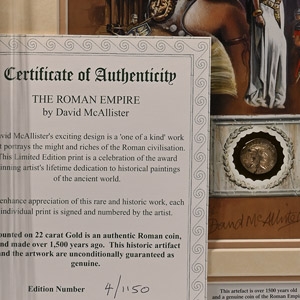
Silver Roman Coin and Framed Limited Edition Print
3rd century A.D. and laterSold for (Inc. bp): £52
The coin of Constantine the Great (272-337 A.D.) mounted on 22 carat gold foil, framed with an art print signed by the artist David McAllister, depicting scenes of Roman military activity; limited edition number 4/1150. 1.26 kg, 49.5 x 37.5 cm
UK gallery, early 2000s. Accompanied by a previous certificate of authenticity. This lot is accompanied by an illustrated lot declaration signed by the Head of the Antiquities Department, Dr Raffaele D'Amato.
David McAllister's exciting design is a 'one of a kind' work that portrays the might and riches of the Roman civilisation. This limited edition print is a celebration of the award winning artist's lifetime dedication to historical paintings of the ancient world. To enhance appreciation of this rare and historic work, each individual print is signed and numbered by the artist. -
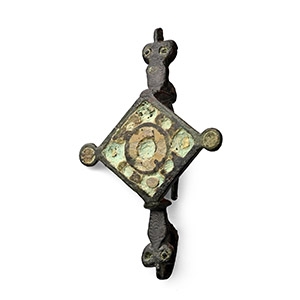
Roman Enamelled Bronze Brooch
2nd-3rd century A.D.Sold for (Inc. bp): £156
Comprising a lozengiform plate with enamelled design and lateral lobes, bow formed by vertical extensions, enamelled rings; hinged pin to reverse. 9.8 grams, 60 mm
Ex German art market, 2000s. Acquired from an EU collector living in London. From the collection of a Surrey, UK, gentleman. This lot is accompanied by an illustrated lot declaration signed by the Head of the Antiquities Department, Dr Raffaele D'Amato.
